Mbappe, Vini and Konate obscure Real Madrid's Ceuta message
Champions League

Mbappe, Vini and Konate obscure Real Madrid's Ceuta message

By Staff Writer — 16 September 2026

Real Madrid have won six out of seven matches in all competitions this season

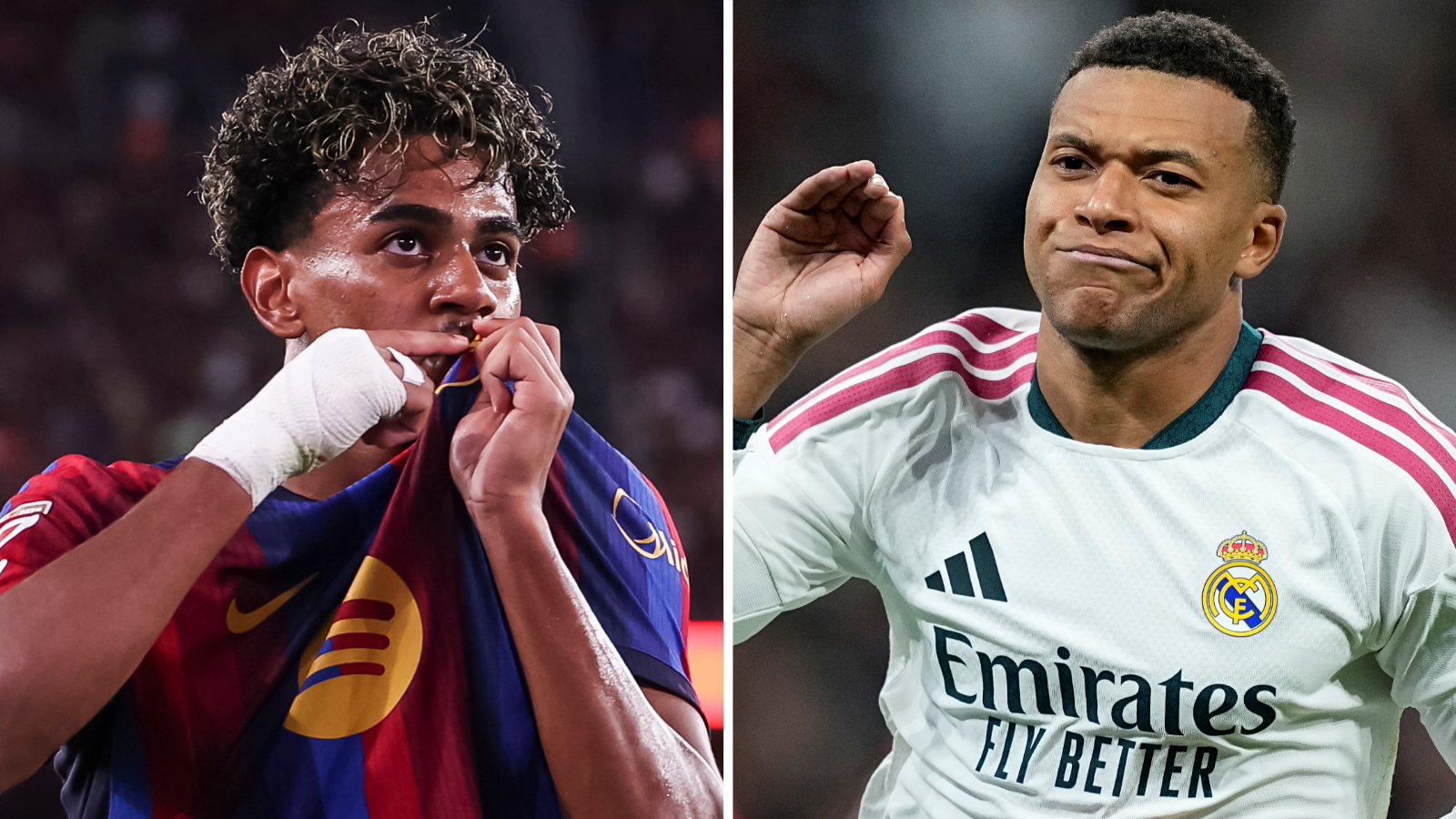
Kylian Mbappe, Vinicius Junior and Ibrahima Konate rolled up their pre-game T-shirts before Real Madrid’s match at Elche on Tuesday to obscure the message of support for the people of Ceuta.

Ceuta is a Spanish autonomous city on the North African coast, bordering Morocco and separated from mainland Spain by the Strait of Gibraltar.

Players from both sides walked on to the pitch at Elche’s ground, Martinez Valero, wearing white T-shirts carrying the message “Todos somos caballas” – translated as “We are all Ceutans” - along with references to the Spanish autonomous city.

While most of the players wore the shirts fully, Mbappe, Vinicius and Konate had theirs rolled up to around chest height, obscuring some of the slogan.

Mbappe and Vinicius then removed their shirts before the pre-match handshake, while Konate kept his on for longer. Their team-mates and the Elche players continued to wear the shirts through the pre-match formalities.

The trio’s actions sparked criticism from La Liga president Javier Tebas, who told reporters: “We saw three players decide not to wear it - putting it half on is the same as not wearing it… bad, bad.”

Tebas confirmed the initiative, which came from a group of entrepreneurs from the Valencia region, had been approved by La Liga and was “not a political act of any type”.

This is not the first time Real Madrid have shown support for Ceuta. Before their Champions League meeting with Inter Milan at the Santiago Bernabeu on 8 September, supporters in the south stand displayed cards featuring the coat of arms of the autonomous city, while the rest of the stadium joined the tribute with a round of applause.

The initiative was part of a wider show of support for Ceuta, following a major migration crisis in the Spanish territory after thousands of people entered from Morocco.

At least 72,000 migrants crossed from Morocco into Ceuta on 30 and 31 July. Most swam around a border fence and at least 100 people died during the crossing, according to figures from Ceuta’s mayor.

Although most returned, as many as 5,000 remain in makeshift camps or are sleeping on the city’s streets and beaches, leading to unrest in the autonomous Spanish city in North Africa.

Locals have expressed safety concerns and some have destroyed shelters and blocked aid being supplied to the migrants.

The representatives of the players have been asked for comment.

The episode came shortly before a dramatic night for Real Madrid, who recovered from surrendering a two-goal lead to beat Elche 3-2, with Carlos Espi scoring the winner in stoppage time.

Mbappe was among Madrid’s scorers, while Vinicius started the game.

The pre-match gesture also highlighted the differing approaches among players and clubs to the Ceuta campaign.

Barcelona did not take part in the initiative, while players at other La Liga fixtures had worn the shirts as intended.

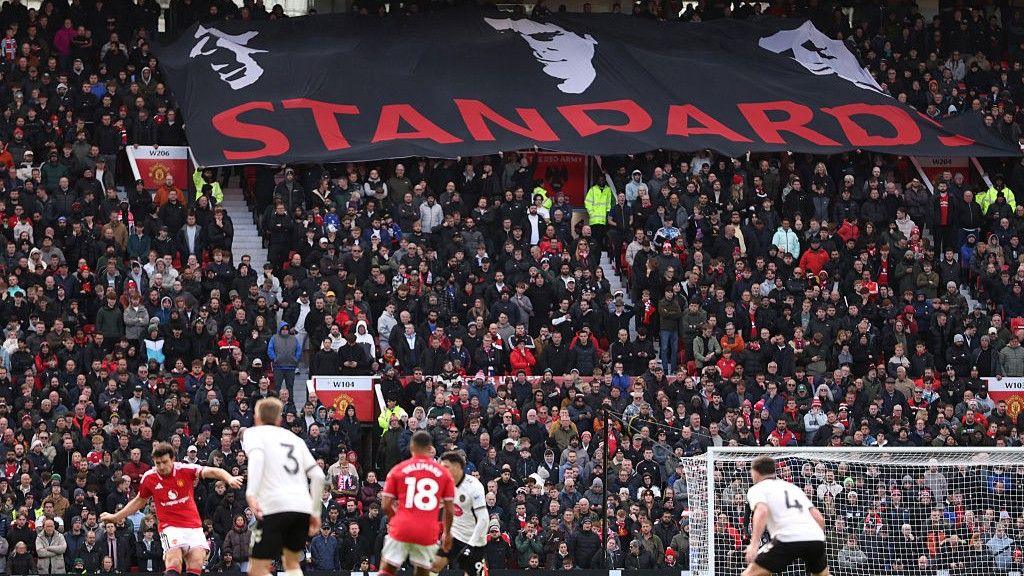
Why are Man Utd better without the ball?
Premier League

Why are Man Utd better without the ball?

By Staff Writer — 16 September 2026

Under Michael Carrick, Manchester United average only 1.5 points per game when they have more than 50% of the ball. When they have less than 50%, this number shoots up to 2.6.

And if you drop possession further, to 45% or below, United have won 10 games out of the past 10 since the start of last season.

It is a staggering correlation but it brings the Englishman to the same crossroads that former United manager Ole Gunnar Solskjaer found himself at.

How do you bridge the game from a seemingly elite counter-attacking side to one capable of beating teams that give you the ball?

The answer has long eluded United.

Going down to 10 men on the way to a 1-0 derby defeat is far from ideal, but at full-time Manchester City manager Enzo Maresca offered a different perspective.

“We had a plan for 11 versus 11, but after the red card the game completely changed, but also for them. They love transitions and space in behind, but the game became more difficult. We just dropped, [offering] no space in behind and no more transitions, which is why the game was also more difficult for them.”

This was an astute analysis of United’s most recent game as well as their team this year.

As divisive as the phrase “United DNA” is, it undoubtedly remains a key part of the conversation about United both externally and internally.

This is because certain coaches have leaned into the club’s roots, while others have tried but failed to move away from those ideas.

“We want to win; we want to be excited - that’s why we love this club. I’m fully aware that we need to do it in a certain way,” said Carrick when asked what style of football he wanted his United side to play.

Here he echoed the sentiment of United’s most successful manager, Sir Alex Ferguson, who in 2017 said: “You have a duty to entertain. We have to always remember there’s a public to be entertained.”

With excitement seemingly non-negotiable for Ferguson, it is obvious why fans and players of that era resonate with a United that create spectacles.

Dynamic, direct and open games are sought after to remain connected to a United they recognise.

Solskjaer’s side embodied United’s DNA before Ruben Amorim looked to play a more choreographed and risk-averse style of play. Carrick went back in the opposite direction.

Having established the context, we can take a closer look at how this has manifested on the pitch.

With the messaging around Carrick’s style of play being one of proactivity, excitement and directness, it is no surprise that United look better with space to attack – something that happens more often for a team with less of the ball.

The strengths of the squad are suited to this approach, with goalkeeper Senne Lammens a good long kicker of the ball. In defenders Harry Maguire and Lisandro Martinez, United have punchy progressive passers from deep too.

In attack, Marcus Rashford is a willing runner in behind, often moving into a striker position despite starting on the wing. The same can be said for Bryan Mbeumo.

Bruno Fernandes, central to all of this, is a strong passer when attacking in transition, finding runners ahead of him – a role in which he broke the Premier League assist record last term.

Bruno Fernandes recorded 21 Premier League assists last season, in large part because of how Michael Carrick platformed him.

Carrick has also provided certain players a level of freedom to make their own decisions on the pitch.

“Giving Bruno the platform to go and perform [has helped him],” Carrick said in April. “We’re trying to create a structure to try to bring out the best of everyone, but I like seeing Bruno in attacking positions with a bit of freedom.”

Although players may enjoy this responsibility, how the team play can be swayed by individual players’ natural tendencies.

With more risk-taking, direct passers in the side, when United are asked to disorganise stubborn defences their long-standing habits can mean losing the ball more often.

When dominating the ball, breaking down a team requires strong one-against-one wingers. Defending teams often clog the centre of the pitch, as City did in the derby, forcing the attacking side to the flank.

City’s Jeremy Doku, Arsenal’s Bukayo Saka, Bayern Munich’s Michael Olise and Paris St-Germain’s Khvicha Kvaratskhelia have been key in helping those sides win often – while keeping the ball.

This season United have used a 4-2-4 shape in possession. The full-backs have pushed up and taken turns with the wingers to hold wide or narrow positions.

This, however, often results in Luke Shaw, Patrick Dorgu, Diogo Dalot and Mbeumo – not the strongest one-v-one dribblers - isolated on the wing.

Amorim used a system without wingers and the squad built as a result – with the exception of Rashford and Amad Diallo – appear underprepared to create chances from out wide.

With wide play an area of concern, play is often funnelled back infield.

Carrick has primarily used Fernandes and Matheus Cunha as a floating front two, both with licence to drop deep or pull wider.

Both players are more suited to facing the opposition’s goal, rather than playing with their back to goal in small spaces, which makes it hard for United to capitalise through the middle.

City’s Rayan Cherki and Arsenal’s Kai Havertz are players suited to this role, albeit in different ways.

Fernandes and Cunha’s quality means they can still be effective in these positions, often forming triangles with the full-back and wingers, helping United get into the final third.

But as they both vacate the striker position, United end up lacking bodies in the box when they play crosses in.

In an example against Ipswich, both Bruno Fernandes and Cunha, United’s front two, dropped deep and moved towards the ball. As the move reached the final third, Dalot shot from distance. The two central attackers were not able to get into the box soon enough, meaning United lacked options in the box.

The best teams have repeatable methods of chance creation in the final third that suit their players’ strengths. Teams then cycle through these depending on what the opposition are offering them.

With United’s attackers given more freedom, they often seem to be looking to solutions during the game more reactively compared to the more repeatable methods of creation Maresca can fall back on.

With United struggling to beat teams that allow them the ball, their impressive set-pieces provided them with a workaround last season.

Since Carrick took over, 56% of United’s opening goals have come from corners, free-kicks or penalties, and 28% from Casemiro’s headers.

Casemiro’s nine Premier League goals last season – mainly from set-plays – were key for United to unlock defences.

After scoring, opponents are more likely to attack, which stretches the game, allowing United to play to their strengths and in a more direct fashion.

This season they have not shown that same prowess and, although Casemiro is known for his defending, the loss of his ability to help open the scoring makes United’s attacking concerns against deep defences a more pressing issue to address.

Cardiff to host 2029 women's Champions League final
Champions League

Cardiff to host 2029 women's Champions League final

By Staff Writer — 15 September 2026

Cardiff’s Principality Stadium will host the women’s Champions League final in 2029.

The 73,931-seater venue hosted the men’s final between Real Madrid and Juventus in 2017 and will now welcome Europe’s elite female talents later this decade.

“It’s brilliant news for Cymru and the FAW and the journey that we’re on, particularly in the women’s game,” said Football Association of Wales (FAW) chief executive Noel Mooney.

It comes nine years after Cardiff City Stadium hosted the women’s Champions League final between Paris Saint-Germain and Lyon - with the latter winning on penalties following a goalless draw after extra-time.

The Cardiff city centre venue will be named National Stadium of Wales for the event to comply with Uefa sponsorship rules.

Mooney added: “This is about much more than one night in 2029. Our ambition is for the Uefa women’s Champions League final to become a catalyst for the continued transformation of women’s and girls’ football in Wales.”

Earlier this year, Principality Stadium - the largest stadium in Wales, and owned by the Welsh Rugby Union (WRU) - hosted the FA Community Shield as reigning Premier League champions Arsenal won 3-0 against Manchester City.

“This is a hugely significant moment for women’s sport in Wales and across Europe,” said WRU group chief executive Abi Tierney.

“We are absolutely delighted that our stadium has been selected to host the 2029 Uefa women’s Champions League final, bringing one of the biggest occasions in world football to Cardiff and Wales.”

“The rapid growth of women’s sport continues to inspire new generations of athletes and supporters, and hosting an event of this magnitude at the National Stadium of Wales is a powerful statement about the importance and future of the women’s game.”

Uefa have also confirmed Munich will host the 2028 men’s Champions League final with Barcelona staging the final a year later, 30 years on from Manchester United’s dramatic triumph over Bayern Munich in the Spanish city.

The 2028 women’s Champions League final will take place at Parc Olympic Lyonnais.

It has also been announced that the National Arena in Bucharest will host the 2028 Europa League final. The National Stadium in Belgrade will hold the Europa League final a year later.

Turin’s iconic Juventus Stadium will host the 2028 Conference League final. The Puskas Arena in Budapest will host the 2029 showpiece.

Coutinho joins Neymar at Santos for rest of season
Transfers

Coutinho joins Neymar at Santos for rest of season

By Staff Writer — 15 September 2026

Philippe Coutinho has joined his close friend and Brazil team-mate Neymar at Santos FC until the end of the season.

The former Liverpool and Barcelona midfielder, 34, has been without a club since leaving Vasco da Gama in February.

Coutinho returned to his childhood club in 2024 but left after 81 appearances, saying he was “tired mentally”.

Santos welcomed the player on social media by posting an old photo of Coutinho and Neymar as teenagers, alongside a new version of them re-enacting the pose in the gym.

The club also posted a video of Coutinho walking into the dressing room where he receives a hug from Neymar and says “if it’s a dream, I don’t want to wake up”.

Neymar returned to Santos, his childhood team, in January last year and this will be the first time that the friends have played together at club level.

Coutinho started his career at Vasco before joining Inter Milan and later moving to Liverpool in 2013, where he scored 54 goals in 201 games before joining Barcelona for £142m in 2018.

He later had stints at Bayern Munich, Aston Villa and Al-Duhail before the return to Vasco.

VAR did not even consider if Fernandez was offside - Webb
Premier League

VAR did not even consider if Fernandez was offside - Webb

By Staff Writer — 15 September 2026

Referees’ chief Howard Webb has admitted that the video assistant referee (VAR) did not even consider whether Enzo Fernandez was offside for Erling Haaland’s controversial winner in Sunday’s Manchester derby.

Speaking on the first edition of ‘Match Officials Mic’d Up’ of the season, Webb said he was “really disappointed” with the error made by the VAR Matt Donohue and his assistant Blake Antrobus.

Manchester City striker Haaland thought he had scored the only goal of the game at Old Trafford in the 60th minute, but it was disallowed on the field for offside.

A VAR review found Haaland was just onside, and the goal was awarded.

But it immediately became apparent that the video officials had made an error in failing to identify an offside offence by Fernandez, diving at the ball in a central position and interfering with opponents.

“I was really disappointed with this outcome. We all are,” said Webb, Premier League refereeing body Pro Ref’s chief refereeing officer.

“None more so than the officials themselves. They take a lot of personal pride in what they do and they’re obviously hurting now, having fallen short in this situation.

“They’ll not be officiating again until after the international break.”

One of the questions which many supporters have asked is how the VAR team could possibly reach the conclusion that Fernandez did not commit an offside offence.

Manchester United defender Lisandro Martinez initially appeared to be marking Haaland, but then moved over to try and intercept the ball from Fernandez. This left Haaland free at the back post to finish.

Former England striker and BBC Sport pundit Wayne Rooney said on Match of the Day that “to not see that and recognise that Enzo Fernandez was in an offside position…anyone who has played the game at any level understands that and to get it so wrong is baffling.”

The Mic’d Up audio revealed that at no stage did Donohue or Antrobus consider whether Fernandez was offside because, as Webb describes, they got “tunnel vision” over Haaland.

The semi-automated offside technology told the VAR that Haaland was three centimetres onside from Josko Gvardiol’s cross.

But the video officials then only checked for a touch by Fernandez which would have created a new offside phase against the Norway international.

This is the transcript, which was dominated by the VAR with the AVAR only making one minor contribution.

VAR: Checking the on-field decision of offside against Haaland.

The VAR and the semi-automated offside operator then discuss the decision against Haaland and he is shown to be onside.

VAR: Okay, so he’s onside. So we now need to check the full APP (attacking phase).

VAR speaking to referee Michael Oliver: Michael, Haaland’s in an onside position, but I need to check the full APP now. Stand by.

VAR: Haaland’s clearly onside. Roll it all the way through. Roll it all the way through.

VAR: Let’s go, let’s go, let’s go, let’s go.

VAR: Go back just to check Ndiaye wasn’t on offside. Sorry, my apologies. When it’s flicked. Quick, quick, quick, quick. Yes, fine. Go, go, go, go, go.

VAR: Let’s go. It should be a goal. All the way into the back of the net now.

VAR: Quick, quick, quick, quick! Go, go, go, go, go!

This is the point at which Gvardiol crosses the ball into the box.

VAR: Deflection. Onside. No touch there [by Fernandez]. Confirm, no touch. There wasn’t.

VAR: Just something [camera angle] tighter. Clear gap.

VAR: There’s not a touch, is there [by Fernandez]? There’s no touch.

VAR: Another angle. Roll it through, roll it through, roll it through.

VAR to referee: Michael, confirming that you need to change your decision to goal. Haaland is in onside position. Final decision is goal. Check complete.

Webb said that the VAR failed to assess how Fernandez found himself in that position, so did not consider the offside offence.

“The VAR gets super-focused on Haaland,” said Webb, who had already been in contact with Manchester United to share the VAR audio and video.

“He establishes he’s onside, he thinks that’s a good goal.

“He doesn’t truly evaluate the full impact of Fernandez’s position. He has a look to see if he touches the ball, because then that relates to potentially knocking it to Haaland, who goes on to score.”

Webb highlighted the lack of assistance from Antrobus as the assistant VAR, who did not offer a meaningful contribution during the review.

“In that moment, he [Donohue] gets tunnel vision,” Webb said. “It’s down to the rest of his team to pull him out of that tunnel, and unfortunately, that didn’t happen on this occasion.

“What looks like a really clear subjective offside, because Fernandez doesn’t touch the ball but still clearly impacts [the play but] doesn’t get identified, and it’s really disappointing.

“This goal should’ve been disallowed. And highly unfortunately, it wasn’t, and we’ll review it, reflect upon it, and try to take the learning forward to prevent this unusual type of error from happening again.”

There was also much debate over the red card shown to Phil Foden in the 23rd minute for kicking out at Bruno Fernandes, largely because there was no sanction against the Portuguese midfielder for a similar act.

Webb backed the decision to dismiss Foden, but said the action by Fernandes did not meet the threshold for violent conduct.

“I agree with the red card for Phil Foden,” said Webb. “He kicks out with force into the upper body of Bruno Fernandes.

“Now, when you look at the footage, there is that petulant kick by Bruno Fernandes into the backside of Foden. It is more petulant than violent.

“To be violent conduct, it has to have excessive force or brutality. When you look at that, particularly in full speed, it doesn’t have those elements. So therefore, this would be a yellow card offence.”

Webb added that if Foden had not been sent off on the field, but he had been via a VAR review - as Aston Villa’s Joao Gomes was at Brighton for a similar offence last month - Fernandes’ yellow-card offence would also have been identified at the pitchside monitor.