Champions League

Konate to join Real Madrid on four-year deal
Champions League

Konate to join Real Madrid on four-year deal

By Staff Writer — 18 June 2026

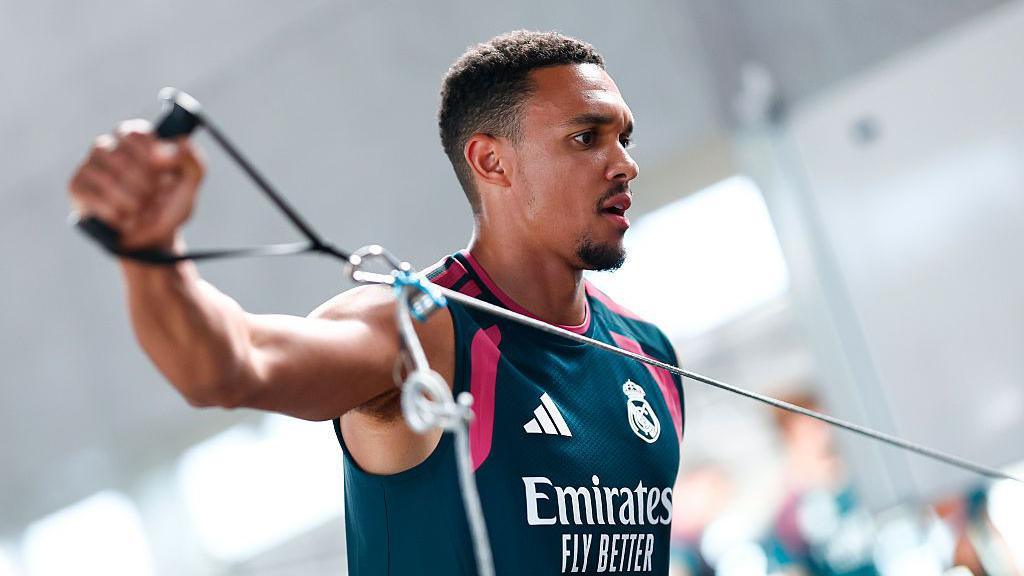
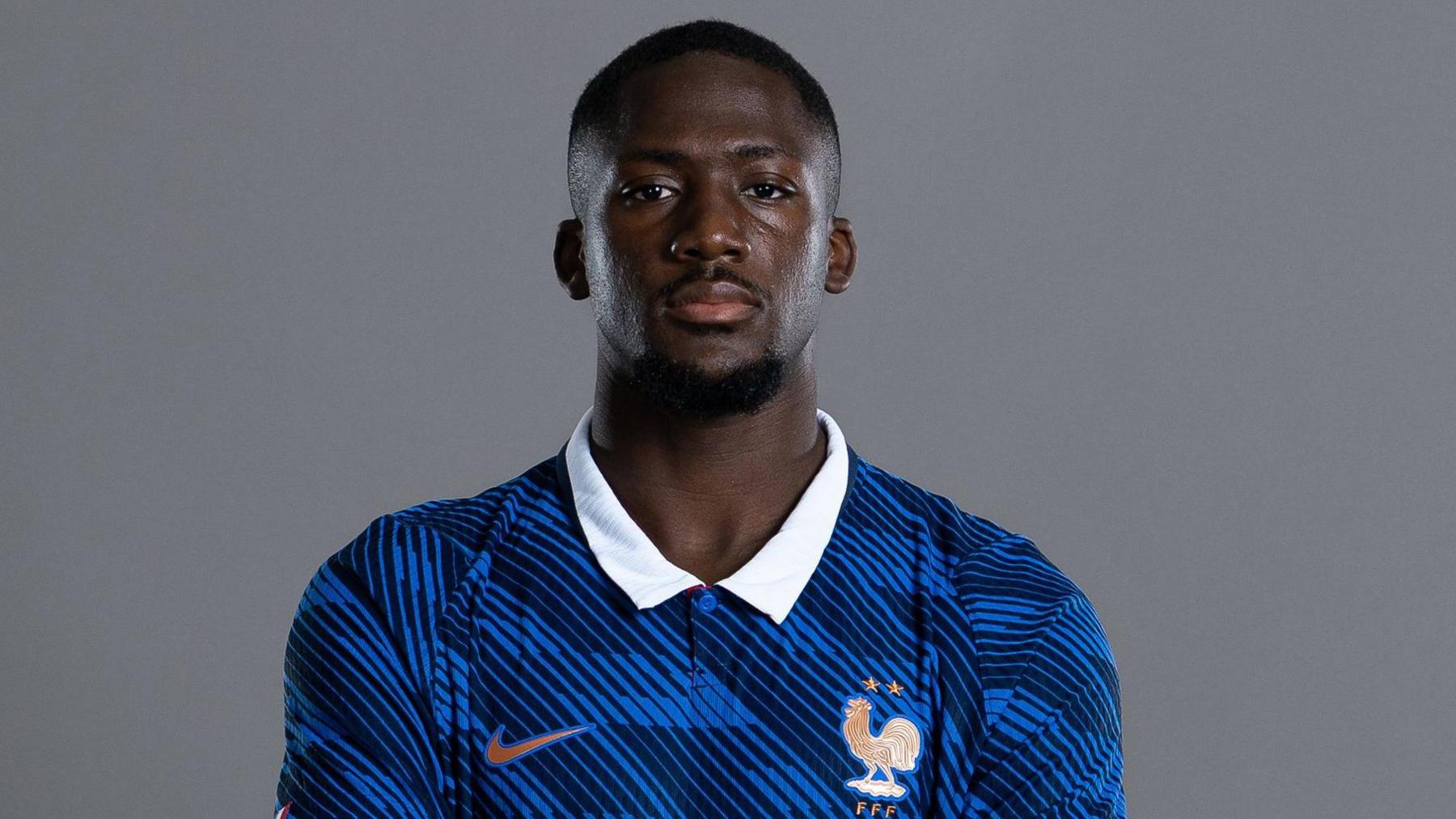
Real Madrid have agreed a deal to sign Ibrahima Konate on a four-year contract when the France centre-back leaves Liverpool.

The 27-year-old is leaving the Reds on a free transfer at the end of June after the two parties failed to agree a new deal because of a gap between the defender and club over his value and wages.

Real Madrid say they have reached an agreement with Konate “for him to become a Real Madrid player for the next four seasons, until 30 June, 2030”.

Konate, who is part of his country’s squad at the 2026 World Cup, joined Liverpool from RB Leipzig in 2021 for £35m on a five-year contract.

He made 183 appearances for the Anfield club in all competitions and won the Premier League, FA Cup and two League Cups.

Konate recently said he had been “deeply saddened that I didn’t get the chance to say goodbye” to the Liverpool fans when the Reds played their final Premier League game of the season against Brentford on 24 May.

He added: “At that moment, I didn’t know it would be my final time wearing this shirt in front of you.”

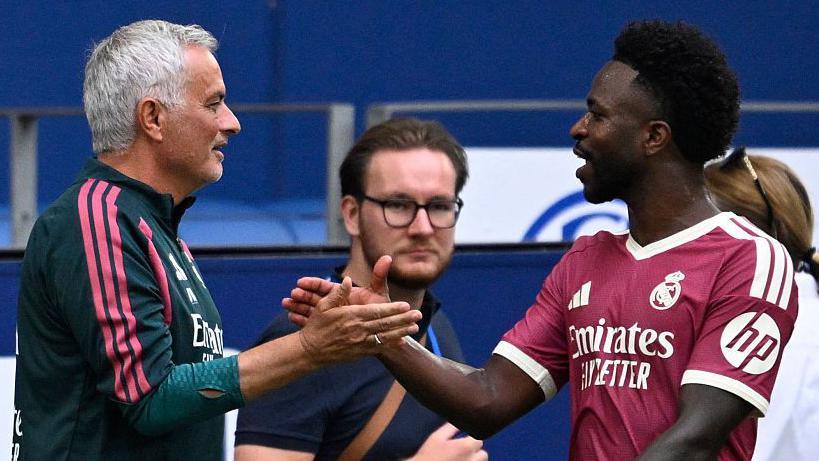
Konate joins Real Madrid following the Spanish club appointing Jose Mourinho as their manager for his second spell in charge.

Bernardo Silva and Marc Cucurella are also joining the Bernabeu side this summer.

Portugal midfielder Silva, 31, is another free transfer for Real Madrid, who did not win a trophy last season, following his departure from Manchester City.

Spain defender Cucurella has been signed from Chelsea in a deal worth £52m.

Hearts, Hibs and Motherwell learn European opponents
Champions League

Hearts, Hibs and Motherwell learn European opponents

By Staff Writer — 17 June 2026

Hearts will face Austrian club Sturm Graz in the second round of Champions League qualifying.

Meanwhile, Motherwell have been drawn against Havnar Boltfelag of the Faroe Islands, while Hibernian take on the winners of tie between Vllaznia of Albania and Malisheva of Kosovo, in the same stage of the Conference League.

Hearts will be playing in the qualifiers of Europe’s top club competition for the first time in 20 years after finishing runners-up in the Scottish Premiership following a final-day defeat by reigning champions Celtic.

Sturm Graz also finished second in their domestic league behind LASK.

The Austrian club will host the first leg on 21/22 July, with the reverse fixture the following midweek.

By that time Hearts will likely be under new management, with head coach Derek McInnes seemingly poised to switch to Rangers and the Edinburgh club expected to choose a replacement within days.

Should Hearts defeat Sturm, they will be unseeded and face either Lyon, Bodo/Glimt, Olympiacos or the winner of Fenerbahce v Gornik Zabrze.

If they lose, they will drop into the Europa League third qualifying round and would be unseeded in the same part of the draw as seeded Rangers.

Sturm Graz lost 6-2 on aggregate to Bodo/Glimt in the play-off round last season and beat Rangers 2-1 at home and lost by the same score at Celtic after dropping down to the Europa League and finishing 26th of the 36 teams.

They finished the regular season top by a point, but similar to Hearts, they finished two points behind LASK after the league split into a championship round.

Motherwell, who finished fourth in the Premiership, and Hibs, who were one place behind, will kick-off their campaigns on 23 and 30 July against clubs sitting lower in the European rankings.

Well, currently seeking a new manager after Jens Berthel Askou left for Toulouse, will be at home for their first leg against last year’s runners-up in the Faroe Islands Premier League.

Havnar currently sit sixth in the 2026 table after 13 games and have lost in their opening Conference League qualifier for the last four seasons.

Hibs will be away from home for the first leg in either Albania or Kosovo.

Vllaznia finished third in the Kategoria Superiore, six points behind Egnatia, who were winners for a third year running.

They lost to Vikingur of Iceland at the second qualifying round last season.

Malisheva, who were runners-up in the Kosovo Superleague, also lost to Vikingur in last season’s opening round.

Who awaits Hearts, Hibs and Motherwell in Euro draws?
Champions League

Who awaits Hearts, Hibs and Motherwell in Euro draws?

By Staff Writer — 16 June 2026

The World Cup has barely started and three of Scotland’s five representatives are already having to set their sights on next season’s early rounds of European qualifying.

Hearts, Hibernian and Motherwell are all involved in Wednesday’s draws for the Champions League and Conference League.

Rangers do not enter until the third round of Europa League qualifying but will be keeping an eye on their potential opponents too.

So who could the other three face when the draw for the Champions League is made at 11:00 BST and the Conference League two hours later in Nyon?

As Scottish Premiership runners-up, Hearts will be playing in the Champions League qualifiers for the first time in 20 years.

Back then, they defeated Bosnia-Herzegovina’s Siroki Brijeg in the second qualifying round before losing to AEK Athens and dropping into the Uefa Cup.

Hearts will enter at the same stage again and already know they will be facing one of two seeded opponents - either Fenerbahce of Turkey or Sturm Graz of Austria - in the League Path of the draw reserved for domestic runners-up.

The first leg of those ties will on 21/22 July, with the reverse fixtures the following midweek.

By that time they will likely be under new management, with head coach Derek McInnes seemingly poised to switch to Rangers.

Should they be drawn against Fenerbahce and win, Hearts will be seeded in the third qualifying round and will face either Czech Republic’s Sparta Prague, NEC Nijmegen of the Netherlands, the winner between Sturm Graz and Poland’s Gornik Zabrze - or Union Saint-Gilloise of Belgium.

The latter scenario would pit two of the other clubs in which Brighton & Hove Albion owner Tony Bloom has invested against one another.

However, while all three clubs use Bloom’s Jamestown Analytics firm for recruitment, the gambling tycoon has kept his investment in both Hearts and Union below 30% to make sure they comply with Uefa’s multi-club ownership rules.

Should Hearts be drawn against Sturm Graz and win, they will be unseeded and face either Lyon, Bodo/Glimt, Olympiacos or the winner of Fenerbahce against Gornik.

Lose at the first hurdle and the Edinburgh side will drop into the Europa League third qualifying round.

There, they would be unseeded in the same part of the draw as Rangers, who will be seeded for their first European fixture of the season.

However, there are a lot of ifs and buts before that draw on 20 July.

Talking of ifs and buts, the Conference League’s second qualifying round draw is full of them.

Despite finishing fifth behind Motherwell in the Premiership last season, Hibs find themselves seeded while the Fir Park side are not.

Among those the Leith side could face on 23 and 30 July are Swedish duo GAIS and IFK Gothenburg, Israeli outfits Beitar Jerusalem and Hapoel Tel Aviv, Valur of Iceland, Northern Ireland’s Coleraine and Shelbourne of Ireland.

Motherwell’s many potential opponents are a step up and include Ajax, Braga, Copenhagen, Gent, Rapid Vienna, Panathinaikos, Ludogorets Razgrad, FCSB, Partizan, AEK Larnaca, Rijeka, Cluj, HJK Helsinki, Brann and Nordsjælland.

All will become slightly clearer early on Wednesday, when Uefa will split the teams into groups of six and Hibs and Motherwell will know their five potential opponents.

Well go into the draw still considering who to appoint as manager after Jens Berthal Askou was poached by Toulouse after a successful season at Fir Park.

Whoever succeeds the Dane will be hoping to avoid the ignominy of their last Conference League venture, when they were knocked out at the same stage by Republic of Ireland’s Sligo Rovers four years ago.

Hibs head coach David Gray will, meanwhile, hope he can take his side one step further than last season, when they lost narrowly to Midtjylland in Europa League qualifying, beat Partizan in Conference League qualifying but then were defeated by Legia Warsaw in the play-off round.

Amorim agrees to become new AC Milan boss
Champions League

Amorim agrees to become new AC Milan boss

By Staff Writer — 15 June 2026

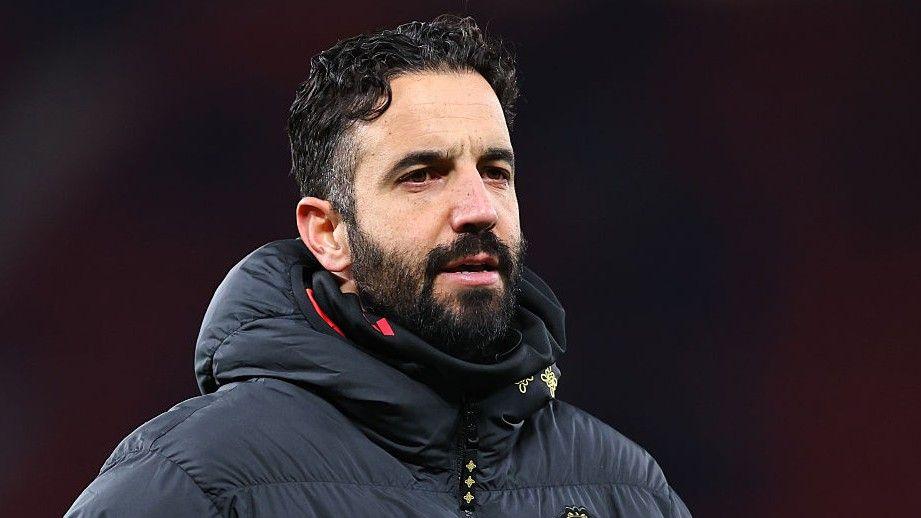
Ruben Amorim won 24 games and lost 21 out of 63 matches in charge of Manchester United

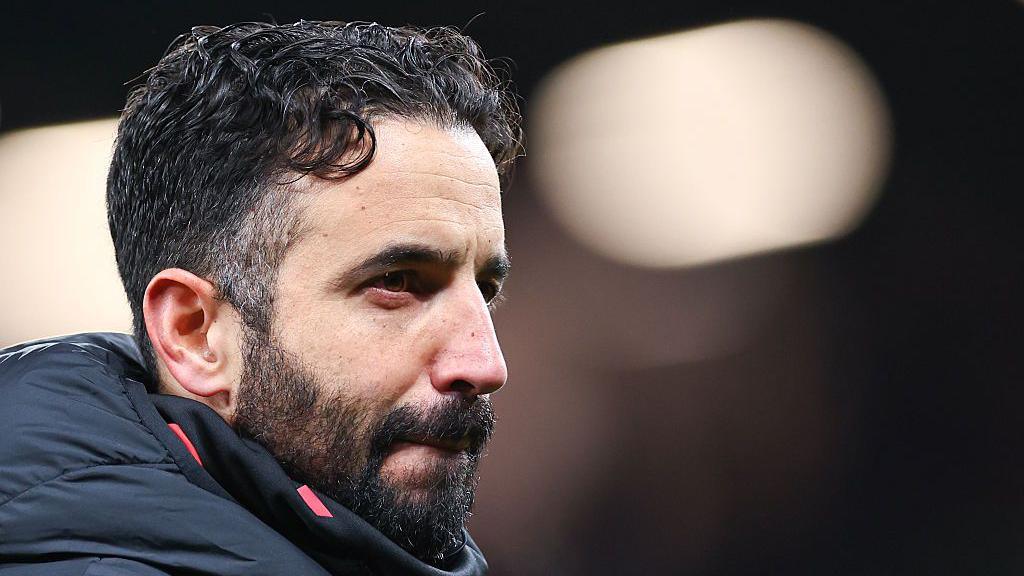
Ruben Amorim has agreed to become AC Milan’s next head coach.

While there is no deal signed just yet, the 41-year-old is expected to fly into Milan later this week and sign a two-year contract to replace Massimiliano Allegri, who was sacked after a catastrophic run of form at the end of the season led to the club missing out on Champions League qualification.

Reports in Italy claim Amorim has said he will forego the year’s pay he was still owed by Manchester United following his dismissal in January.

In February, United said Amorim’s exit, together with his coaching staff, could cost the club up to £15.9m.

It is not known whether United will have to outline the saving in their next set of financial results, which are due out in the autumn.

Amorim was axed after a torrid 14 months at Old Trafford.

However, prior to that, he had become one of Europe’s most sought-after young coaches due to his work at Sporting, where he ended the club’s 19-year wait for a league title in 2020-21, and then won it again in 2023-24.

Amorim replaced Erik ten Hag at Old Trafford in November 2024 after the club rejected his plea to take over at the end of the season.

Last month, sources close to Amorim distanced him from the impending vacancy at former club Benfica as it became apparent Jose Mourinho was about to leave for Real Madrid. Former Fulham boss Marco Silva has since been appointed.

Providing the contracts are signed as expected, Amorim’s first game in charge will be a pre-season match at Celtic on 25 July.

Ironically, they conclude their pre-season campaign against Manchester United in Wroclaw on 15 August.

Amorim appointed as AC Milan head coach
Champions League

Amorim appointed as AC Milan head coach

By Staff Writer — 15 June 2026

Former Manchester United manager Ruben Amorim has been appointed as head coach of Italian giants AC Milan.

The 41-year-old has signed a two-year contract to replace Massimiliano Allegri, who was sacked after a catastrophic run of form at the end of the season led to the club missing out on Champions League qualification.

Reports in Italy claim Amorim will forego the year’s pay he was still owed by Manchester United following his dismissal in January.

Milan say Amorim brings a “modern dominant tactical approach”.

“There are ambitions that stay with you throughout your career, and coaching AC Milan has always been one of mine,” said the Portuguese head coach.

“I know exactly what this club means: history, prestige and an extraordinary fanbase around the world. It is a challenge I embrace with pride and enthusiasm.”

In February, United said Amorim’s exit, together with his coaching staff, could cost the club up to £15.9m.

It is not known whether United will have to outline the saving in their next set of financial results, which are due out in the autumn.

Amorim was axed after a torrid 14 months at Old Trafford.

Prior to that, he had become one of Europe’s most sought-after young coaches because of his work at Sporting, where he ended the club’s 19-year wait for a league title in 2020-21, and then won it again in 2023-24.

Amorim replaced Erik ten Hag at Old Trafford in November 2024 after the club rejected his request to take over at the end of the season.

Last month, sources close to Amorim distanced him from the impending vacancy at former club Benfica as it became apparent Jose Mourinho was about to leave for Real Madrid. Former Fulham boss Marco Silva has since been appointed.

Amorim’s first game in charge will be a pre-season match at Celtic on 25 July while ironically, they conclude their pre-season campaign against Manchester United in Wroclaw on 15 August.

Amorim a leading contender for AC Milan job
Champions League

Amorim a leading contender for AC Milan job

By Staff Writer — 13 June 2026

Former Manchester United head coach Ruben Amorim has emerged as a leading contender for the AC Milan manager’s job.

The Portuguese has been out of work since being sacked by United in January after a torrid 14 months in charge.

Sources close to the former Sporting boss had previously distanced the 41-year-old from a return to Benfica, the club he spent six years with as a player, making 154 appearances.

While there is no agreement in place, there have been conversations between Milan and Amorim’s representatives and he is high on their list of candidates to replace Massimiliano Allegri, who was dismissed in May after failing to qualify for the Champions League.

Milan had been nine points clear of fifth place when they beat rivals Inter in March, but then won just three of their final 10 games, picking up 10 points to eventually finish a point behind Como, who snatched the final Champions League spot on the last day.

USA coach Mauricio Pochettino has also been linked with the vacancy, as has Oliver Glasner, who left Crystal Palace following their Uefa Conference League final victory over Rayo Vallecano.

However, another former Manchester United boss who had been linked with the Milan job is out of the running.

Ralf Rangnick, who managed the Old Trafford club from 2021 to 2022 before taking charge of Austria, has extended his contract with the nation to 2028.

If Amorim took over, he would face his old club in pre-season, with AC Milan due to face United in Wroclaw, Poland on 15 August, a week before the Premier League begins.

Weir's title regret as she confirms Real Madrid exit
Champions League

Weir's title regret as she confirms Real Madrid exit

By Staff Writer — 12 June 2026

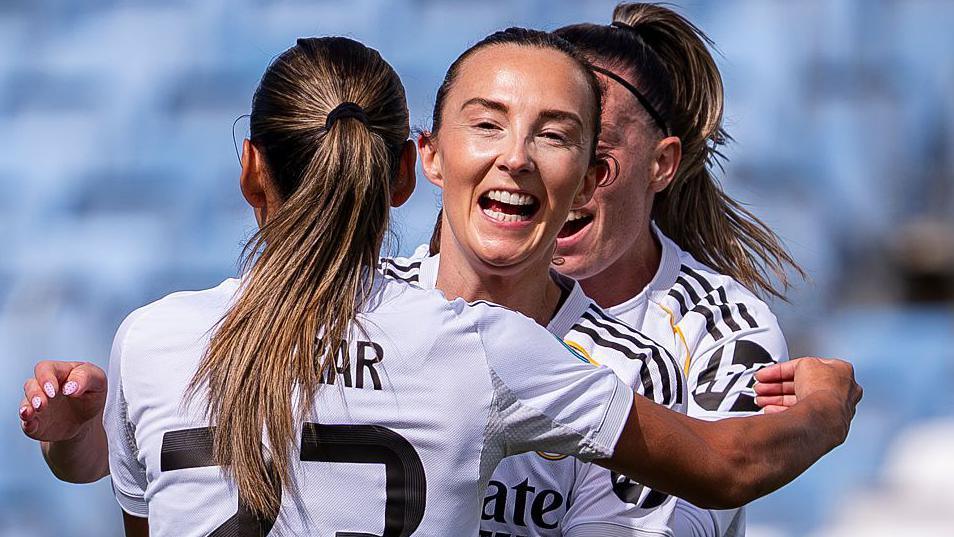
Scotland midfielder Caroline Weir has confirmed her exit from Real Madrid without giving a hint of her next destination.

The 30-year-old says it was “a dream come true” to have played for the club and that her “only regret is that I could not give you a first title” in her four-year spell.

Weir, who had been given a guard of honour by team-mates in her final game for Real, exits having played 125 matches and scoring 63 goals, becoming the player with the most goals and assists in their history.

Real said it had been Weir’s decision to leave but expressed “gratitude and affection for everything she has contributed to our club and for her professionalism, commitment and hard work during these four seasons”.

Weir joined from Manchester City in 2022 but was sidelined for a year after tearing the anterior cruciate ligament in her left knee while playing for Scotland against Belgium in September 2023.

“With your support and that of my team-mates, managers, staff, friends and family, I overcame my knee injury, the biggest setback in my career,” she said on Instagram.

“You also gave me the freedom to become the player and person I am today. For that, I will always be grateful.”

The news of her departure comes two days after she captained Scotland to top spot in their World Cup qualifying group, having scored seven goals in their final two victories over Israel.

Weir, who has netted 31 times in 121 appearances for her country, had won silverware with both City and Arsenal but trophies eluded her in Madrid amid Barcelona dominance, although she was twice voted club player of the season and was a Ballon d’Or Feminin nominee last year.

“The time has come for me to leave this special club,” she said. “I do so with a heart full of love, memories and gratitude.”

“My only regret is that I could not give you a first title. I therefore say goodbye with sadness but also excitement to watch from afar and see this club continue to grow.”

Real Madrid bring back Mourinho on three-year deal
Champions League

Real Madrid bring back Mourinho on three-year deal

By Staff Writer — 11 June 2026

Jose Mourinho first joined Real Madrid 16 years ago, after successful spells at Porto, Chelsea and Inter Milan

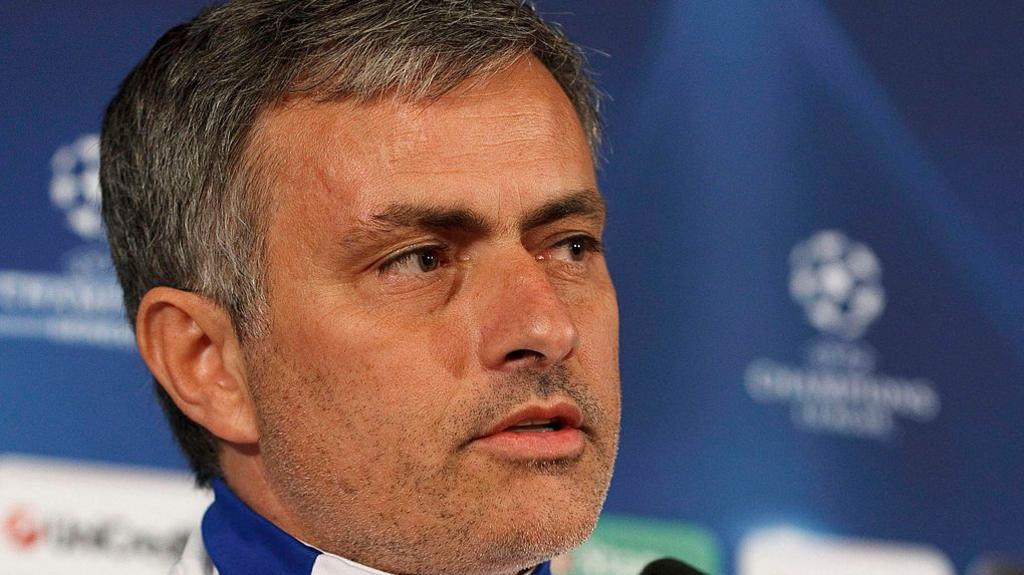
Real Madrid have confirmed the reappointment of Jose Mourinho as head coach.

The 63-year-old has agreed a three-year deal and will begin work when the squad return for pre-season training on 13 July.

Real Madrid have paid Benfica £13m (15m euros) in compensation to bring the Portuguese head coach back to the Bernabeu - some 13 years after his first stint at the club came to an end.

Florentino Perez had vowed to reappoint Mourinho as head coach if re-elected as club president earlier this month.

Perez, 79, who has been in office since 2009, beat challenger and renewable energy magnate Enrique Riquelme in the election by picking up 65% of the votes.

That cleared the way for the man who led Porto and Inter Milan to Champions League titles to rejoin a club who have won that competition a record 15 times.

Mourinho’s previous spell in Madrid, which began in 2010 and lasted three seasons, yielded a La Liga title, a Copa del Rey and a Spanish Super Cup.

He has since taken charge of Premier League clubs Chelsea, Manchester United and Tottenham Hotspur and had stints at Roma, Fenerbahce and Benfica.

During the only season of what was his second stint at Benfica, Mourinho led the two-time European Cup winners to an unbeaten Liga Portugal campaign, though it was only enough to secure a third-place finish.

Earlier this week, Benfica agreed a deal to appoint former Fulham manager Marco Silva as Mourinho’s replacement.

Mourinho, meanwhile, heads back to Real Madrid with the club having failed to win a trophy in the past two seasons.

They parted ways with Xabi Alonso in January before Alvaro Arbeloa led them through to the end of the campaign.

How Alvarez became Europe's most sought-after striker
Champions League

How Alvarez became Europe's most sought-after striker

By Staff Writer — 10 June 2026

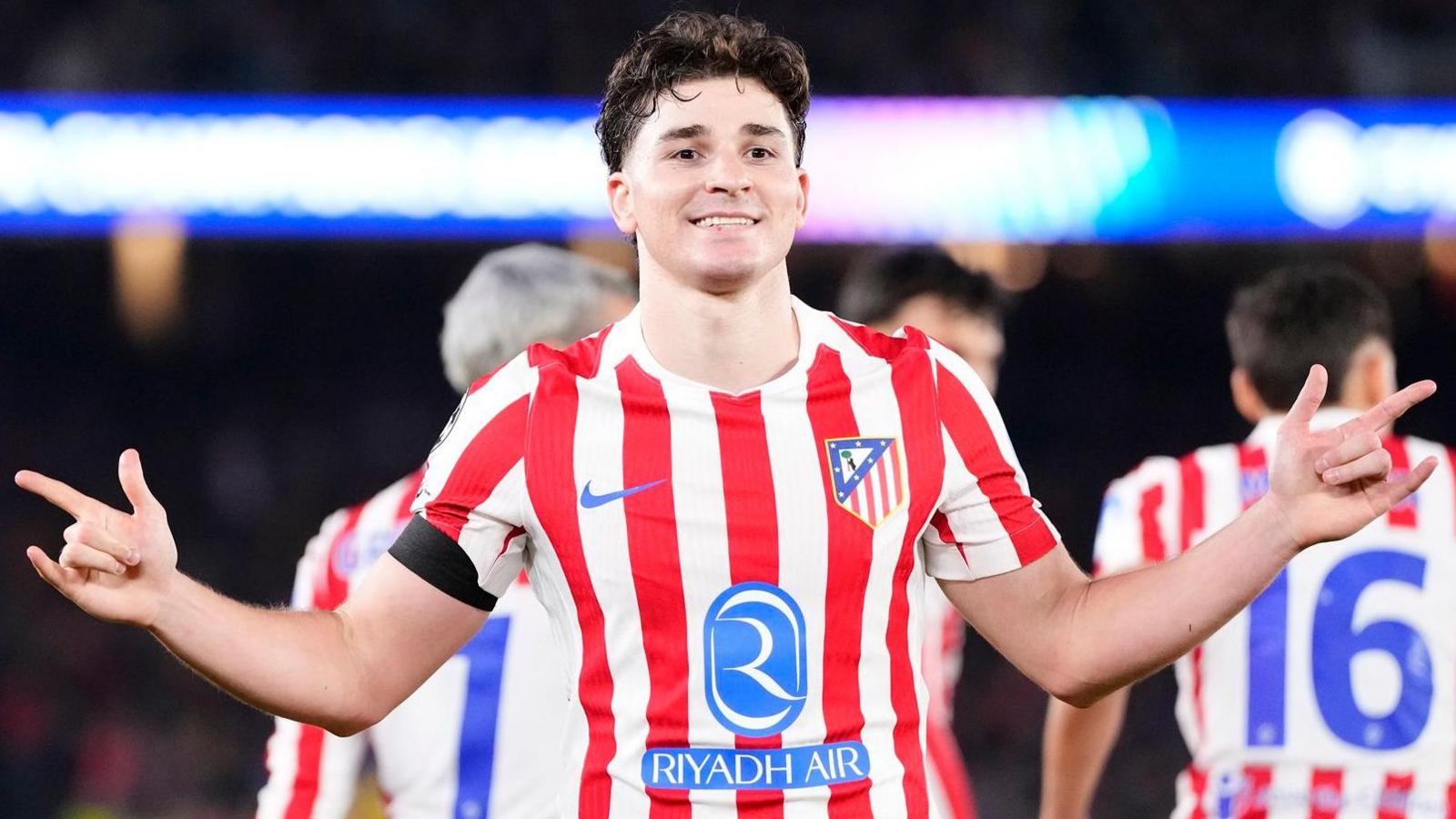
Julian Alvarez has scored 49 goals since joining Atletico Madrid

Julian Alvarez heads to the World Cup aiming to fire Argentina to back-to-back triumphs amid the distraction of being the subject of one of the most sensational transfer bids ever made.

The 26-year-old is at the centre of an intriguing three-way La Liga tug-of-war, with current club Atletico Madrid trying to keep hold of their prized asset while rivals Real and Barcelona attempt to snatch him away.

Real president Florentino Perez made good on his election promise to make a 150m euro offer for an unnamed “galactico” player who, it transpired, after much speculation, was Alvarez. But that astonishing bid was laughed off by counterparts across the city.

So why is Alvarez so coveted by the La Liga giants and is he worth the £130m Real have tabled?

Alvarez became a fan favourite during his two-year stay at Manchester City, where he won six major trophies and played a role in the Treble-winning team.

But the striker wanted to leave Etihad Stadium as he was unhappy at playing a deputy role to Erling Haaland, instead wanting to be the main man elsewhere.

Former City boss Pep Guardiola was always open in his view that wantaway players were free to leave, providing the asking price was met.

In August 2024, Atletico agreed an £81.5m deal to sign Alvarez, providing City with a hefty profit on a player they signed for only £14.1m and one that became their most expensive sale.

“There was never any kind of problem,” Alvarez said in a podcast last year. “I simply told him [Guardiola] how I felt - that I wanted more minutes in some matches where I knew I wouldn’t get them or simply wasn’t getting them.

“Of course he understood. Players always want more minutes, they want to grow, they want to play the big moments. And if I felt I wasn’t going to have them there, he gave me the freedom to choose my path.”

Alvarez scored 36 goals in 106 appearances for City, but could he kick on?

Atletico were always likely to lag behind Barcelona and Real in the La Liga title race. They finished third in 2025 and fourth last season.

Alvarez has managed 49 goals and 17 assists in 106 games at the club and received high praise from France great Thierry Henry who said on The Overlap: “One of my favourite number nines out there is Julian Alvarez.

“Putting pressure, playing alone, he can hold it up, he has played at the Olympic Games, Copa America and I didn’t hear him saying he is tired.

“The way he plays, I just like him.”

More importantly for the player, he has been given the opportunity by boss Diego Simeone to feature in the biggest games, something he so desperately wanted to do.

This season, Alvarez scored in the Copa del Rey final against Real Sociedad, which ended in an agonising defeat on penalties, and also in the first leg of the Champions League semi-final against Arsenal.

Simeone said in September: “Julian Alvarez is the best player we have, we need to take care of him and keep him for many years at Atletico.

“We have to help him be even better than he is.”

But Real have since come knocking.

When one of the most prestigious clubs in the world are after you, it usually proves too difficult to resist.

Alvarez’s former City team-mate Rodri said in March that “you can’t turn down the best clubs in the world” in referencing a potential move to Real, despite previously playing for Atletico.

It’s not only Real who have been looking to entice Alvarez - with suggestions yesterday’s bid was an attempt to outprice La Liga champions Barcelona, who have long been linked with a move for the player.

Last month, Atletico aimed a dig at Barca over their “smear campaign” in pursuit of Alvarez, while BBC Sport columnist Guillem Balague said talks had opened to sign the Argentine.

The flirtations have seen Barca and Spain defender Pau Cubarsi call Alvarez a “spectacular footballer”, a “world-class striker” and one with the “quality for Barcelona”.

Following Perez’s election victory, the 79-year-old made good on his promise but was mocked by Atletico, who turned down the offer and quoted Alvarez’s release clause of 500m euro (£430m).

In a statement, Real said: “Following the meeting of the board of directors held today, it has made an offer of 150 million euros to Club Atletico de Madrid for the federative rights of the player Julian Alvarez.

“After reviewing and evaluating the offer, Club Atletico de Madrid has expressed its gratitude for the proposal, made within the framework of the good relations between both clubs, and has rejected it, referring to the player’s release clause.”

Atletico quoted the Real Madrid statement on X alongside a series of laughing emojis.

In a subsequent post, they added: “You must have confused education with gratitude, but to leave no doubt: we don’t thank you for anything.

“We neither study nor consider any offer for Julian. How could we not get along, when you make us laugh even more than Barcelona does.”

Now Real are teetering on the edge of becoming a laughing stock.

Since the departure of Carlo Ancelotti at the end of last season, former midfielder Xabi Alonso lasted only 34 games, while replacement Alvaro Arbeloa managed only 21 matches.

They ended the campaign in unthinkable fashion, without winning a trophy and behind arch rivals Barcelona once again.

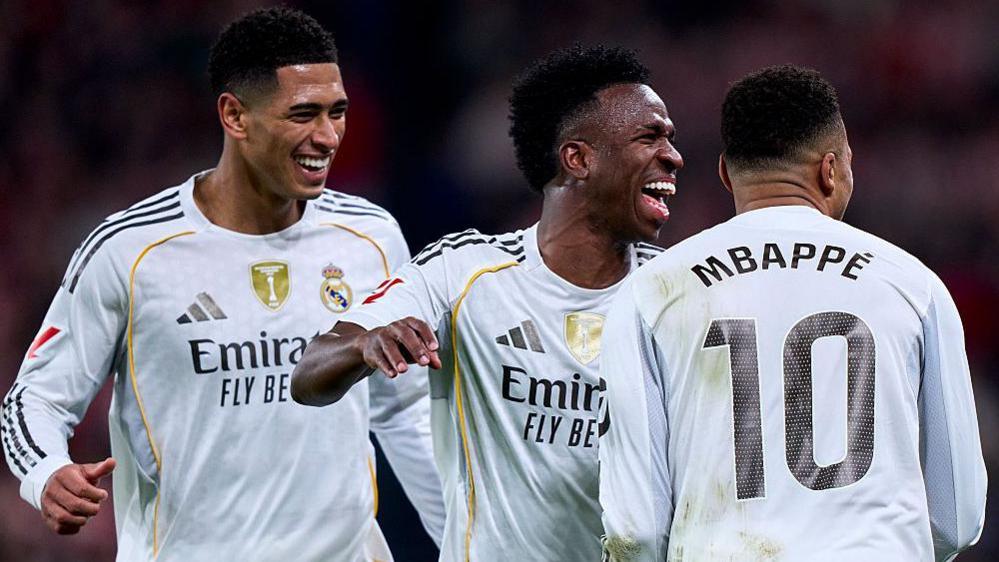
Perez has turned to Jose Mourinho in an attempt to turn around the fortunes of the floundering giants, who have world-class talent such as Kylian Mbappe, Vinicius Jr, Jude Bellingham and Trent Alexander-Arnold at their disposal.

Alvarez would add a work rate and unselfishness that has, at times, been seemingly missing from the current crop of Real stars.

After being rebuffed the first time, attention may now turn back to tempting the Argentine to lead the latest cast of ‘galacticos’ at the Bernabeu.

Silva agrees to replace Mourinho at Benfica
Champions League

Silva agrees to replace Mourinho at Benfica

By Staff Writer — 9 June 2026

Marco Silva and Jose Mourinho both had spells as players with Portuguese clubs Belenenses and Rio Ave in their homeland

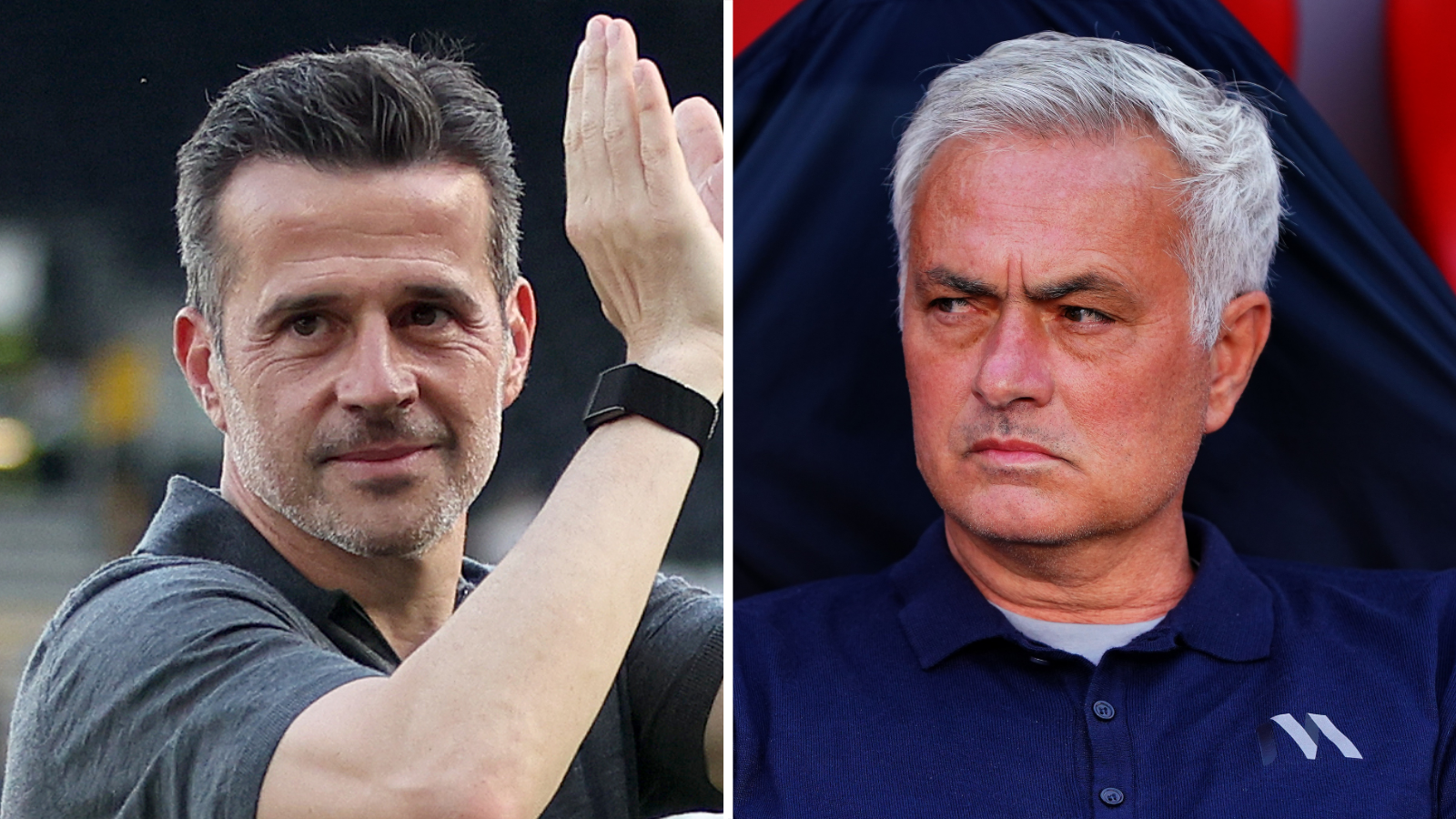
Marco Silva has agreed to become Benfica’s new head coach as the Portuguese club formalised Jose Mourinho’s departure for Real Madrid.

Silva, 48, ended his five-year stint as Fulham boss a week ago when his contract at Craven Cottage expired.

Benfica said they had “reached an agreement” with Silva who is set to sign a contract until the end of the 2027-28 season which can be extended to 2028-29.

Fulham were Silva’s fourth English club after spells in charge of Hull City, Watford and Everton.

Mourinho’s exit from Estadio da Luz was also announced, with Benfica saying Real Madrid will pay them £13m (15m euros) in compensation to bring the 63-year-old back to the Bernabeu.

“The coach [Mourinho] has given his agreement to this hiring,” added a Benfica statement.

“Thus ended Jose Mourinho’s second spell as manager of Benfica’s professional football team.”

Mourinho took charge of Benfica in September and led them to third place in the Primeira Liga this season as they went through the league campaign unbeaten.

In his previous spell in charge of Real Madrid between 2010 and 2013, the Portuguese won La Liga, the Copa del Rey and the Spanish Super Cup.

The pioneer in an unlikely World Cup team
Champions League

The pioneer in an unlikely World Cup team

By Staff Writer — 6 June 2026

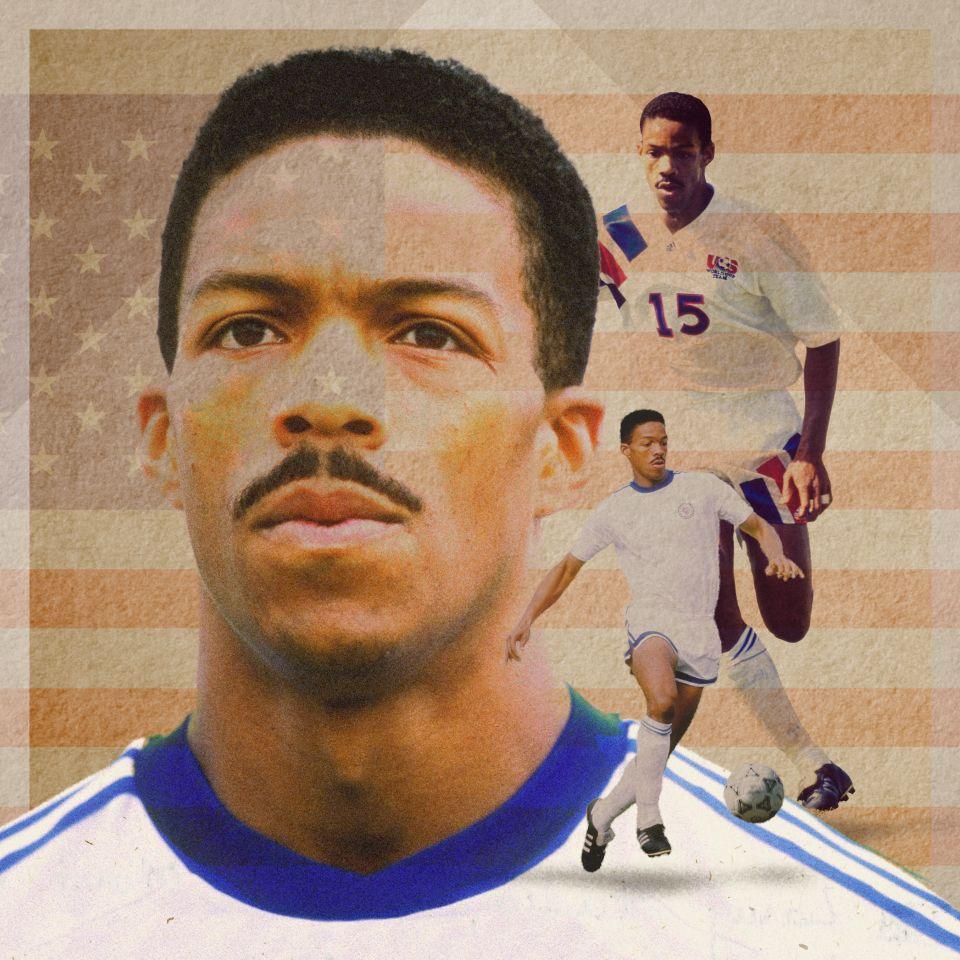
When Desmond Armstrong faced the media at the 1990 World Cup in Italy, the opening question he was asked wasn’t about the remarkable feat of the USA team reaching the tournament for the first time in four decades.

“Why aren’t you playing basketball?” was directed at Armstrong, then a 25-year-old defender, who was about to become the first US-born black player to represent the United States at a World Cup.

“There were no congratulations, or ‘how excited are you to be here?’” Armstrong tells BBC Sport.

“The stereotype was ‘you’re an American and you’re black, so you should be playing basketball’. Beyond the fact that Americans shouldn’t be here in the first place, why are you here?”

Days later, he would keep the prolific Italy striker Gianluca Vialli off the scoresheet in a brilliant man-marking display against the hosts at the Stadio Olimpico - a performance that marked a huge turning point for football in the United States and for Armstrong himself.

The ripples from that match in Rome are still being felt today.

Football came to Armstrong, via a television set, in suburbia. His family moved from the Southeast part of Washington DC when Armstrong was young and later settled in a largely white neighbourhood in Maryland, where he befriended a soccer coach’s son. One afternoon, the coach called Armstrong over to the television.

He was pointing to a Brazilian in a New York Cosmos jersey.

“It was Pele,” says Armstrong. “His movement reminded me of a lot of the point guards that played basketball, but he was doing it with a ball at his feet. He was one of the few black players on the team, so that connected me.”

While Pele was popularising a game he’d learned barefoot on the streets of Brazil, much of the American grassroots version was being built on privilege. Unlike the developing youth academies of Europe and South America, where clubs like Ajax and Barcelona were putting money into young talent, development in the US has long run on a pay-to-play model. Families must meet significant costs or seek sponsorship to give their children a shot at advancing - creating a system that has seldom favoured those from less affluent households.

“It’s kind of antithetical to what this game’s all about,” says Frank Dell’Apa, who has spent 40 years as the Boston Globe’s football columnist, covering the game since the days of the original North American Soccer League (NASL). “This is the simplest game with the easiest access. Everybody plays it around the world with no money, no soccer balls, no shoes. And here, we had just the opposite thing going on.”

Armstrong knows just how easily his story could have been different. “If my folks didn’t move into the suburbs, then hands down I’m not playing soccer,” he says.

The NASL going under in 1985 during Armstrong’s time as a college player limited professional pathways for him and his peers before their careers had even begun. “For me, personally, that was crushing,” Armstrong says.

He turned to the Major Indoor Soccer League to play professionally, where his performances earned him a US men’s national team debut in 1987, followed by a spot at the 1988 Seoul Olympics. “I remember being on the field, hearing the national anthem and just thinking ‘this is where I’m supposed to be’,” he says.

That same year, world football’s governing body Fifa had selected the USA to host the 1994 World Cup finals - the first time the tournament had gone to a country outside Europe or Latin America. They would be under the global spotlight.

“The US was not a factor in world soccer at all,” says Dell’Apa. “I remember Des playing a lot of games on artificial turf. It was hard for those guys. They had to fight to get into line-ups, to get a playing field, to get a stadium.”

With no elite outdoor professional league in the country, the player pool was a fragmented mix largely consisting of college, semi-pro and indoor players like Armstrong. The federation looked to work around this by securing a core group of them on full-time contracts, essentially turning the national team into the country’s professional set-up. It was an unorthodox approach, not unlike something from the Eastern Bloc playbook.

They appointed a German-Hungarian head coach named Bob Gansler. Armstrong was now among a group of young players who were handed a near impossible task: qualify for the 1990 World Cup in Italy.

It is Sunday, 19 November 1989 and the catchy staccato theme tune of ESPN’s SportsCenter plays out on American television. “We’ve got football news - we call it soccer - the rest of the world calls it football,” says anchor Bob Ley in an upbeat delivery to the camera.

The USA had secured a shock win over Trinidad and Tobago in Port of Spain to claim the final spot for Italia ‘90. So sure had the hosts been of progressing with a draw, their government had already declared the following day a national holiday.

“It was quite simply the most important soccer match the US has played for the last two generations,” Ley reads, having to spell out to American viewers the magnitude of the result.

Armstrong, who was watching from the sidelines because of an ankle injury, ran on to the pitch at the full-time whistle. “Everybody was going crazy,” he says. “We got there with no pro league in the country. Unbelievable. But everybody in America couldn’t care less.”

In 1990, racial tensions in America were on the rise. The 1989 murder of black teenager Yusef Hawkins by a white mob in Brooklyn had ignited protests and exposed a deep-seated oppression that foreshadowed the 1991 beating of Rodney King by white police officers, and the subsequent LA Riots.

Yet, black representation was cutting through the American mainstream - whether through Carole Gist making history as the first black woman to win Miss USA, or the explosive rise of hip-hop. As Armstrong recalls, artists like NWA and Public Enemy were “telling you the story of what was going on in our community through a medium that everybody was locked in on”.

Against this backdrop, Armstrong stepping on to the pitch in Italy was not just a sporting achievement. “For an African-American that started playing soccer at 12 years of age, to make it to not just the national team but the World Cup and start - you can’t even write that,” he says.

Frank Dell’Apa was at the Stadio Comunale in Florence when the US lost their first group match 5-1 to Czechoslovakia. “It was a real wake-up call for the US,” he says. “They had to realise tactically who they were and what they could do.”

That realisation would be tested at their next game against the hosts in front of a 73,000-strong crowd in Rome. The Italy side reflected Serie A’s formidable strength, featuring the likes of Franco Baresi, Paolo Maldini and Roberto Donadoni. The Azzurri even had the luxury of leaving Juventus’ world record signing, Roberto Baggio, on the bench. The Stadio Olimpico was expecting a blood bath.

Armstrong’s assignment: stop Gianluca Vialli. “Vialli was the man,” he says. “I’m going to be his shadow. I look across the field and we catch eye contact. In my mind I’m saying ‘you’re not going to get the ball’.”

A lone goal came in the 11th minute from Italy midfielder Giuseppe Giannini, and the blowout did not follow. Both Vialli and Salvatore ‘Toto’ Schillaci, whom Armstrong marked in the second half, failed to score.

“A very unimpressive Italian performance which will cause some indignation and some hostility in their press tomorrow,” said the BBC’s match commentary at full-time. It also praised the “plucky” display by the US, “who people thought had come to Rome as whipping boys but in fact have gone off the pitch with a very respectable score”.

Despite leaving the tournament after losing 2-1 to Austria in their final group game, the US had already laid the foundations for the future of American soccer. And for Armstrong, he got noticed as a defender.

The following year he spent two weeks training with Luton Town. The then First Division club were interested in signing Armstrong when he received a phone call from his agent asking if he wanted to go to Brazil. “Yeah, I want to be on the beach. I’m in England, it’s all grey skies and these guys drink tea at half-time. What club?” “Get me the plane ticket.”

Armstrong became the first American player to sign a professional contract in Brazil, where he would spend a single season with Pele’s former club. He sets the scene of the media converging on him after getting off the plane. Though he didn’t realise it in the moment, the man interpreting for him was Edinho, a goalkeeper at the club - and Pele’s son.

When reporters asked how he would communicate without speaking a word of Portuguese, Armstrong replied: “I guess I’m going to have to smile.” He had no idea the interview was being broadcast across the country and when he walked into the Santos dressing room, every one of his new team-mates had huge grins on their faces in response.

Armstrong bursts into laughter at the memory. “It was the highlight of my career because I used to watch Pele, the master in his method. Just a wonderful, wonderful experience.”

Following a season in a semi-professional US league, Armstrong ended his playing career in 1996 at the age of 31 to transition into coaching.

You can’t talk about Desmond Armstrong without mention of Jimmy Banks - or “Gee” as Armstrong affectionately calls him. Banks was the only other black player in the squad, and although he didn’t feature in the opener at Italia ‘90, he started in both remaining group games as the US looked to strengthen their backline.

Banks was diagnosed with cancer and died in 2019 aged 54, but memories of being room-mates in Italy and going to Janet Jackson concerts together are still vivid. “I’ve a lot of love towards him and our time together,” says an emotional Armstrong.

The pair met as 15-year-olds in a tournament. Both spotted they were the only black players on their teams and exchanged jerseys, becoming friends with a shared ambition of making the national team. And when they both went into coaching, they made sure their teams played each other.

Not far from the country music playground of downtown Nashville, Armstrong loads his pick-up truck with footballs and sets off for the melting-pot neighbourhood of Antioch. Wherever he stops, he is met with a pound hug. At the Kurdish cafe, it’s “Galatasaray” and “Amedspor”. At the petrol station, the Egyptian and Iraqi attendants want to talk about Mo Salah. Football is the common language here.

Through his grassroots club, he has made it his mission over the past 14 years to bring football to the city’s immigrant-rich population - driving children to games, sourcing pitches and often funding kit and entry fees from his own pocket. “There are some really talented kids over here,” he says.

Now that he has joined forces with Armada FC, where he is the director of coaching, not only does Armstrong have access to dedicated facilities, but also a better location.

Since heightened activity from Immigration and Customs Enforcement (ICE) in Nashville over the last year - as part of the Trump administration’s immigration crackdown - Armstrong says members of the Hispanic community avoid travelling outside of Antioch, meaning some children had not been making it to games. “They don’t want to get pulled over in the car,” he says. “They want to drive in areas where they’re most comfortable and, in their minds, feel they’re not going to be harassed.”

At Armstrong’s youth programme, it has heightened a sense of community among parents, who set up group chats to co-ordinate lifts for children of fearful families. “If you don’t feel comfortable taking the kid out of town, we’re here,” says Maria, who is there to watch her younger brother play.

She is among a strong turnout of Hispanic family members, and a chorus of “vamos, vamos!” can be heard as they cheer on the children. “There are different cultures and it just brings us all together.”

For teenagers Abdi and Kylan, who were both scouted by Armstrong and credit him entirely for getting them into the sport, the former national team player’s pioneering status doesn’t fully register until they see photographs. “1990. Wow,” says Abdi, staring at the images of his coach in a USA kit. Kylan laughs at the retro styling: “He’s there with the tucked-in shirt. He doesn’t even have the moustache any more.”

Members of the current US team know exactly who Armstrong is, and one admiring player even has similar facial hair. “Look at you rocking that moustache, dude,” Armstrong says on a video call.

Some 4,000 miles away, Chris Richards pops up on screen, laughing as he says: “I’m trying to bring the old school vibe back!” Aged 26, the Alabama-born Crystal Palace defender is a key member of the 2026 World Cup squad, which is the most diverse a men’s national team group has ever been.

“For people that look like us, it’s taken a while to get to this point, and you’re one of the pioneers of that,” Richards says.

The centre-back is on his own mission to broaden the reach of US youth development - “so that a kid like myself would never have to leave to chase the dream”. Although the rise of funded Major League Soccer youth academies has paved the way for him and US team-mates like Weston McKennie and Tyler Adams, Richards knows the path to professionalism is not straightforward for those outside the reach of MLS hubs.

“It’s expensive to play back home,” Richards tells Armstrong. “I’ve seen a lot of kids drop out of the sport because they couldn’t afford it. Without your contribution, your bravery, your courage, I wouldn’t be here, so I really want to give you all the flowers. Your generation was probably the least spoken about, but I don’t want you to ever feel like it goes unnoticed, because we very much feel our history and it started with you.”

The anatomy of a Golden Boot winner - and who could win it in 2026?
Champions League

The anatomy of a Golden Boot winner - and who could win it in 2026?

By Staff Writer — 3 June 2026

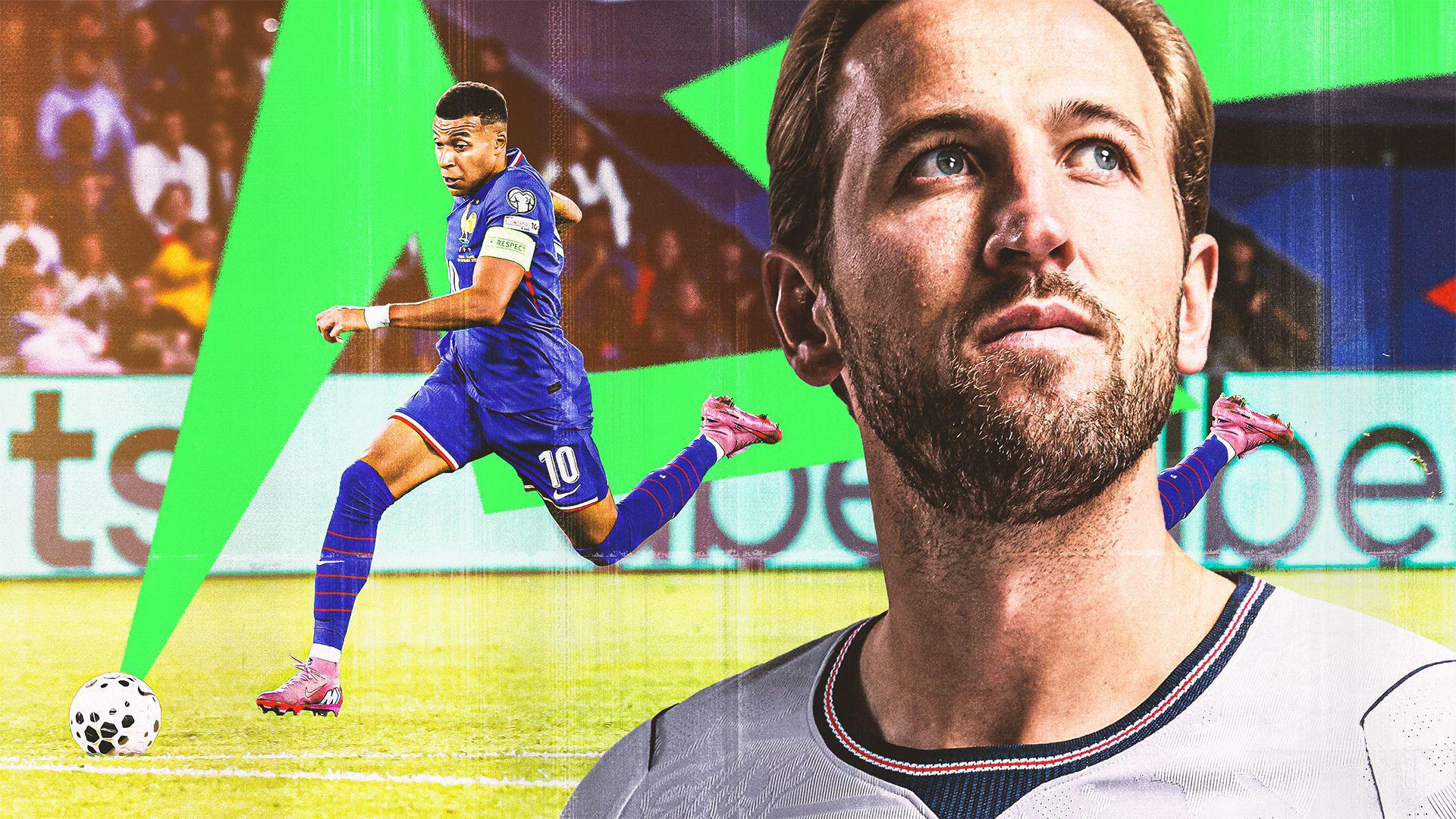
Kylian Mbappe and Harry Kane are both bidding to become the first player to win the Golden Boot twice

Kylian Mbappe couldn’t smile as he collected his Golden Boot trophy at the end of the 2022 World Cup.

France had lost the final, even though he had scored a hat-trick. Goals do not guarantee prizes, but a prolific striker gives his team a chance.

With the next edition of the world’s biggest football tournament imminent, we look at the common attributes of Golden Boot winners and examine some of the leading candidates to finish as the top scorer in 2026.

The Golden Boot was claimed by Oleg Salenko (left) in 1994, Harry Kane (middle) in 2018 and Davor Suker (right) in 1998

Some bad news for Harry Kane - history suggests it is unlikely the 2026 Golden Boot will be won by somebody aged 30 or above.

It has only happened once, when Davor Suker scored six goals aged 30 at France ‘98 as Croatia took third place in their first World Cup since gaining independence.

Suker is the exception to the rule. On average Golden Boot winners are 24.7 years old. Mbappe brought the average slightly down in 2022, the 24-year-old beating 35-year-old Lionel Messi’s tally by just one goal.

The record for the youngest player to claim the Golden Boot - which 18-year-old Lamine Yamal might have eyes on - is held by Hungarian Florian Albert, who was one of six joint-winners at Chile 1962 at 20 years and eight months old.

A successful striker needs two things - a good supply line and for their team to progress deep into the tournament. It is not surprising, therefore, that five-time winners Brazil have provided six of the tournament’s most prolific strikers.

Their first Golden Boot winner was Leonidas in 1938 and their latest was Ronaldo in 2002.

A prolific group stage is a good start for Golden Boot hopefuls, but if your team do not make progress in the knockout stages, you are at a huge disadvantage.

That was the fate of Cristiano Ronaldo at Russia 2018. He scored four Group B goals before Portugal exited in the last 16, while Kane scored six times as England got to the semi-finals.

There is an exception though - Oleg Salenko at USA ‘94. His work was done by the time he got on his flight home after Russia failed to progress from Group B, because he bagged five in a 6-1 thrashing of Cameroon and his six goals overall secured the boot for him.

Thomas Muller had never scored for his country before he landed in South Africa for the 2010 World Cup.

“I basically got lucky, I hit form at just the right time,” Muller said as he left with the Golden Boot.

In the 2009-10 Bundesliga season, Muller expected to be sent out on loan or possibly even sold by Bayern Munich. However Louis van Gaal then arrived at the club and he suddenly became a regular.

Muller scored 13 goals and provided 11 assists as he played every game of Bayern’s league-winning campaign, thus arriving at the World Cup in prime form following a successful club season.

His story is a familiar one among Golden Boot winners. Only twice has a player from a club that finished outside their domestic top four finished as the World Cup’s top scorer.

Muller beat more experienced players to the prize in 2010 - by a whisker.

The 20-year-old and Diego Forlan of Uruguay scored a goal apiece in the third-place play-off to tie David Villa of Spain and the Netherlands’ Wesley Sneijder on five.

Villa and Sneijder had the chance to claim the boot in the final in Johannesburg but neither found the net and the quartet had to be separated by the number of assists they had provided.

Muller’s tally of three proved decisive.

And if you’re wondering what happens if players are tied on goals and assists, Fifa awards the Golden Boot to the man who has played the fewest minutes.

No-one has won the World Cup Golden Boot more than once - but two men have a good chance to become the first to do so this summer.

Mbappe scored four goals in World Cup qualifying and as one of the strongest squads in the tournament, it is likely that 2022 finalists France will reach the latter stages of the competition.

Another striker seeking a historic second boot is Kane. At 32, he is as we know significantly older than the average winner - but with 54 goals for his club this season, Kane is no average player. If Thomas Tuchel’s side go deep into the tournament, Kane is surely certain to score his fair share.

Messi has claimed plenty of personal accolades in his career, but there is a Golden Boot-shaped gap next to the eight Ballon d’Or trophies in his cabinet. Aged 38, the 2026 tournament is his final chance.

At the other end of the age scale, Lamine Yamal will turn 19 the week before the final. Spain have not progressed beyond the round of 16 since their 2010 tournament win, but Luis de la Fuente’s men showed they have the mettle to go the distance at Euro 2024 and were impressive in qualifying.

Premier League Golden Boot winner Erling Haaland has scored 26 league goals for Manchester City this season but his bid for the boot might depend on how long Norway stay in the tournament. Haaland scored 16 goals in eight qualifying games.

The only player to have scored more than 100 goals for four different clubs and on the back of a successful season in Saudi Arabia, Ronaldo will have his sights on the Golden Boot at the age of 41.

Portugal’s record of just one World Cup knockout win since 2006 does not bode well, but theirs is a strong squad - including assist king Bruno Fernandes - and there is every chance they could reach the latter stages.

Amid a chaotic Real Madrid season, 25-year-old Vinicius Junior scored 21 goals and assisted 14 times across all competitions. But after finishing fifth in Conmebol qualifying and with a squad that is still relying on older players, Brazil might struggle to give Vinicius the platform for a Golden Boot challenge.

Ousmane Dembele did not enjoy the same outstanding season as 2024-25, but still managed to score 19 times in all competitions for Paris St-Germain. France have a breathtaking array of attacking options but Dembele is likely to be a regular and could easily compete with compatriot Mbappe for the boot.

Argentina could have two more challengers in addition to Messi, with Lautaro Martinez and Julian Alvarez both strong candidates. Martinez scored the winner in the final and earned the Golden Boot with a five-goal haul at Copa America 2024 while Alvarez is one of Europe’s most coveted strikers after a fine season with Atletico Madrid.

Those are the more predictable candidates, but do not be surprised if there are some surprise bids for the boot.

Euro 2024 final match-winner Mikel Oyarzabal scored in all but one of Spain’s World Cup qualifying games and struck 15 La Liga goals this season. Injuries permitting, he will have Lamine Yamal and Nico Williams providing him with plenty of chances.

Could Alexander Isak benefit from being fresh after an injury-hit season with Liverpool and shine for Sweden? Or might his compatriot Viktor Gyokeres be a candidate?

Raphinha has also had a season disrupted by injury but is a serious attacking threat and will likely play in Brazil’s forward line alongside Vinicius and Igor Thiago, another potential boot winner.

Michael Olise will go into the tournament after a season comprising 22 goals in all competitions for Bayern. Although he is principally an assist machine, with 30 for the German champions this season, France will create so many chances that he could be a boot contender too.

Finally, what about another relative veteran, Romelu Lukaku? Belgium have got lots of creativity in their team and the Napoli forward can be unplayable at times, so is the sort of player who could have one prolific group game then adds a goal or two more in the knockout stages.

Stick or twist for Arteta - keep to the formula or refine Arsenal style?
Champions League

Stick or twist for Arteta - keep to the formula or refine Arsenal style?

By Staff Writer — 31 May 2026

Arsenal are fresh from Champions League final heartbreak but there is no time to wallow.

Sunday’s Premier League title celebrations in north London may have refocused minds on next season’s missions, when they will aim to stay at the top of the English game and go a step further in Europe.

Defeat by Paris St-Germain in Budapest on Saturday night came only on penalties, but Arsenal’s limitations against opposition of the highest class were evident before the spot-kicks.

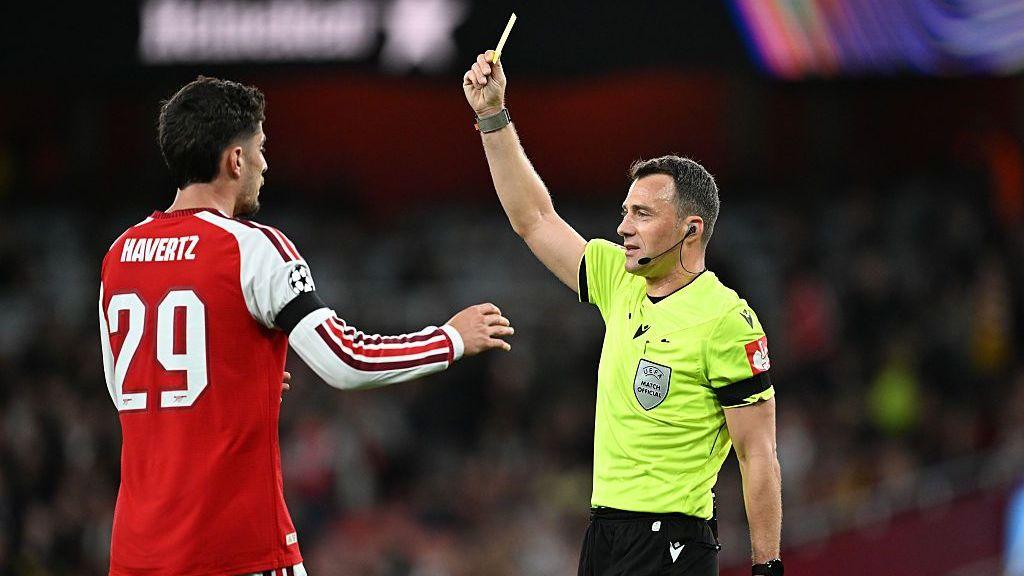
The Gunners had less than 25% of possession, and Kai Havertz’s early opening goal was their only shot on target in 120 minutes of football.

After the game, PSG midfielder Joao Neves said Luis Enrique’s side had been “the only one who wanted to play”.

Former Arsenal defender and Premier League winner Matthew Upson told BBC Sport that Havertz’s early goal killed the game in one sense.

“Had it been 0-0 throughout the first half, I think you might have seen a slight difference in Arsenal, but once you get that goal naturally you just slightly slip into protection mode,” Upson said.

“Every team does it and obviously PSG then dominated the ball, but the possession stats are pretty scary really for a final with two teams who are the best around. To have a 75-25% difference in possession is almost unheard of really in a Champions League final.”

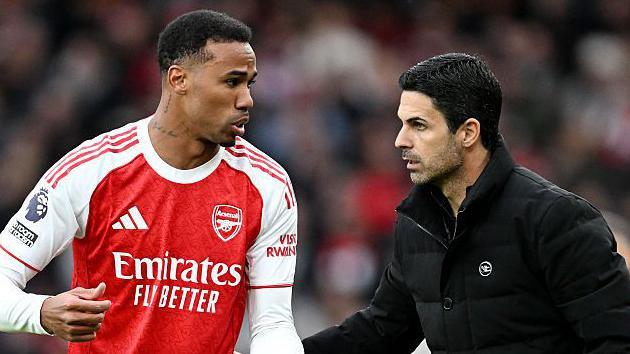
Arsenal manager Mikel Arteta described PSG as “the best team in the world”.

He said it was their prowess that dictated Arsenal’s style.

He also hinted that his side could look to emulate the French side’s style of play in the future.

“What they are able to do with the ball, with individual actions, I haven’t seen it,” Arteta said.

“It’s not the plan to play in certain areas when you don’t have the ball, but they force you to do that.”

So does the Spaniard need to refine his style for next season to push Arsenal to the next level, build up their possession numbers, and keep challengers at bay?

Or will we see more of the same Premier League title-winning formula from the Gunners?

PSG played 885 passes during the final, more than three times the 285 Arsenal managed.

After Havertz’s early opener, the Gunners defended deep to protect the lead with their world-class backline keeping them in the game.

Despite winning a first Premier League title in 22 years, Arsenal have been criticised for their style of play throughout the season because of their threat from set-pieces and a perception they lack creativity from open play.

The number of wins by single-goal margins over the campaign also drew attention, although it is worth noting Arsenal took the title by seven points from Manchester City and with a league-leading goal difference.

Upson believes that when pressure ramped up in the run-in, Arteta reverted to a more conservative style.

“If you looked at the performances from August to December, I think you see a different Arsenal team,” Upson said. “He notably switched to more of this type of style from January onwards.

“It’s become really notable. I cast my mind back to the games in September or October and it was slightly different football, much more possession-based. Those buzzy little triangles between Saka, Odegaard, Rice, and whoever the full-back was on the edge of the 18-yard box was really good, entertaining football to watch and they were trying to control the game in that sense.

“As time has gone on and maybe the pressure has built, they have fallen back on the reliable side. It’s worked and it’s been the right choice because they have won the Premier League.”

Across all competitions, Arsenal won 20 games by a single-goal margin.

Arteta has spent more than £900m on signings since taking over as Arsenal manager in 2019. Although he has transformed the club from where he found it, some have questioned whether Arsenal should be playing a more attractive brand of football by now.

With his side having got over the psychological block of winning the Premier League title, now could be an ideal time for Arteta to make a style switch, even if adjusting a winning formula brings with it the element of a gamble.

Defeat by PSG brought about Arsenal’s second moment of misery in a major final this season after the Gunners lost to Manchester City in the Carabao Cup at Wembley in March, with Arsenal only having 38% possession on that occasion.

Arteta’s team were the second highest scorers in the Premier League with 71 goals, only behind runners-up City who scored 77.

Taking all competitions into account, Arsenal scored 76 open-play goals across the season. Some 22 of their 30 goals in the Champions League came from open play.

But Arsenal only scored more than one goal in two of their final 14 games in the campaign.

Arteta perhaps gave a hint about what he may need to do this summer for Arsenal to become both more easy on the eye and capable of lifting Europe’s top club trophy.

“We need to do better, we have to improve and find different margins to get the outcome that we want,” he said.

Arteta has turned Arsenal from ‘nearly men’ to English champions, a major step that could be followed by moves to change the approach in attacking areas.

“He alluded to that after,” Upson told BBC Sport when asked if a forward line change is needed.

“His comments were more based around ‘we need to be a little bit more PSG-like’ - and I understand that. That’s difficult to achieve with the structure that he’s got in place, but you can certainly tweak that because ultimately it’s a numbers game.

“If you only have the ball for 25% of the game, you’re going to be defending a lot.”

David Raya, Gabriel Magalhaes, William Saliba and Declan Rice have been Arsenal’s standout players this season, which shows that the Gunners’ excellence has been in their backline and defensive areas.

No Arsenal forwards were included among nominees for the Premier League’s Player of the Season award.

Arsenal have monitored Atletico Madrid striker Julian Alvarez, who has Premier League experience from his time at Manchester City.

Even though Viktor Gyokeres scored 21 goals in all competitions in his first season with Arsenal, that could be an area that can be strengthened.

Arsenal are also looking to strengthen on the left wing, and Arteta said that he and the club will “start to make some very important decisions if we want to reach another level”.

There will be an examination of whether Arteta’s current group of forwards are capable of adapting style. Some are eminently capable.

“I think [Bukayo] Saka will be in that bracket,” Upson said. “[Leandro] Trossard is very good with the ball. Technically he’s an excellent player.”

Upson also pointed to the full-back roles, and how attacks can be launched from those positions.

“I saw that last night with the PSG team, how important the full-backs are in how they’re willing to go the other way and be real catalysts for those attacks,” Upson said.

“So I think that’s another interesting feature, but I think they’ve got the players [at Arsenal]. I think they’ve got really good technical players, top level players with the ball.”

Arsenal beat Atletico Madrid, Bayern Munich and Inter Milan on their way to the Champions League final.

It was a terrific feat and to take PSG to penalties was commendable, but Upson believes the Gunners need to show more on the ball if they are end their wait for Champions League glory.

“Manchester City, Bayern Munich, Atletico Madrid, Barcelona, PSG - you’re going to come up against two or three of these throughout the tournament in the need to win it,” Upson said.

“That’s going to be difficult over two legs if you’re not going to have a little bit more possession. For me, that could be a feature that you see from Arsenal next season.”

Arsenal 'pain' will fuel fire after Champions League heartbreak
Champions League

Arsenal 'pain' will fuel fire after Champions League heartbreak

By Staff Writer — 30 May 2026

That was the first word out of Mikel Arteta’s mouth in his post-match news conference when asked how he would sum up the Champions League final defeat to Paris St-Germain in Budapest.

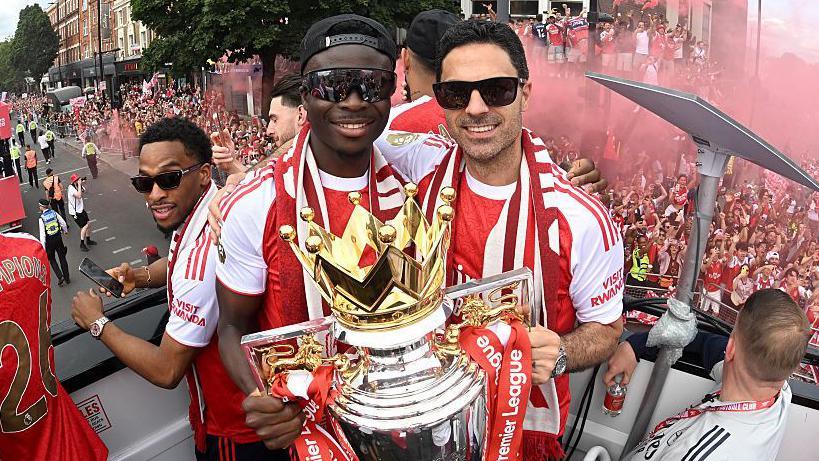
On Sunday, Arsenal will get on an open-top bus parade to celebrate their Premier League title, less than 24 hours after their final heartbreak.

The Gunners, who were unbeaten in the Champions League this season heading into Saturday’s final, missed out on becoming European invincibles with their penalty shootout defeat.

Arsenal are hurting but they will fly back from Hungary early on Sunday before joining their fans to celebrate a season to be proud of.

Before the game manager Arteta said he wanted to use the Premier League success as a platform to reach bigger destinations and to aim for more silverware.

But unfortunately, his side fell at the final hurdle in their pursuit of a first European trophy, in their first final in the competition since 2006.

Arsenal produced a battling display but lacked attacking quality as PSG dominated with 75% possession and eventually won on penalties as centre-back Gabriel skied his penalty in the shootout.

The Gunners have still had an excellent season, winning the Premier League for the first time in 22 years, but could the manner of the defeat be what pushes Arsenal on next season?

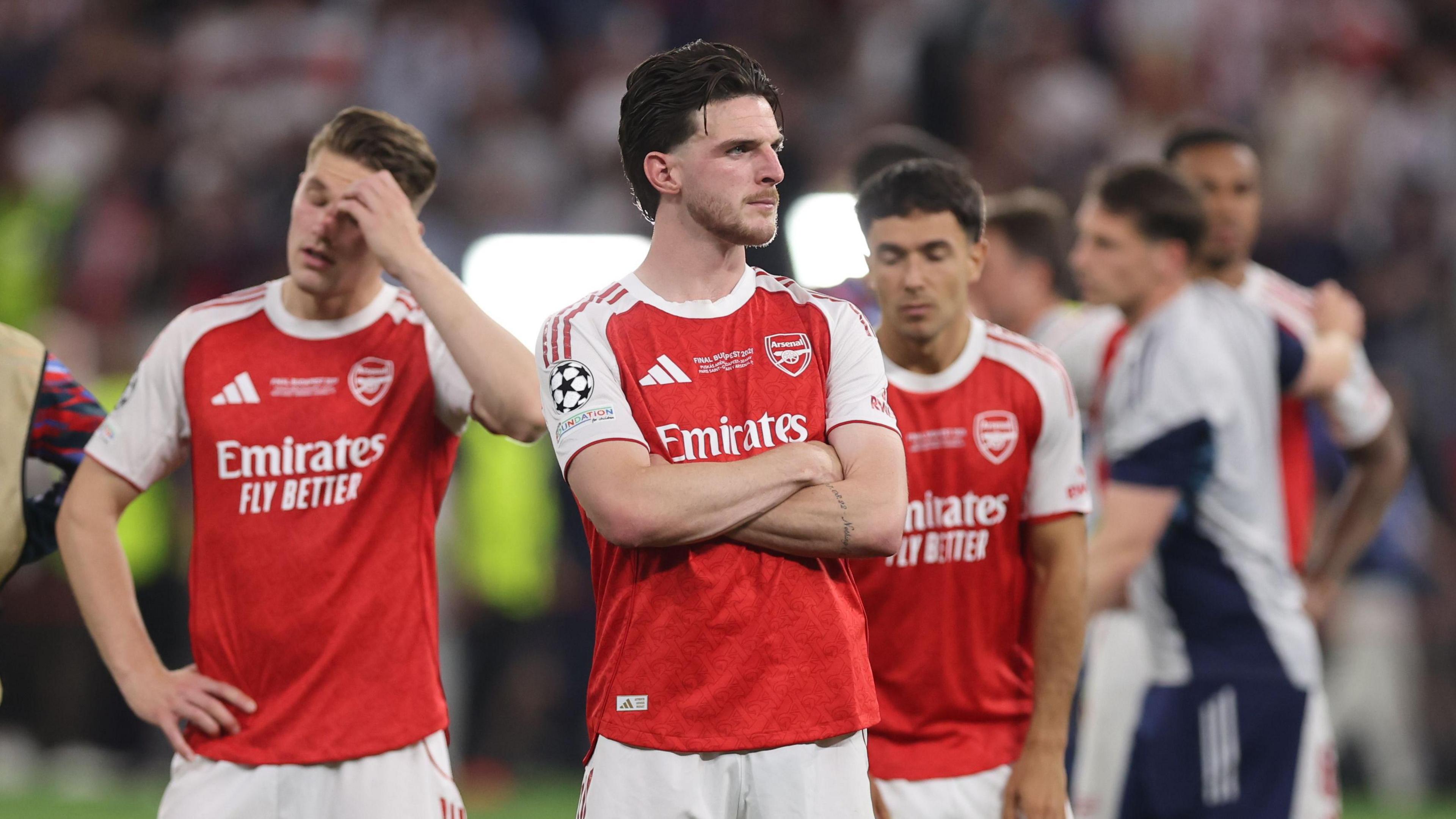
The Arsenal manager and players understandably looked dejected at the full-time whistle.

“It is very tough to accept when you are so consistent all the way to the final and in the end you lose the trophy on penalties,” Arteta said, before mentioning the decision not to give Arsenal a penalty in the second half when Noni Madueke tangled with Nuno Mendes.

“I watched all the penalties in the competition in the last 72 hours to understand what a penalty is and what is not, and that easily can be a penalty,” said the Spaniard.

“But it is if, if, if. It is not what happened.”

“We need to do better, we have to improve and find different margins to get the outcome that we want.”

Arteta has already turned his mind to next season and helping Arsenal return to this stage.

“First of all I will take a few days with my family and they will start the process to review what we’ve done,” he said.

“We’ll start to make some very important decisions if we want to reach another level.”

“And we’re going to have to show that ambition because we are more than capable of doing it, but it’s going to demand us to be very ambitious, very fast and very smart.”

Arsenal spent around £250m in last summer’s transfer window and they look set to invest again, with a midfielder, left winger and striker all targets this summer.

“They are 100% not going away,” Nedum Onouha told BBC Sport.

“They have shown this season and last season that they are good enough to go deep in the Champions League.”

“Even though they have lost they are still one of the best teams in Europe.”

Arsenal have played the most games in European Cup/Champions League history without winning the trophy (226).

Arsenal will celebrate their Premier League title win on Sunday in front of their supporters in north London.

“If you’d offered them at the start of the season - that they would win the Premier League title and lose the Champions League final by a penalty kick, then it is not a bad season, it is a great season and I mean a really great season,” Pat Nevin told BBC Sport.

“Let’s remember they have lost tonight but they are the Premier League winners,” Onouha added.

“They have got their parade to look forward to and I don’t think there will be any fewer people turning up tomorrow just because they have lost the Champions League final.”

“I think the club is in a great position, the manager has been there for many years now and he has a bunch of players who are still very very hungry, even though they have been successful.”

The review of the Arsenal squad will come in the summer but this team has progressed so much from the one that Arteta took over in 2019.

Bukayo Saka is the last player left from that squad and Arteta said it has been a “joy” to share this season with his players and staff.

Arsenal have looked at how they could generate money in the coming transfer window by potential player sales.

There is also a group of exciting youngsters, including 19-year-old Myles Lewis-Skelly - who started in Budapest - Ethan Nwaneri, 19, and 16-year-olds Max Dowman and Marli Salmon who could emerge as first-team regulars in the coming seasons.

“It is cruel for Arsenal fans, but it is inevitable that this club win the Champions League,” European football expert Julien Laurens said on 5 Live.

“Mikel Arteta will see the positives because that is the kind of guy he is. Arsenal are getting closer and closer.”

And for Arteta, despite the pain, says he is ready to celebrate what has been a big step for his Arsenal side.

“I already know how they [the fans] feel about the team. I want to thank them for everything they’ve done for us throughout the season.”

“Difficult moments like this, they’ve been with us. It’s been a joy to see the reaction they’ve had when we’ve been able to win a league after 22 years.”

“It hurts a lot for them not to win it today because I can’t even imagine what would have happened.”

“We all had a huge desire to win it and tomorrow we’ll have a great day, I’m sure.”

Budapest police investigating fan brawl
Champions League

Budapest police investigating fan brawl

By Staff Writer — 30 May 2026

The game between Paris St-Germain and Arsenal kicks off at 17:00 BST at Puskas Arena

Police in Budapest are studying camera footage to identify supporters fighting before Saturday’s Champions League final between Arsenal and Paris St-Germain.

A police statement said the incident occurred in the early hours of Saturday morning.

Footage emerged on social media showing what was said to be about 30 supporters of each club brawling and lighting flares.

“Several fans got into a fight on May 30, 2026, at around 00:20 in Budapest’s 7th district, on Kiraly Street,” a police statement said.

“The BRFK 7th District Police Department has initiated proceedings against unknown perpetrators for the crime of gang violence, within the framework of which the camera recordings are also being analysed.”

Nearly 4,000 police officers will be deployed across the Hungarian capital for the Champions League final, with tens of thousands of fans expected to travel to Budapest without tickets.

On Tuesday, Hungary’s deputy national police chief Zoltan Janos Kuczik said: “This will be the largest single-day police deployment in Hungary’s history.”

It was described as a “high-risk event” with security preparations beginning more than a year ago.

Two Portuguese and a British man were arrested on Friday following a fight at the Champions League fan festival site and charged with disorderly conduct.

Police said a British man who climbed on to the roof of a parked car and damaged the vehicle was also arrested.

'He wanted to take it' - Gabriel's first Arsenal penalty ends with heartbreak
Champions League

'He wanted to take it' - Gabriel's first Arsenal penalty ends with heartbreak

By Staff Writer — 30 May 2026

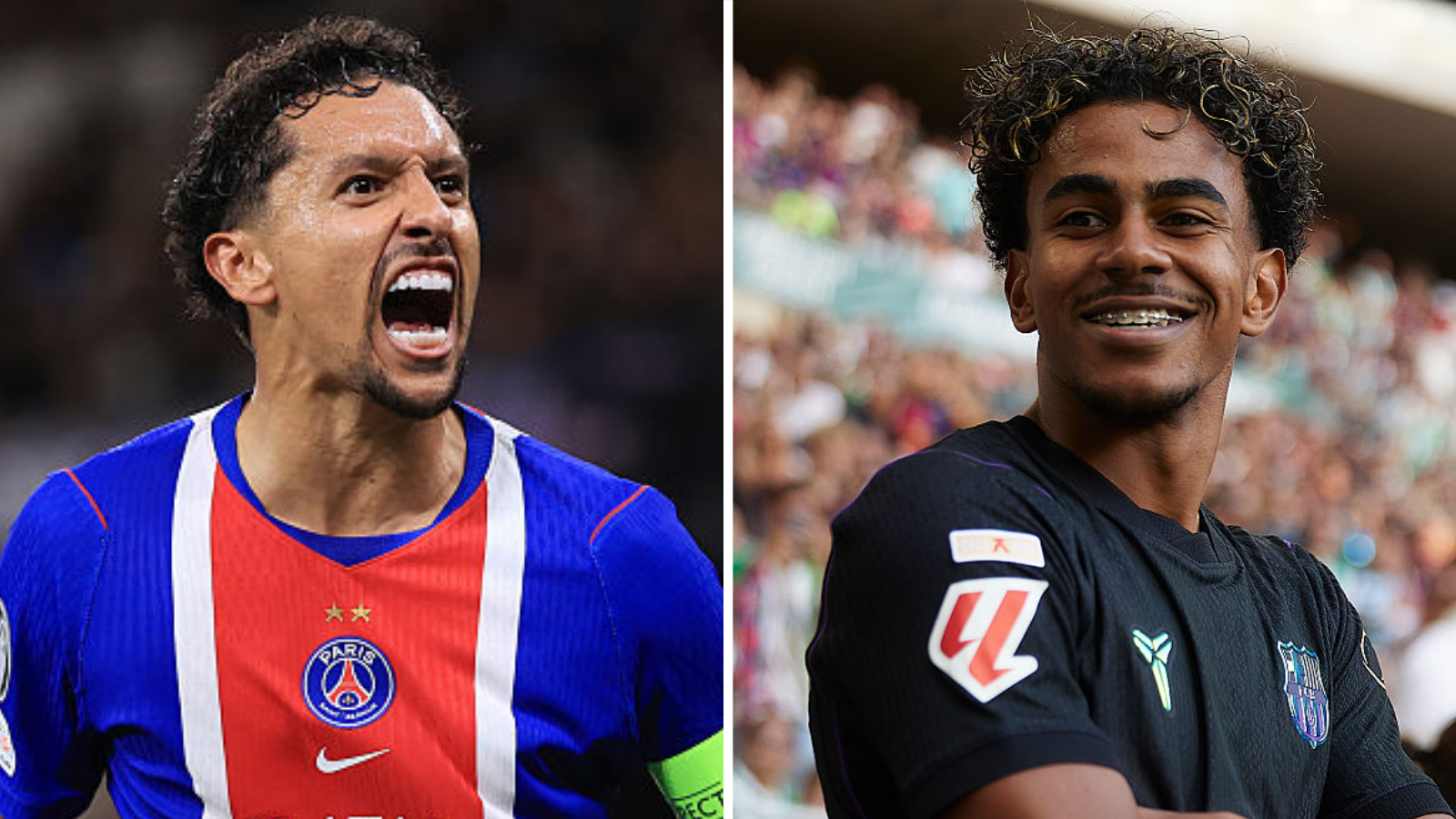
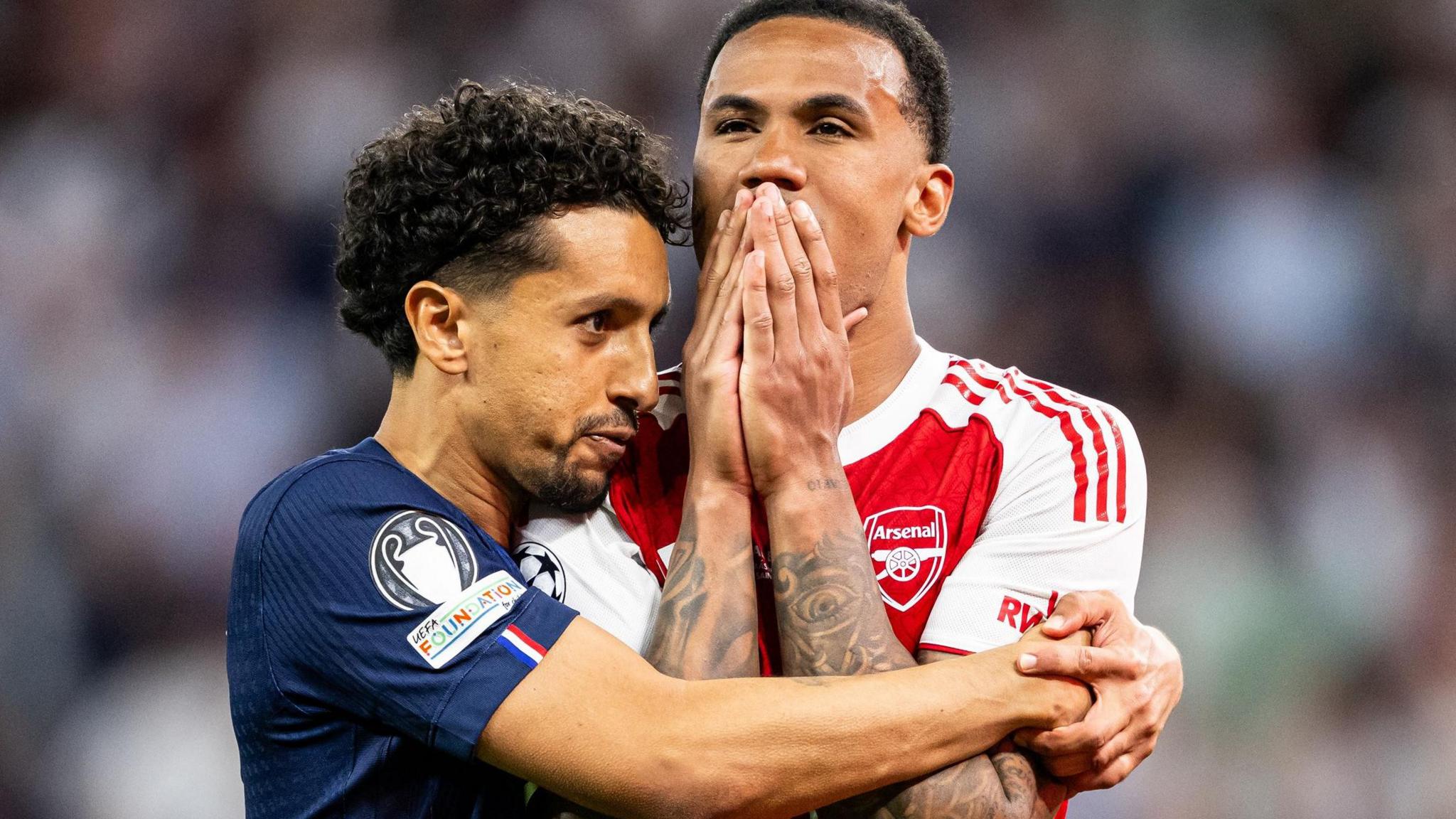
The defining image of Arsenal’s Champions League final defeat was Gabriel standing with his head in his hands as he was consoled by Paris St-Germain captain and Brazil team-mate Marquinhos.

It was a cruel end to the defender’s first European final. His penalty, blasted over the crossbar, proved decisive as the Gunners suffered shootout heartbreak and PSG successfully defended their title.

For a player who has so often been Arsenal’s difference-maker this season, it was not the contribution he would have envisaged before the club’s first Champions League final since 2006.

It was the first penalty Gabriel had taken for Arsenal, with manager Mikel Arteta revealing the defender had “prepared and trained for this moment”.

“He wanted to take it,” Arteta said. “Normally the penalty takers would be Bukayo [Saka], Martin [Odegaard] and Kai [Havertz]. But we knew if the game went to extra-time and penalties, different players would have to step forward.”

It was a painful way for one of Arsenal’s standout performers of the season to bring his campaign to a close.

Speaking on BBC Radio 5 Live, former Arsenal defender Matt Upson called it “one of those John Terry moments”, referring to the 2008 Champions League final when the Chelsea captain had the chance to win the final in a shootout, but slipped as he struck the ball, which hit the post as Manchester United went on to claim the title.

It was a night that began so brightly for Arsenal.

When Kai Havertz smashed the ball high into the roof of the net over Matvey Safonov inside six minutes, their supporters were in dreamland at the Puskas Arena in Budapest.

And despite dominating possession, PSG were unable to fashion many clear chances for their feared front three of Khvicha Kvaratskhelia, Ousmane Dembele and Desire Doue, with Arsenal’s defence largely keeping them under control.

At the heart of that was Gabriel. The defender made more clearances than any other player on the pitch (13) as the Gunners chased the rare feat of a Premier League and Champions League double - achieved only by Manchester United (1999 and 2008) and Manchester City (2023) since 1992.

But after Dembele equalised from the penalty spot, the contest became a must-not-lose affair for both sides, with neither keeper seriously tested as the tension rose in Hungary and the game drifted towards a shootout.

There was an early advantage for PSG when Eberechi Eze stroked his penalty wide after a stuttering run up, but Gunners keeper David Raya responded by saving Nuno Mendes’ effort.

However, after four successful kicks, there would be no reprieve for Gabriel who fired his penalty over the crossbar and into the delirious PSG fans.

“To miss a penalty in a Champions League final, obviously it’s not nice,” Arsenal midfielder Declan Rice said on TNT Sports.

“But we love them and we’re with them. It happens in football. They’re not going to be the last players to miss penalties in finals.

“Everyone has missed a penalty and without those two this season we wouldn’t have won the Premier League, that’s for sure.

“Gabriel, I’ve run out of words for him as a person and as a player. Eze has scored some crucial goals for us this season.

“It happens. It’s football and it’s cruel. We take the positives and keep going.”

The sight of Gabriel wiping away tears as PSG’s players celebrated with the trophy will be one that lingers long in the memory of Arsenal supporters.

The Brazilian, one of Mikel Arteta’s first signings after taking charge in December 2019, has been a driving force behind the club’s rise back to the summit of English football and their Premier League title triumph this season.

He started 48 of Arsenal’s 63 matches across all competitions and contributed nine goals and assists - more than both Martin Odegaard and Gabriel Jesus.

While rival fans may focus on his miss in Budapest, Arsenal supporters will remember the countless occasions he delivered for his side, including a dramatic 96th-minute winner against Newcastle United in September.

“I’ve just listened to Declan Rice talking about how he has run out of words to describe Gabriel because he has been so important and so good for Arsenal all season, and over the past few years as well,” former Manchester City defender Nedum Onuoha told BBC Sport.

“So for him to be the one who misses the penalty that costs them the Champions League final is heartbreaking.

“But I think everyone will rally around him because Arsenal would not have won the Premier League without him. He has been invaluable and, quite rightly, is in the conversation for PFA Player of the Year.

“The pressure is always there in a shootout. You can practice penalties in training, but in a Champions League final you can never truly prepare for that moment. Unfortunately, he has experienced what every player dreads - missing the penalty that decides a final.”

Former England defender Upson added: “It’s one of those moments that will be remembered for years, a cruel blow for a player who has been a tower of strength for Arsenal.

“Gabriel gave everything for his team. He showed the mentality and courage to step forward and take responsibility, which is all you can ask of any player.

“It is desperately sad for him, but he strikes me as someone who will recover quickly and use it as motivation. He still has a huge summer ahead with Brazil.”

For one night, Gabriel was the face of Arsenal’s heartbreak. It should not detract from the fact he was also one of the main reasons they got there in the first place.

PSG go back-to-back and join 'greatest of all time'
Champions League

PSG go back-to-back and join 'greatest of all time'

By Staff Writer — 30 May 2026

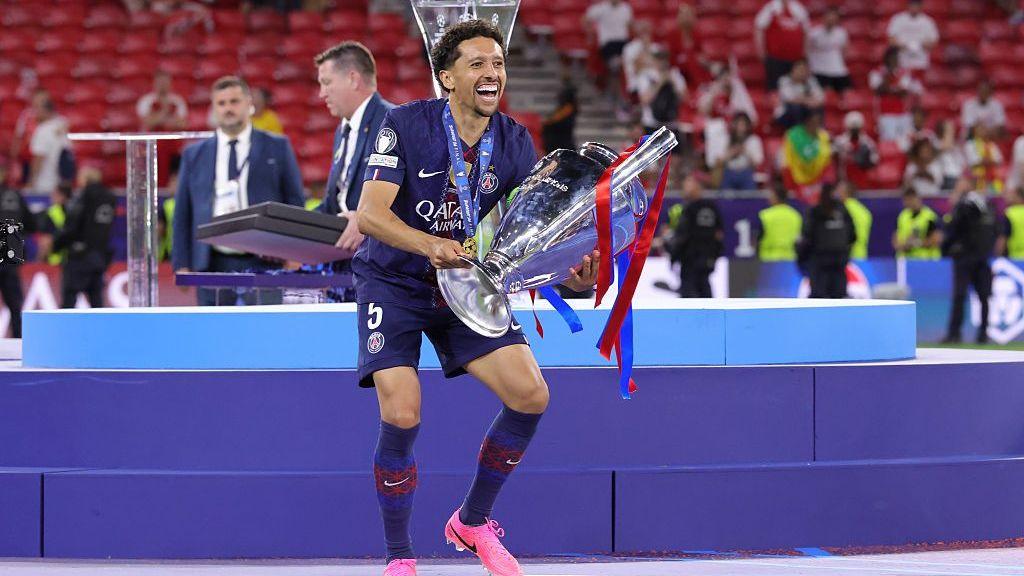
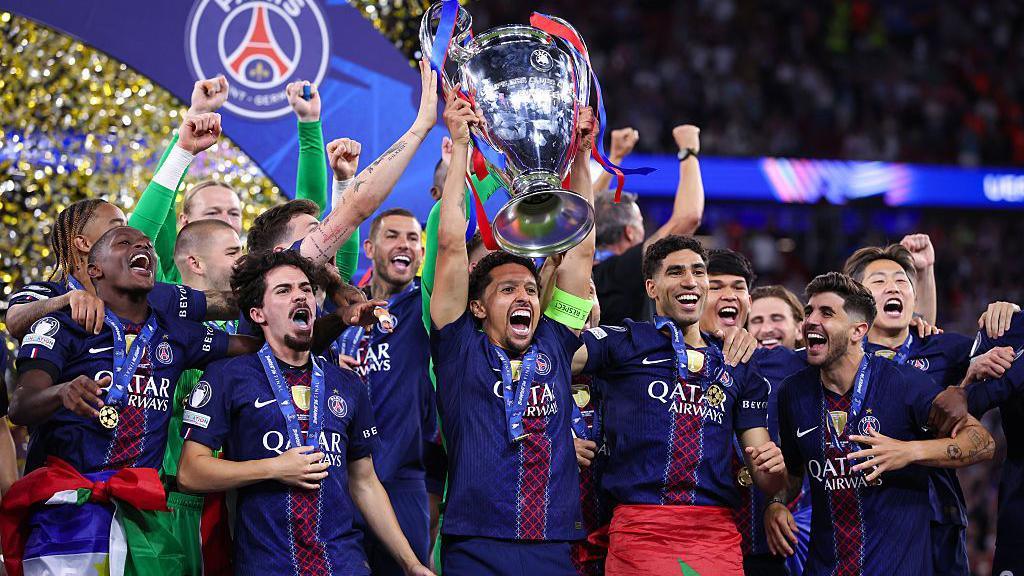
Paris St-Germain underlined their status as one of European football’s greatest ever teams by becoming only the second club to retain the Champions League.

Their nervy 4-3 win on penalties over Arsenal following a 1-1 draw in the final in Budapest backed up their 5-0 win over Inter Milan in Munich 12 months ago.

In doing so they became the first side to successfully defend their title since Real Madrid’s three-peat from 2016 to 2018, and only the second to do it in the Champions League era - 1993 onwards.

Indeed, across the competition’s 71-year history PSG are just the 10th club to win successive titles.

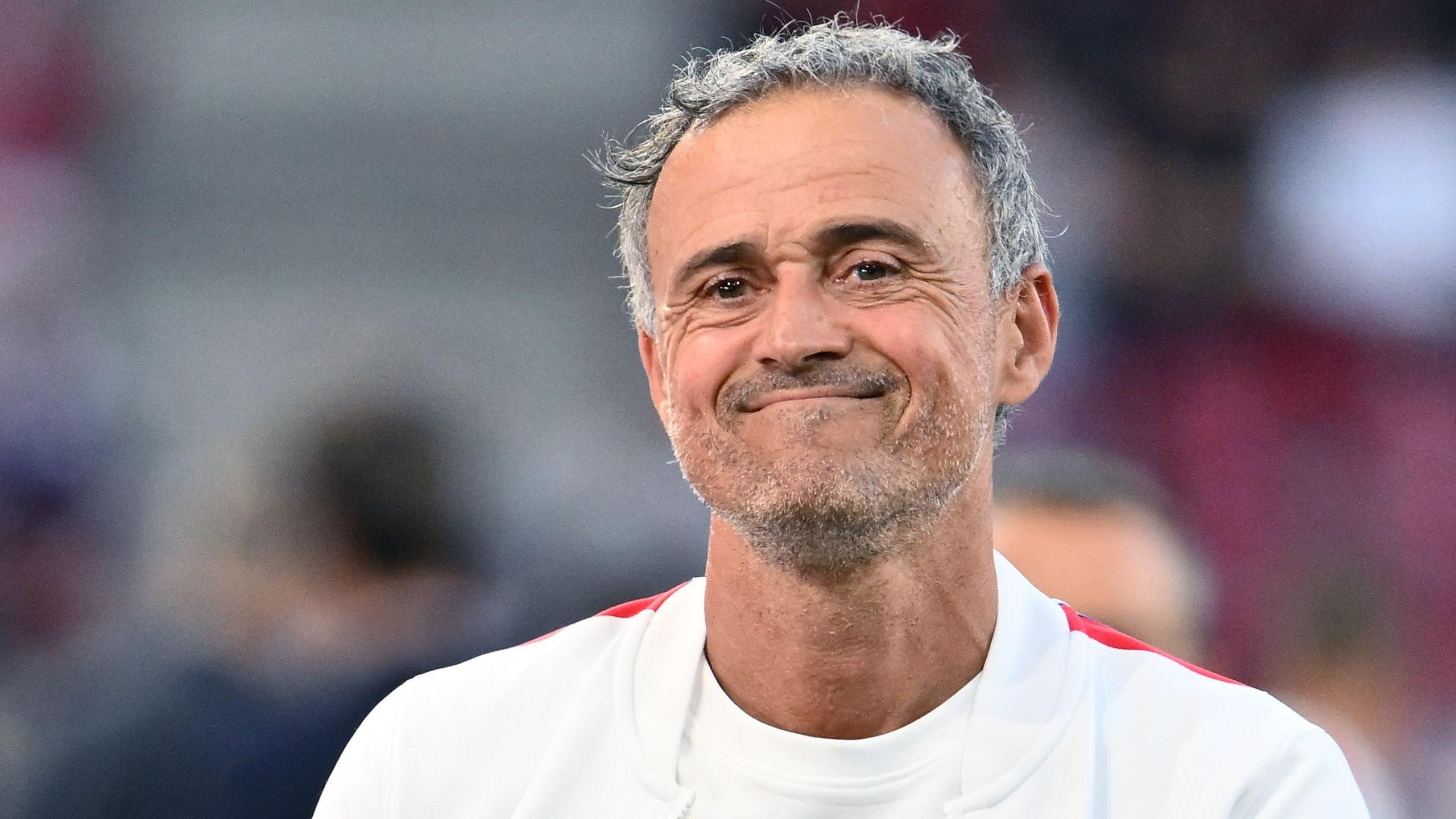
“I’m mixed,” boss Luis Enrique said after the game. “Excitement, fatigue - everything. But this is the best moment of the season. We are still champs, two in a row, it’s amazing.”

All 10 of the outfield players who started PSG’s win over Arsenal, also started their victory over Inter Milan.

Only goalkeeper Matvey Safonov was new, in for Gianluigi Donnarumma who was signed by Manchester City last summer.

Over the past two years Luis Enrique’s team have dominated almost all competitions they have competed in.

Since the start of last season they have won eight of the 10 trophies available to them - only missing out on last summer’s Club World Cup and this campaign’s French Cup.

If they continue their dominance next season PSG could become just the fifth side to win three successive Champions League/European Cup titles.

But they still have a way to go to break Real Madrid’s record of five European Cups in a row between 1956 and 1960.
“Tonight PSG have made history,” said European football journalist Julien Laurens on BBC Radio 5 Live.

“Last season will always be special, but I think they will enjoy this more as they had to dig deep, they had to fight, and they had to come back.

“Last season was almost a bit too easy against Inter. Back-to-back you join the greatest of all time.”

Luis Enrique is now the fifth manager to win three Champions League/European Cup titles.

ESPN journalist Laurens said PSG’s second Champions League crown “puts them in another dimension”.

The French champions also scored the most goals (45) and recorded the highest average possession (60.5%) in this season’s competition.

Laurens added to BBC Radio 5 Live: “Now they are in the conversation with those great teams. Pep [Guardiola] never did it with [Lionel] Messi and Barcelona, or with Manchester City either.

“If you win one it’s great, one and you are happy. But back-to-back is a different story.”

Paris St-Germain were playing in their third final. Their first was in 2019-20 when they lost 1-0 to Bayern Munich in Portugal.

But by winning a second Champions League title PSG also became the best-performing French club in the competition, going clear of rivals Marseille who have one title.

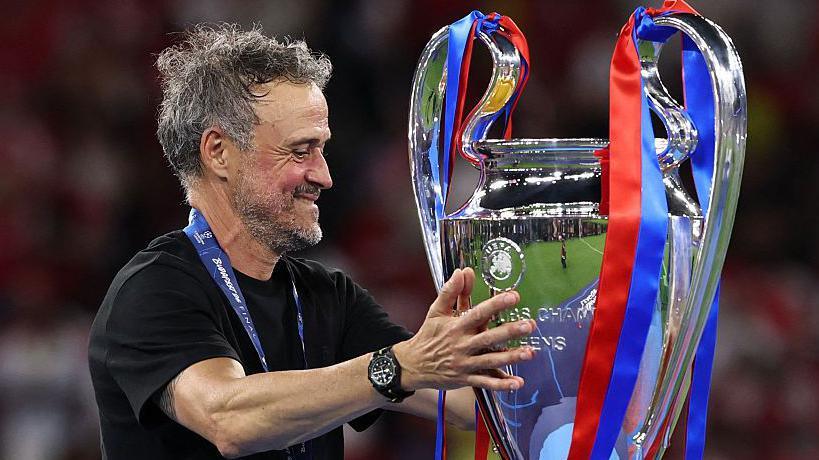
Head coach Luis Enrique follows in the footsteps of Bob Paisley, Pep Guardiola, Carlo Ancelotti and Zinedine Zidane in becoming just the fifth manager to win three Champions League/European Cup titles.

The Spaniard, who was unveiled as PSG boss in July 2023, also won the Champions League as a player with Barcelona in 2014-15.

Remarkably, “he didn’t want to take the job when he was first asked”, journalist Guillem Balague told BBC Radio 5 Live.

“[He said] ‘you are full of stars - I’m not interested’. He was promised [he could] change the culture and the question was different. It wasn’t how can we win the Champions League, it was what kind of football do we want?

“The answer was offensive, attractive and Luis Enrique represented that and he was convinced he could do that.”

Under Luis Enrique, PSG lost their record goalscorer and five-time Ligue 1 player of the year Kylian Mbappe to Real Madrid on a free transfer in 2024.

But, arguably, the France forward’s departure has helped balance the team.

PSG scored 44 more goals across all competitions in their first season without Mbappe (2024-25) compared with his final season at the club.

“Everyone plays like a team,” says Balague of the current squad.

“PSG is the team with the fewest yellow cards in Europe’s top leagues. That is a reflection of emotional control and everyone playing for everybody instead of being angry.

“He [Luis Enrique] said before when Mbappe left he prefers five players scoring 10 goals than one scoring 50. This season PSG have 20 different goalscorers. It is a collective approach.”

They also equalled the record for most goals scored in a single edition of the European Cup/Champions League, with their 45 drawing level with Barcelona’s total in 1999-2000.

Luis Enrique has also created a brilliant relationship with PSG’s fans.

After their Champions League win last year, they unveiled a flag in tribute to their coach and daughter Xana - who died aged nine in 2019 - showing the pair planting a Barcelona flag in the centre circle after the 2015 European triumph over Juventus in Berlin.

And in Budapest, before their win over Arsenal, a giant banner showing Luis Enrique lifting the famous trophy was displayed among the French faithful.

He was cheered on by the PSG fans passionately as he was lifted into the air by his players while hold the Champions League trophy.

After collecting his medal he danced in front of them with president Nasser Al-Khelaifi, celebrating the trophy that for so long had eluded the club. Not once, but twice.

The tactics that could win Arsenal the Champions League
Champions League

The tactics that could win Arsenal the Champions League

By Staff Writer — 30 May 2026

Arsenal are bidding to win the Champions League for the first time

Mikel Arteta’s Arsenal are hoping to follow up their Premier League triumph with a Champions League trophy against Paris St-Germain on Saturday but know a mammoth task is ahead.

Arsenal’s men have thrived in Europe with a high possession approach that has minimised the number of chances they concede, boasting the most clean sheets (9) in the competition so far.

Luis Enrique’s PSG, by comparison, have only five clean sheets but are the tournament’s top scorers with 44 goals to Arsenal’s 29.

Although these stats set the game up as the best attack against the best defence, Arteta will hope his side are front-footed, playing in PSG’s half as they did for large parts of the two legs in last season’s semi-final exit.

A tactic that worked impressively - despite the narrow defeat - in the second-leg tie between the two sides last season was the use of midfielder Mikel Merino as a number nine.

PSG, known for their ability to press intensely and often in a man-to-man fashion, stepped up to Arsenal as they looked to build out from the back.

A key principle of positional play is finding the free man. When opponents apply man-to-man pressure, finding a free man is harder.

With Merino dropping deep into central midfield, PSG centre-back Willian Pacho was reluctant to follow him, which allowed the French team to keep an extra player in the defensive line.

Arsenal, without a striker, however now had an extra man in midfield.

PSG’s midfield trio, alert to Arsenal’s midfield three, looked to shift across onto Merino at times but this would leave another Arsenal midfielder free helping the Gunners get up the pitch.

Although Swedish striker Viktor Gyokeres has seen out the season in strong form, both Merino, who is fit again after a long absence, and Kai Havertz are players naturally suited to this tactic.

Against high man-to-man pressing, the long ball over the opponent’s attack and midfield is also a valuable tactic.

Merino and Havertz, again, are best placed to bring down or flick on long passes from David Raya before Arsenal’s midfield swarm the second ball making this another tactic to look out for.

Gyokeres could make use of long balls by duelling with defenders in wider areas, looking to run the channels.

Last season, Arsenal struggled to score against PSG, often thanks to Gianluigi Donnarumma’s heroics.

PSG have not conceded many goals this season but Chelsea, RC Lens and Bayern Munich have all attacked well against them.

By positioning their players close to each other, those teams have been able to draw PSG and their man markers higher up the pitch into crowded clusters. This then leaves other parts of the pitch with fewer players.

Releasing the ball from these crowded areas into more open spaces is a tactic that has helped teams break down a resolute PSG, particularly while attacking down the middle.

Arsenal tend to shy away from playing centrally, focusing more on safer attacking play and crosses, as losing the ball centrally makes you more susceptible to a counter attack.

But this might be a risk they could lean into with the likes of Leandro Trossard, Havertz, Bukayo Saka, Martin Zubimendi and Eberechi Eze capable of playing in close proximity under pressure paired with players capable of finishing moves centrally.

Khvicha Kvaratskhelia, an explosive right-footed left winger is one of football’s most dangerous players, and Arsenal will need to keep him quiet.

PSG under Luis Enrique are a very fluid side but follow certain rules as outlined in this tactical analysis of the side earlier in the season.

One of these ideas is that they have certain areas of the pitch they look to keep occupied throughout the game including the two centre-back positions, both flanks, and the centre-forward position - but who moves into these positions is less important.

The many rotations of different players into these areas helps PSG pull apart the opposition’s defensive shape.

Kvaratskhelia naturally finds himself on the left touchline often. From here, his off-the-ball movement stands out.

In PSG’s first leg against Bayern, Desire Doue dropped deep from the attacking line - a common movement Arsenal will need to be alert to.

With Bayern’s Dayot Upamecano less than touch-tight, Doue had time on the ball. Kvaratskhelia feinted to run in behind, then dropped short, then looked to run in behind, dropped short again before eventually running in behind.

These movements froze Bayern’s full-back and Doue clipped a pass in behind for his team-mate to run onto before he cut inside and scored.

If Arsenal are to nullify PSG, in these situations they will have to commit to an approach.

This could be to stay very tight on the players that drop deep so as not to give them time to find runners in behind or they could drop off, letting them have the ball in certain areas but reducing the space in behind their defence.

After going 1-0 down in that first leg last season, Arteta tweaked his side’s defensive approach, saying after the game that “we had one issue that we corrected after 15-20 minutes, that turned the game around”.

Martin Odegaard’s role in the press changed higher up the pitch making it harder for PSG to find their midfielders but the other key difference was the increased pressure and attention William Saliba applied to Dembele. He went man-to-man even when Dembele dropped very deep.

This echoes former Chelsea boss Enzo Maresca’s sentiment too who, after a 3-0 win against PSG in the Club World Cup, said: “The idea was to go man-to-man. PSG are so good that if you give them time you are going to struggle. You have to press them very intensely.”

It would be negligent to write about Arsenal beating a direct opponent without mentioning their most effective tool this season.

PSG have only conceded 29 goals in the league this season but six of them have come from non-penalty set-pieces. The size of their squad makes this an obvious area of weakness.

Thomas Frank’s Spurs lost to PSG in the Champions League earlier this season but managed to score three goals, one coming from a corner. They also lost on penalties against them in the Uefa Super Cup in August, scoring both goals in a 2-2 draw from crossed free kicks.

Under Frank, Spurs adopted various Arteta-isms including making set-plays one of their main methods of breaking teams down.

For all three set-piece goals, Spurs targeted the back post before heading the ball back across goal, either for a teammate or directly to goal.

PSG appear uncomfortable dealing with crosses that float over their heads as they track back and the header back in the other direction goes against the direction they are moving in, giving the attacking side, who know where the ball will go, an advantage.

Arsenal are even better placed for that, so if they are able to get up the pitch in the first place, forcing corner kicks or winning free-kicks will produce good looks at goal.

While there is little that can be done about potential moments of brilliance, there are at least signs of hope that Arsenal can hurt the defending champions.

From 'bling-bling' & disputes to unity: The transformation of PSG
Champions League

From 'bling-bling' & disputes to unity: The transformation of PSG

By Staff Writer — 29 May 2026

Back in 2011 Qatar Sports Investments were deep in negotiation for the sleeping giant that was Paris St-Germain.

PSG had finished 13th in Ligue 1 the previous season and Nasser Al-Khelaifi, leading the negotiations for QSI, regularly checked the results because there was a fear they could end up buying a second division club.

The Parisians survived and the deal went through, although the club bore almost no resemblance to the modern European contender people know today.

Over the next decade and a half, PSG would undergo one of the most dramatic cultural rebuilds in modern football. Money was about to be spent, stars were going to arrive, but the deep transformation was about reshaping their identity.

The journey unfolded in phases - each necessary, each flawed in its own way, but at the same time each contributing to the club PSG eventually became. The club who will bid to defend their Champions League title against Arsenal on Saturday.

Luis Enrique is bidding to take PSG to a second successive Champions League triumph.

In 2011, PSG were a paradox: a major European capital with a vast talent pool, yet a club lacking structure, prestige and stability.

They had no stars, no sustainable model and no clear footballing philosophy.

Despite having had big names like Ronaldinho, Pauleta, Ludovic Giuly and Claude Makelele in the first decade of the 21st Century, PSG needed to be seen in the eyes of the football world as relevant and credible before they could even dream of competing with Europe’s elite.

The ultras were banned after violence ended in the death of a fan, leaving the Parc des Princes without its most passionate supporters for the first five years of the new era. They only came back in 2016 when Al-Khelaifi decided the majority could not be held responsible for the actions of a few.

The early years of QSI were defined by aggressive spending. Critics labelled it the ‘bling-bling era’ but internally it was seen as the quickest way to get to the top.

As is the case with Newcastle and Manchester City, PSG have had to answer questions about the source of their funding and their owners have been accused of ‘sportswashing’, which is when nations invest in sports to help clean up their tarnished reputations.

Signing global superstars - Zlatan Ibrahimovic, Neymar, Kylian Mbappe, Lionel Messi - helped force PSG into the global conversation.

This phase brought domestic dominance and deep Champions League runs. But it also created internal tensions. Stars dictated dressing-room dynamics, influenced tactical decisions and sometimes overshadowed the collective with inane disputes over things like training schedules or even who should take penalties.

The 18-year-old Mbappe and his family told club representatives he would join PSG instead of Real Madrid only if he was guaranteed to play every game - and Neymar had it written into his contract that he had the power to decide not to travel to some games.

When basketball legend Kobe Bryant visited the old training ground, Neymar and Mbappe wanted to break with the schedule prepared by then head coach Unai Emery.

He had them resting. They wanted to train with a sometimes-missing enthusiasm to impress Kobe. That battle was won by Emery - but those clashes left scars.

This era built PSG’s global brand but it also exposed the limitations of a star-centric model.

Al-Khelaifi publicly declared the end of the bling-bling era.

Instead of asking how to win the Champions League, the starting question became, “What kind of football do we want to play?” The answer was attacking football with French players at its heart.

This reshaped everything that followed. The man appointed to lead PSG into the new dawn was Luis Enrique.

For the first time in the QSI era, the club chose a footballing identity first, then selected the coach, then built the squad.

What happened next was a mixture of a needed change in club mentality and the arrival of the Spanish manager - a force of nature.

Messi, Neymar, Mbappe, Marco Verratti, Sergio Ramos - icons of the previous era - were moved on. The club was not punishing them; they had to reset the order of priorities and no player would be above the team.

Luis Enrique enforced discipline with a clarity PSG had lacked for years. He asked Mbappe to work harder and when his request fell on deaf ears was pleased to see him depart.

A defining moment occurred at the end of September last season when Ousmane Dembele arrived late for training before the Champions League league phase game against Arsenal. It was only 10 minutes but the coach dropped him immediately. Dembele would go on to win the 2025 Ballon d’Or.

Players responded. When Dembele was substituted, he encouraged his replacement rather than sulking. Injured players were required to attend training sessions.

The results were visible in the shape of titles but also in the little details. PSG became the team with the fewest yellow cards in Europe’s top leagues as players stopped arguing with referees, stopped indulging in theatrics and embraced a disciplined, unified approach.

Luis Enrique much prefers to have five players scoring 10-12 goals each over one player scoring 40. This season, PSG had 20 different goalscorers - a testament to the collective approach.

There have been some bumps along the road but the most striking cultural change has been the club’s refusal to panic.

In previous years, a run of poor results would trigger a flurry of signings or internal upheaval. Not any more. PSG now stayed loyal to the squad and the project.

In January 2025 with the French media clamouring for five or six new signings after Champions League defeats against Arsenal, Bayern and Atletico, they made just one… Kvicha Kvaratskhelia.

And perhaps most importantly there was a unified leadership structure. An alignment between the club’s three central figures: Luis Enrique, sporting director Luis Campos and president Al-Khelaifi.

Stability at the top created stability throughout the organisation.

Each figure has a clear role and they work together constantly. Luis Enrique defines the footballing vision, Campos manages recruitment and squad construction while Al-Khelaifi oversees the broader project.

This unity has replaced years of internal friction, when coaches, directors and executives often operated with conflicting priorities.

Of all things that have been achieved at the club the one investment Al-Khelaifi is most proud of is the new training centre that has been created at a cost of about 350million euros (£304m).

A key objective of the cultural reset was restoring PSG’s connection to French identity. Nearly half of the team’s playing time now goes to French players, many from the academy.

This season the average age of PSG’s starting XI was 23 years and 363 days, the lowest recorded by the clubs in Ligue 1 and the second youngest among teams in Europe’s top five leagues. Six academy graduates made their first-team debuts this season.

In a wider footballing context, Al-Khelaifi’s stance against the European Super League also reflected his increasing power and belief in raising the club’s presence.

He argued that if football became a closed system, PSG would never have risen from their Europa League days.

And as leader of the European Club Association, he led the search for peace in European football, making key calls to Barcelona president Joan Laporta and Real Madrid counterpart Florentino Perez to convince them to return to the fore and abandon the Super League project.

PSG are not yet the finished article. The challenges ahead remain significant. Their stadium is too small for a club of PSG’s stature (about 46,000 capacity) and French TV rights lag far behind the Premier League - the top five in the Premier League will receive in the region of 200m euros (£174m) in TV money this season, while PSG will earn about 9m euros (£7.8m).

But at least, for the first time in the QSI era, PSG are a club who know what they want to be and which way they want to go.

From non-league to Champions League final - Raya's fairytale rise
Champions League

From non-league to Champions League final - Raya's fairytale rise

By Staff Writer — 29 May 2026

David Raya has won the Premier League with Arsenal and European Championship with Spain after starting out with a loan spell at Southport.

Saturday afternoon. Kick-off approaching. Preparations complete. Crowd filing in. Excitement building.

David Raya fastens his gloves and breathes out.

But this is not the Champions League final. This is Moss Rose, home of National League side Macclesfield Town and a teenage Spanish goalkeeper is embarking on a journey that will lead him to the biggest stage in European football.

In front of fewer than 1,500 spectators, Raya was part of a Southport side beaten 3-0 by Macclesfield in September 2014.

Now aged 30, he is set to become only the third person to make the journey from non-league football to the Champions League final when Arsenal face holders Paris St-Germain on Saturday.

Raya will join Steve Finnan and Chris Smalling in achieving that feat.

Full-back Finnan, who lifted the 2005 title with Liverpool, had earlier played for Welling United in the National League, while centre-back Smalling turned out for Maidstone before going on to be an unused substitute when Manchester United lost the 2011 final to Barcelona.

Even people who have witnessed the journey from a 19-year-old making his first-team breakthrough - after joining Southport on loan from Blackburn Rovers - have struggled to envision Raya’s rise.

Paul Carden, Southport’s former assistant manager, said: “I don’t think anybody could have predicted or scripted it. You wouldn’t be 100% surprised, but you wouldn’t have put a bet on him.”

What makes Raya’s journey so unique is that until he was 16 he was playing in the youth teams of Cornella, a Third Division club based on the outskirts of Barcelona.

But he would swap the small commuter district for Blackburn because the two clubs had a partnership which involved young Spanish footballers travelling to the Lancashire club for trials.

By the time Raya left his home town, he wasn’t a starting goalkeeper for the academy and, when he arrived at Blackburn in 2012 - the season of their relegation from the Premier League - he would face similar struggles because he had Paul Robinson, Jake Kean and Simon Eastwood in front of him.

So after two years in England, Raya made another brave decision in search of first-team football, dropping down a further three leagues to join struggling fifth-tier side Southport, where he experienced the harsh realities of senior football in a temporary four-month spell.

More poor results followed the Macclesfield loss as Martin Foyle was sacked as manager and Gary Brabin took charge along with Carden, who joined from Blackburn’s academy.

“I obviously knew him a little bit as he’d see me about as an academy coach, but quickly you realised he had really good ability,” added Carden.

“You’ve got to give credit to him because he went on a bit of a pathway that not many young lads want to take - and they don’t want to go out and get dirty in non-league.

“They want the niceties of development football and playing at nice grounds on nice pitches or even training grounds. Some lads will be 21 and they won’t have played a real first-team game at any level, but they will have more than 100 appearances in development football.”

Raya used to train three days a week at Southport and then do extra work with Blackburn when his loan club had days off. When he was training with the Merseyside club at Ormskirk’s Edge Hill University, the players used to joke he was good enough to play outfield for them.

That ball-playing ability in a goalkeeper was unheard of at many levels in English football at that time, but Raya was confident enough to showcase his talent in the most stressful situations.

Carden said: “We were really struggling at the time and it was a lot of pressure to win points and win games to stay in the league and we played Kidderminster away, where we won 1-0.

“There was a ball that came back to him, late on in the game, and you’d expect a keeper just to shell it back up the pitch, because he’s getting closed down by one or two forwards, and he’s chopped one of them then just casually passed it out to the full-back.

“We were hearts in mouth in the dugout, but he’s obviously not fazed by it and just got on with it.

“A young Spanish player going into the National League could quite easily have been played on, but whenever teams did, he always came out the other side because of his ability and his confidence.

“It wasn’t arrogance. It was just huge confidence and he had a mindset where he was always determined and very humble.”

During his Southport spell, Carden was aware opposition clubs would try to exploit his 6ft height with high balls and extra physicality, but the Spaniard had traits that “defied” his height.

Raya’s biggest test came in his final game for the club when the Sandgrounders visited Championship side Derby County in the FA Cup third round.

He made multiple fine saves to keep the Rams at bay, and was beaten only by a stoppage-time penalty. At the final whistle, Raya left the pitch in tears after a performance that highlighted his potential.

Carden recalled: “He was bitterly disappointed, but we all were, so that kind of tells you how much he felt at the time for the lads and the club. He was certainly part of the culture in non-league and the dressing room.

“He made some saves in that game where we thought he’s definitely at the level. You could have put him in goal for Derby and he wouldn’t have been out of place.”

Raya returned to Blackburn and made appearances in the Championship, but had to wait until the club’s relegation to League One to become first choice in 2017.

He proved instrumental for Rovers, instantly helping them to return to the second tier.

Jayson Leutwiler was back-up goalkeeper to Raya at Blackburn and saw the match-winning saves that have become so regular during the Spaniard’s time at Arsenal.

“He was able to make saves that would make you think, ‘wow this is a shot that one out of 10 times he would have saved it’,” said the former Canada international.

“But when it happens four, five or six times over the season, that’s just not a coincidence.”

Leutwiler played across England’s lower football leagues and believes playing at that level has great advantages to developing goalkeepers.

“You get exposed to smaller crowds, you get exposed to different pressures, they are difficult leagues, it’s more physical, you have to adapt a bit more,” added the 37-year-old.

“You could go to a great football pitch on a Saturday and the weekend after the conditions aren’t as great, maybe a smaller crowd and it only helps you to be more resilient when it gets to a bigger game at any level.”

Raya was then signed by Brentford for £3m in 2019, before Arsenal completed a £27m deal five years later, after a loan spell.

From that disappointing debut at Macclesfield, he has gone on to shine for club and country - being part of Spain’s victorious 2024 Euros squad and helping Arsenal win the Premier League for the first time in 22 years.

Now the Gunners, and Raya, will cap a dream double if they overcome PSG in Budapest, and leave his old colleagues proud of his achievements.

Carden said: “He had that confidence and that determination, but it didn’t stop him from being a good team-mate.

“Everybody who crossed paths with him at his time at Southport is delighted. It is a real credit to him.

“I don’t think anyone could have written that tale, which is why it’s such a good one.”

From non-league to Champions League - Raya's fairytale rise
Champions League

From non-league to Champions League - Raya's fairytale rise

By Staff Writer — 29 May 2026

David Raya has won the Premier League with Arsenal and European Championship with Spain after starting out with a loan spell at Southport.

Saturday afternoon. Kick-off approaching. Preparations complete. Crowd filing in. Excitement building.

David Raya fastens his gloves and breathes out.

But this is not the Champions League final. This is Moss Rose, home of National League side Macclesfield Town and a teenage Spanish goalkeeper is embarking on a journey that will lead him to the biggest stage in European football.

In front of fewer than 1,500 spectators, Raya was part of a Southport side beaten 3-0 by Macclesfield in September 2014.

Now aged 30, he is set to become only the third person to make the journey from non-league football to the Champions League final when Arsenal face holders Paris St-Germain on Saturday.

Raya will join Steve Finnan and Chris Smalling in achieving that feat.

Full-back Finnan, who lifted the 2005 title with Liverpool, had earlier played for Welling United in the National League, while centre-back Smalling turned out for Maidstone before going on to be an unused substitute when Manchester United lost the 2011 final to Barcelona.

Even people who have witnessed the journey from a 19-year-old making his first-team breakthrough - after joining Southport on loan from Blackburn Rovers - have struggled to envision Raya’s rise.

Paul Carden, Southport’s former assistant manager, said: “I don’t think anybody could have predicted or scripted it. You wouldn’t be 100% surprised, but you wouldn’t have put a bet on him.”

What makes Raya’s journey so unique is that until he was 16 he was playing in the youth teams of Cornella, a Third Division club based on the outskirts of Barcelona.

But he would swap the small commuter district for Blackburn because the two clubs had a partnership which involved young Spanish footballers travelling to the Lancashire club for trials.

By the time Raya left his home town, he wasn’t a starting goalkeeper for the academy and, when he arrived at Blackburn in 2012 - the season of their relegation from the Premier League - he would face similar struggles because he had Paul Robinson, Jake Kean and Simon Eastwood in front of him.

So after two years in England, Raya made another brave decision in search of first-team football, dropping down a further three leagues to join struggling fifth-tier side Southport, where he experienced the harsh realities of senior football in a temporary four-month spell.

More poor results followed the Macclesfield loss as Martin Foyle was sacked as manager and Gary Brabin took charge along with Carden, who joined from Blackburn’s academy.

“I obviously knew him a little bit as he’d see me about as an academy coach, but quickly you realised he had really good ability,” added Carden.

“You’ve got to give credit to him because he went on a bit of a pathway that not many young lads want to take - and they don’t want to go out and get dirty in non-league.

“They want the niceties of development football and playing at nice grounds on nice pitches or even training grounds. Some lads will be 21 and they won’t have played a real first-team game at any level, but they will have more than 100 appearances in development football.”

Raya used to train three days a week at Southport and then do extra work with Blackburn when his loan club had days off. When he was training with the Merseyside club at Ormskirk’s Edge Hill University, the players used to joke he was good enough to play outfield for them.

That ball-playing ability in a goalkeeper was unheard of at many levels in English football at that time, but Raya was confident enough to showcase his talent in the most stressful situations.

Carden said: “We were really struggling at the time and it was a lot of pressure to win points and win games to stay in the league and we played Kidderminster away, where we won 1-0.

“There was a ball that came back to him, late on in the game, and you’d expect a keeper just to shell it back up the pitch, because he’s getting closed down by one or two forwards, and he’s chopped one of them then just casually passed it out to the full-back.

“We were hearts in mouth in the dugout, but he’s obviously not fazed by it and just got on with it.

“A young Spanish player going into the National League could quite easily have been played on, but whenever teams did, he always came out the other side because of his ability and his confidence.

“It wasn’t arrogance. It was just huge confidence and he had a mindset where he was always determined and very humble.”

During his Southport spell, Carden was aware opposition clubs would try to exploit his 6ft height with high balls and extra physicality, but the Spaniard had traits that “defied” his height.

Raya’s biggest test came in his final game for the club when the Sandgrounders visited Championship side Derby County in the FA Cup third round.

He made multiple fine saves to keep the Rams at bay, and was beaten only by a stoppage-time penalty. At the final whistle, Raya left the pitch in tears after a performance that highlighted his potential.

Carden recalled: “He was bitterly disappointed, but we all were, so that kind of tells you how much he felt at the time for the lads and the club. He was certainly part of the culture in non-league and the dressing room.

“He made some saves in that game where we thought he’s definitely at the level. You could have put him in goal for Derby and he wouldn’t have been out of place.”

Raya returned to Blackburn and made appearances in the Championship, but had to wait until the club’s relegation to League One to become first choice in 2017.

He proved instrumental for Rovers, instantly helping them to return to the second tier.

Jayson Leutwiler was back-up goalkeeper to Raya at Blackburn and saw the match-winning saves that have become so regular during the Spaniard’s time at Arsenal.

“He was able to make saves that would make you think, ‘wow this is a shot that one out of 10 times he would have saved it’,” said the former Canada international.

“But when it happens four, five or six times over the season, that’s just not a coincidence.”

Leutwiler played across England’s lower football leagues and believes playing at that level has great advantages to developing goalkeepers.

“You get exposed to smaller crowds, you get exposed to different pressures, they are difficult leagues, it’s more physical, you have to adapt a bit more,” added the 37-year-old.

“You could go to a great football pitch on a Saturday and the weekend after the conditions aren’t as great, maybe a smaller crowd and it only helps you to be more resilient when it gets to a bigger game at any level.”

Raya was then signed by Brentford for £3m in 2019, before Arsenal completed a £27m deal five years later, after a loan spell.

From that disappointing debut at Macclesfield, he has gone on to shine for club and country - being part of Spain’s victorious 2024 Euros squad and helping Arsenal win the Premier League for the first time in 22 years.

Now the Gunners, and Raya, will cap a dream double if they overcome PSG in Budapest, and leave his old colleagues proud of his achievements.

Carden said: “He had that confidence and that determination, but it didn’t stop him from being a good team-mate.

“Everybody who crossed paths with him at his time at Southport is delighted. It is a real credit to him.

“I don’t think anyone could have written that tale, which is why it’s such a good one.”

60 Palace 'troublemakers' ordered to leave Leipzig
Champions League

60 Palace 'troublemakers' ordered to leave Leipzig

By Staff Writer — 27 May 2026

Crystal Palace and Rayo Vallecano are taking part in their first European final

Police say 60 Crystal Palace fans classified as “known troublemakers” were ordered to leave Leipzig city centre on Tuesday evening while two arrests were made following clashes between supporters of the Eagles and Rayo Vallecano.

Thousands of fans have travelled to Leipzig for the Conference League final between Palace and Spanish side Vallecano on Wednesday (20:00 BST).

After videos appeared online of rival fans clashing in the German city on Tuesday, Saxon State Police confirmed two arrests were made and all individuals involved in the disturbance were ordered to leave the area.

Two officers, one from the Federal Police and one from the State Police, sustained minor injuries during clashes with both sets of fans.

“At approximately 20:00 (19:00 BST), around 300 Rayo Vallecano fans, considered to be at high risk of hooliganism, were gathered in the city centre,” read a statement from Saxon State Police.

Police say clashes “suddenly broke out” with Palace fans sat on the outdoor terraces of both Leo’s Brasserie and Dhillons.

“Bottles, beer glasses, and pub furniture were thrown at each other. Physical altercations also occurred,” added the police statement.

“Officers on the scene immediately intervened and separated the two groups of fans, checked the identities of more than 300 people, and issued dispersal orders.
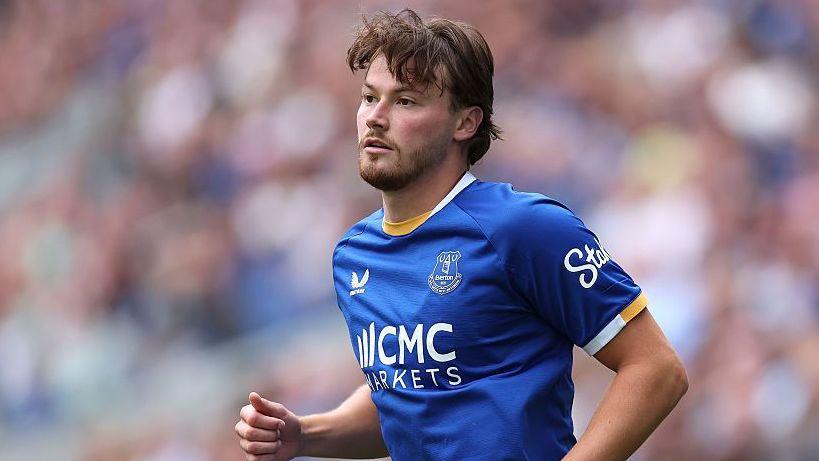
“Known troublemakers from Crystal Palace moved to the area of the Penguin Ice Bar and approximately 60 individuals provoked passing Spanish fans and were surrounded by federal police.”
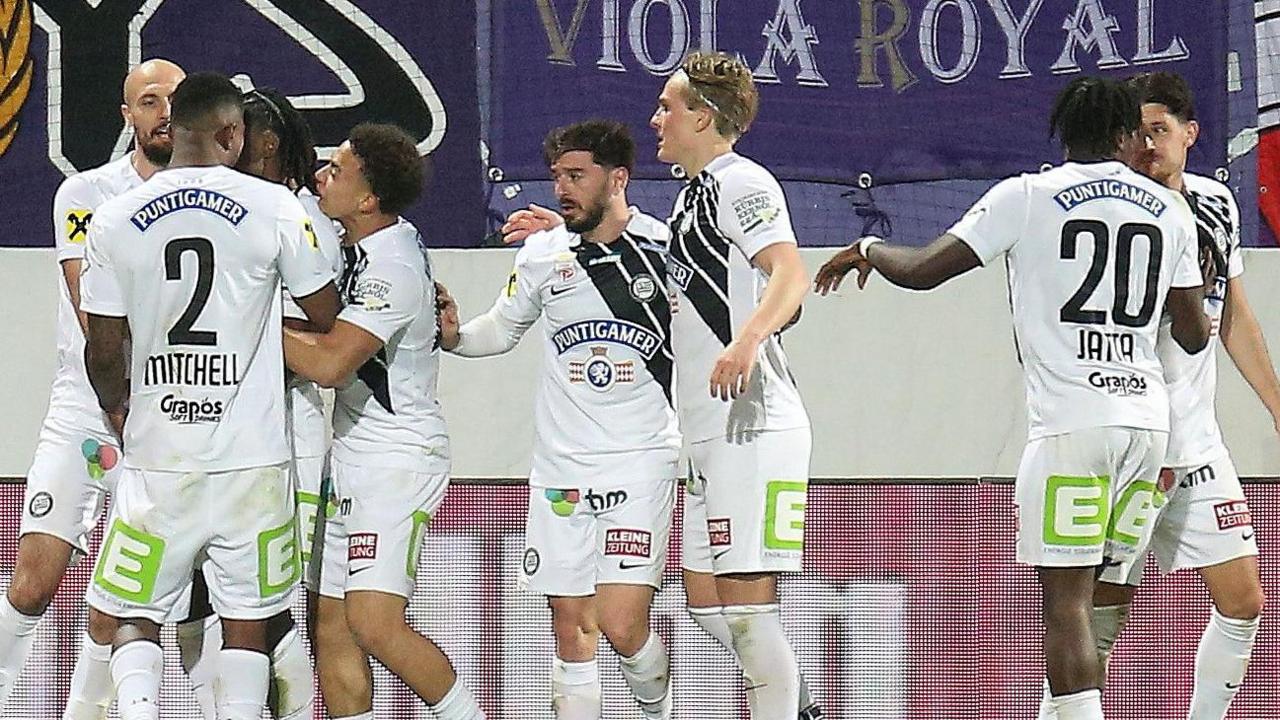
The police operation concluded at approximately 03:15 on Wednesday morning, with more than 320 fans involved.

Local police say the ‘fan fest’ in the market area of Leipzig remained peaceful throughout, with about 2,000 fans from both clubs present.

Allegri sacked after season of 'unequivocal failure'
Champions League

Allegri sacked after season of 'unequivocal failure'

By Staff Writer — 25 May 2026

AC Milan have sacked head coach Massimiliano Allegri after failing to qualify for the Champions League, in a season the club’s hierarchy described as an “unequivocal failure”.

Milan fell from third to fifth in Serie A after a 2-1 defeat by Cagliari on the final day to miss out on Champions League football for the second year in a row.

Inter Milan, Napoli, Roma and Como - for the first time in their history - will represent Italy in Europe’s top-tier club competition next season while AC Milan join Juventus in the Europa League.

“For the majority of this season, we were in the top two positions in Serie A, with a credible shot at competing for the Scudetto,” read a statement from American investment group RedBird Capital, which bought AC Milan in 2022.

“The final stretch was completely inconsistent with the performance up to that point, with last night’s disappointing loss in the final game turning the season into an unequivocal failure.

“It is now time for change and a comprehensive reorganisation of football operations.”

Chief executive Giorgio Furlani, sporting director Igli Tare and technical director Geoffrey Moncada have also left the club, the owners announced.

Allegri, 58, returned for a second spell with the Rossoneri in May last year, replacing Sergio Conceicao.

He previously managed the club between 2010 and 2014, winning the league in 2010-11 and the Italian Super Cup the following season.

Milan lost seven of their final 13 games in the campaign just ended as rivals Inter Milan won their second Scudetto in three seasons.

Como qualify for Champions League for first time
Champions League

Como qualify for Champions League for first time

By Staff Writer — 24 May 2026

Como were playing in the third tier of Italian football in 2019

Cesc Fabregas’s Como qualified for the Champions League for the first time in their history with a 4-1 victory over 10-man Cremonese on the final day of the Serie A season.

Como’s win, combined with AC Milan’s 2-1 defeat by Cagliari, cemented the fourth-place finish for Fabregas’s side, while the loss for Cremonese confirmed their relegation to Serie B.

“It’s up there with all my achievements for how it was done and with whom we did it, because we did it with very young players, almost all of them are under 23 years old. That’s amazing,” said former Arsenal, Chelsea and Barcelona midfielder Fabregas, 39.

Goals from Jesus Rodriguez and Tasos Douvikas put Como into a commanding lead before Jamie Vardy was fouled in the area and Federico Bonazzoli stepped up to give the home side a lifeline.

Fabregas’ side were awarded a controversial penalty with 20 minutes to go which resulted in three red cards for Cremonese players.

Midfielder Alberto Grassi was shown a straight red for his protests while Milan Djuric and David Okereke, both of whom were on the substitutes’ bench, were also brandished reds as temperatures boiled over.

Lucas da Cunha added a fourth late on to add some gloss to the scoreline and seal a historic place in Europe for a team in just their second season back in Italy’s top flight.

Going into the game, Como knew they needed to win and hope one of AC Milan or Roma dropped points to secure Champions League qualification.

Roma were victorious over 10-man Hellas Verona, and secured third place, but a 2-1 defeat by Cagliari for Milan ensured Como leapfrogged the seven-time Champions League winners into fourth place.

Three points for Roma and Como also ensured that another Italian giant, Juventus, would miss out on a Champions League spot.

Their derby against Torino was due to kick off at 19:45 BST, like the rest of Serie A, but was delayed for an hour for “public safety” after a Juventus supporter was taken to hospital following clashes with Torino fans.

Luciano Spalletti’s Juventus started the day in sixth and required a win, plus two of the three teams immediately above them to drop points if they were to achieve a place in the top four.

However, by the time it reached half-time in their game, they already knew their fate.

The victories for both Roma and Como ensured Juventus would be playing in the Europa League next season.

In the end, Juventus drew 2-2 with Torino, with Dusan Vlahovic giving them a two-goal lead before Cesare Casadei and Che Adams replied.