How PSG's Ballon d'Or duo are pushing each other on
Champions League

How PSG's Ballon d'Or duo are pushing each other on

By Staff Writer — 24 September 2026

The Ballon d’Or is celebrating its 70th anniversary and the winner will be announced at a ceremony in London on 26 October.

Paris St-Germain won almost all before them last season, so it’s no surprise the team’s best are up for the 2026 Ballon d’Or.

The French and European champions have 10 players shortlisted for the greatest individual prize in football, which will be awarded at a ceremony in London on 26 October.

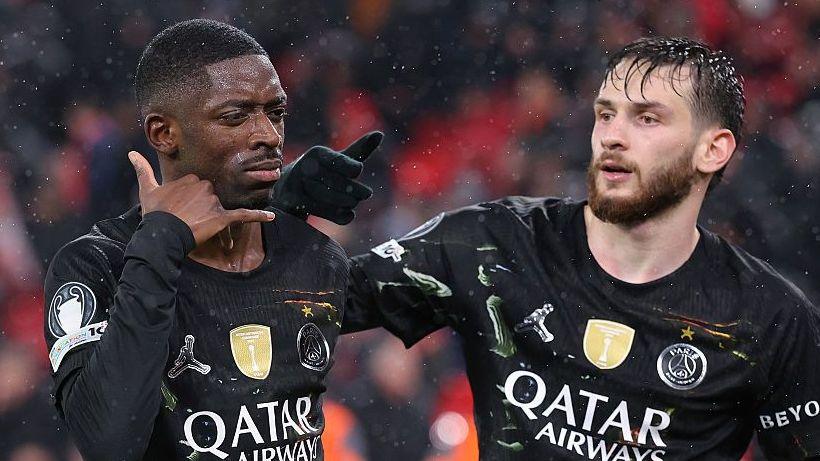
While there can only be one winner, team-mates Ousmane Dembele and Khvicha Kvaratskhelia are backing each other to collect the prize.

Speaking exclusively to BBC Sport, they have even suggested sharing the award.

“We can cut it in two,” joked Dembele, before adding “honestly, he [Kvaratskhelia] deserves it, the season he had was exceptional”.

Kvaratskhelia told BBC Sport journalist Julien Laurens: “Of course it’s him [Dembele], the season he had last year, he deserves it.”

The pair’s reaction won’t surprise PSG fans, who watched the duo ruthlessly and selflessly link up on countless occasions during their side’s Champions League title defence last season.

So, how do they complement each other’s game so well, and could the race for this year’s Ballon d’Or be a PSG one-two?

PSG made just one signing in January 2025, the last window before their first Champions League title later that year, and it was to bring in Kvaratskhelia for £59m from Napoli.

The then 23-year-old Georgia forward was already a hero in Naples, nicknamed ‘Kvaradona’ by supporters during Napoli’s 2022-23 title-winning campaign.

Full of flare, technically superb and forward-thinking, Kvaratskhelia’s play was once compared to George Best by Italian legend Gianfranco Zola - although Kvaratskhelia himself cites Cristiano Ronaldo as his biggest inspiration.

Like his idol, Kvaratskhelia has an impressive work-rate and winning mentality. PSG have won 10 trophies out of a possible 12 since his transfer.

“[He’s] electric,” team-mate Dembele told BBC Sport.

“Every time he has the ball something can happen. Every time he goes one v one, he provokes the opponent.

“He has shown all his quality. Especially last season where he had a really, really good season.

“Thankfully we didn’t let him go to the Premier League.”

Kvaratskhelia was named the Champions League’s best player of last season, his 10 goals and six assists meaning he averaged a goal contribution in Europe’s premier club competition every 72 minutes.

And he did most of his best work towards the business end of the tournament, becoming the first player to score or assist in seven consecutive knockout appearances in a single Champions League campaign.

Kvaratskhelia says his motivation comes from his father, who played for Dinamo Tbilisi and the Azerbaijani national team.

Like his father, Khvicha started his career at Tbilisi before playing for Lokomotiv Moscow and Rubin Kazan in Russia, until Russia’s invasion of Ukraine prompted a move back home - to Dinamo Batumi, and then on to Napoli.

“I think for the big nations it’s really difficult to understand what [winning a Ballon d’Or] would mean for the small country [like Georgia],” Kvaratskhelia told BBC Sport.

“It’s something that is very far, it’s like impossible, of course I will be the happiest guy because I want to make my family and country proud.”

While defenders double up to deal with Kvaratskhelia on the left wing, France forward Dembele is finding even more joy down the right.

The 29-year-old’s blistering pace and cool finishing helped him to a combined 31 goals and assists last season which, thanks to a low workload in terms of gametime, worked out to 1.27 goal contributions per 90 minutes.

Only Harry Kane boasted a better rate among players in Europe’s top five leagues last term.

The current Ballon d’Or holder, Dembele also scored six goals in 10 appearances for France in 2026 as his side reached the semi-finals of the World Cup.

“He’s an amazing player,” Kvaratskhelia told BBC Sport.

“The way he leads the team is important, the way his personality and what he gives the team on the pitch is really incredible, and the season he had last year, it was amazing.

“I think we understand each other very, very much. It’s easy to understand what he will make and you just have to make some move and he will give you a ball wherever he wants and wherever you are waiting.”

Dembele’s goal threat by now is well-known and at PSG he has shown the quality that persuaded Barcelona to once pay £135.5m to sign him from Borussia Dortmund in 2017.

It may not have worked out in Spain but it meant PSG were able to pick up Dembele for a bargain £43.5m in 2023 and, since Kylian Mbappe left for Real Madrid, the Parisians have made Dembele their main star.

“I didn’t change,” Dembele added. “I played my game - last season and the one before when I won the Ballon d’Or - [and] I stayed the same person.

“When you win it for the first time, you don’t want people to say that you were lucky. So you want to continue to be at the top.”

If not PSG duo Dembele and Kvaratskhelia, then who?

Well, England captain Harry Kane is actually odds-on to win after a club record 61 goals in 51 games for German double winners Bayern Munich last season. He also scored six times at the World Cup.

Lamine Yamal, who won La Liga with Barcelona and the World Cup with Spain, is second favourite - followed by his club and international team-mate Rodri.

Real Madrid forward Mbappe scored 42 goals in 44 games for his club last season and won the World Cup Golden Boot with 10 goals on his way to becoming the World Cup’s all-time record goalscorer.

Meanwhile, Inter Miami forward Lionel Messi, who is looking to win his ninth Ballon d’Or, has also been nominated.

As has Dembele and Kvaratskhelia’s team-mate Ferran Torres, who scored Spain’s winner in the World Cup final.

The Ballon d’Or is celebrating its 70th anniversary, with the choice of venue - in London - a tribute to the first winner, Englishman Sir Stanley Matthews.

The 30-man shortlist: Jude Bellingham (Real Madrid/England), Pau Cubarsi (Barcelona/Spain), Marc Cucurella (Real Madrid/Spain), Ousmane Dembele (Paris St-Germain/France), Luis Diaz (Bayern Munich/Colombia), Bruno Fernandes (Manchester United/Portugal), Gabriel (Arsenal/Brazil), Erling Haaland (Manchester City/Norway), Achraf Hakimi (Paris St-Germain/Morocco), Harry Kane (Bayern Munich/England), Khvicha Kvaratskhelia (Paris St-Germain/Georgia), Lamine Yamal (Barcelona/Spain), Sadio Mane (Al-Nassr/Senegal), Marquinhos (Paris St-Germain/Brazil), Lautaro Martinez (Inter Milan/Argentina), Kylian Mbappe (Real Madrid/France), Nuno Mendes (Paris St-Germain/Portugal), Lionel Messi (Inter Miami/Argentina), Joao Neves (Paris St-Germain/Portugal), Michael Olise (Bayern Munich/France), Willian Pacho (Paris St-Germain/Ecuador), Julian Quinones (Al-Qadsiah/Mexico), Declan Rice (Arsenal/England), Rodri (Barcelona/Spain), Fabian Ruiz (Paris St-Germain/Spain), William Saliba (Arsenal/France), Ferran Torres (Paris St-Germain/Spain), Dayot Upamecano (Bayern Munich/France), Vinicius Jr (Real Madrid/Brazil), Vitinha (Paris St-Germain/Portugal).
Uefa fears Premier League impact on transfer market
Transfers

Uefa fears Premier League impact on transfer market

By Staff Writer — 24 September 2026

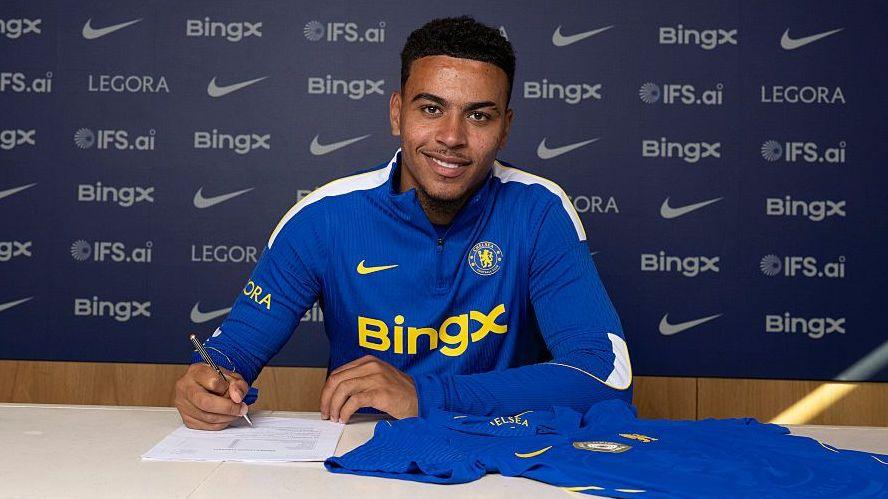
Morgan Rogers joined Chelsea from Aston Villa in a deal worth £118m

Uefa believes “a clear two-speed system” is emerging in the transfer market as a result of the huge spending by Premier League clubs this summer.

In its latest European club talent and competition landscape report, European football’s governing body laid bare just how dominant the transfer activity of English clubs has become.

Uefa’s report said that the estimated €4.6bn (£4bn) spend by Premier League clubs is “larger than that of the next eight largest European countries combined”.

Andrea Traverso, Uefa’s executive director of finance, said that this trend “raises concerns”.

“Transfer values continue to rise sharply, particularly in the English market, increasing future pressure on club financial results,” Traverso wrote.

“These developments also point to an increasing concentration of talent and a growing polarisation of the market, with the emergence of a clear two-speed system.

“English clubs were involved in more than 60% of the deals and paid an average of around €24m (£20.7m) per inbound player, compared with only around €4m (£3.4m) to €5m (£4.3m) in the other major European leagues, underlining a widening gap in purchasing power.”

Traverso said that any “correction in transfer values” or “slowdown in buyer demand” could have serious implications for any club carrying debt.

He added that it has created “a more fragile model” which has left clubs “increasingly dependent on continued market inflation and liquidity”.

The report set out that the transfer spend of the 20 Premier League clubs this year is “equivalent to 56% of their annual revenue” - much higher than the 33% average of the pre-Covid decade.

Uefa also highlighted the increasing trend for English clubs to do big-value transfers between each other, which showed a 44% increase to €1.55bn (£1.33bn).

The English domestic market was “as large in fee value as the next five market flows combined”.

A market flow describes league-to-league deals. After the English domestic market, the next most lucrative was the German Bundesliga to the Premier League, at €690m (£594m).

The number of European transfer fees paid above €50m has significantly increased, from 14 in the summer of 2024 to 23 in 2025. In 2026 there was another jump to 35 such deals, of which Premier League clubs were responsible for 29.

With pressure to pass financial regulations, clubs have increasingly looked to sell academy players as they provide pure profit on the books.

European clubs generated an estimated profit of €6.8bn (£5.85bn) on these sales over the summer, an increase of €655m (£564bn) on 2025.

Uefa also found little evidence of clubs using multi-club ownership structures to move players for inflated or reduced fees.

Total transfer fees of such deals were €152m (£130.8m) with an estimated market value of €159m (£136.8m).

More than half of this spend came from transfers between Chelsea and Strasbourg.

Why this break has come at the worst time for De Zerbi & Spurs
Premier League

Why this break has come at the worst time for De Zerbi & Spurs

By Staff Writer — 24 September 2026

Big spending always means big ambitions, but shelling out so much money on so many players the way Tottenham did this summer produces problems for any manager, and there is no quick fix.

If I was given a bundle of cash and asked to buy an outfit for a wedding, and I spent every penny of it on pink shoes, brown trousers, yellow shirt and orange tie, then I am sure you would all say that just doesn’t work.

That is similar to what has happened at Spurs, where the board backed Roberto de Zerbi to the hilt with an outlay on new players of around £400m.

It was an almost unprecedented occurrence from a club that has always been renowned for being careful with investment in their team, and it sent expectations from many Spurs supporters through the roof.

The club had just avoided relegation two seasons running, finishing 17th twice in a row, but suddenly some fans were looking forward to a season competing for trophies and a top-four finish.

Their early results and performances have been disappointing, of course, but fans have to understand all the different factors that affect you when you are building a team - and it is ridiculous to suggest De Zerbi should be under pressure already, especially after he kept them up last season.

De Zerbi took over as Spurs boss with seven games to go last season and the club 17th in the Premier League. Three wins and two draws were enough to keep them up.

Finding a way for your club to win takes a manager in lots of different directions but they all involve time - on the grass or with social interaction with the players.

Not only has De Zerbi not been given that early time and opportunity, the majority of his players have now been taken away from him for another three weeks on international duty.

De Zerbi has many other issues to deal with, from Tottenham’s poor home form to their inability to recover from conceding the first goal in games.

But his biggest challenge right now will be to fit those players who have just arrived in with the ones already at the club, into a unit that plays as a team and produces results so that the money the club has spent is justified.

All of this will take time, and patience, and all the kinds of little detail that supporters never see.

In my day, we were given time to create a team, and a family. For today’s managers, time seems more limited than ever.

We are only five games into the season but there are already some Spurs fans who seem to think De Zerbi is the worst manager in the world, even though he has proved elsewhere how good he is.

I like De Zerbi’s passion, and his approach. That will count for nothing if Spurs don’t eventually produce, but let’s give him a proper chance.

Spurs, Fulham and Bournemouth are the only top-flight teams yet to win a league game this season.

De Zerbi is a very passionate, straight-talking and ambitious manager who demands total commitment and backing from his board.

He has definitely had that at Spurs, which has left people wondering why he has made such a slow start.

But, before the season started, I thought his biggest challenge with so many different types of players arriving would be to put players together that fit as a team, not as a group of individuals.

I’ve been in that situation myself, for example in my early days at Stoke, when I signed Gerry Taggart and Michael Duberry to play together, two centre-halves who were complete opposites in relation to how they dealt with space on the pitch.

Gerry always wanted to drop off deeper because he wasn’t overly quick, whereas Michael was fast and didn’t ever worry about leaving space behind him.

I couldn’t make Gerry any quicker, so common sense locked in and I had to convince Michael that he would have to take a step away from his main strengths of pace and power and work along Gerry’s lines instead.

We spent a great deal of time on the grass in training until we finally got both working in unison. Both were different, but they understood the importance of working together as a pair for the benefit of the team. Even so, it still took time for it to click.

For any manager trying to build a successful team by developing combinations like that, the main thing you need is time with your players.

It can happen where a lot of new players settle in quickly at the same time and the team starts well - like Sunderland last season, or Brighton pretty much every year when they have lost several key players - but the difference is that while those clubs might also have changed their manager, they have not changed their identity.

Whether it is Sunderland and Brighton, or Brentford and Bournemouth, they all have a set identity so that when they look for a player to fit in a certain position, he has to have certain strengths.

When you don’t have that solid base behind you, knowing exactly what is needed for certain positions, then bringing 10 new signings and all in one window like Spurs have just done, is going to create many issues for the coach.

Each player has a different personality and needs different amount of time to settle in, not only to a new environment but also to adjust to the demands of a very single-minded and demanding coach like De Zerbi is.

This settling-in period would have been covered if all the players had had a pre-season together, to get up to speed with their team-mates and what De Zerbi is asking of them, with his front-foot style of play.

That did not happen, and then even after the season started, Spurs were still adding to their squad.

Coaching a team to be a team takes time, patience and a sound idea of the strengths of all your players.

Even when you have got that, trying to knit every player together takes time, and that is still De Zerbi’s issue now.

For starters, he was always playing catch-up. Because all of his players were not in place when the season began, he missed the opportunity to assess his squad and impose his own principles on his top group of players.

He is a coach at heart and will want to be out on the training pitch conducting a system of work for the team, in and out of possession, that he believes will bring success to the club. This international break means he cannot do that with all his players.

Another issue De Zerbi has is that he has only been in the job a few months and he is still getting to know the existing players, not just the new ones, on and off the grass.

On it, you need to find out who understands the importance of teamwork and who doesn’t, to iron out shortcomings and see what works and what doesn’t.

An example of when you realise something doesn’t work was my experience at a club who had just bought a right-back from a top Premier League team, for more than £1m which was big money at the time.

We were struggling at the bottom of the league when I came in and needed a direction on the pitch that would bring better results.

During the defensive work we were doing in training, the full-back kept picking up what were, in my opinion, poor positions while covering from the opposite side to where the ball was.

I must have stopped the session on at least four occasions to remonstrate with him and give my view, but in the end the lad told me that this is not what he believed was right.

I immediately replaced him with a young full-back from the reserves who had been playing for the opposition in the drill, who understood his role was for the team, and not for himself.

Getting things right off the pitch is so important too, and that involves getting to know what your players’ characters are like, finding out what they are like as individuals, and understanding their lifestyles.

I had three South American players at West Brom who were fantastic lads but we still had to look after them.

I spoke to my assistant, David Kemp, about taking them and their families out for dinner, and by spending time with them and their children and their wives I believe we won a degree of respect and trust that we would never have had if we had not bothered to meet them all together as a family.

You have to realise that players from different cultures can be used to living a different lifestyle, and this can make a difference to how quickly or how well they fit in.

I had one player in the Premier League whose routine I just could not believe, yet he became such an integral part of keeping a struggling club up.

His 24 hours typically played out like this - training from 8.30am to 1pm, home and bed until 9 or 10pm and then up and out again for dinner and then a casino or whatever, until the early hours.

Then he would be up for training, and he would go again.

It took me a few weeks to get to the bottom of this but, once I confronted him, he was adamant that his routine suited his lifestyle. He certainly knew the best restaurants around town, but his performances were always of the highest quality on the pitch.

Did he heed my advice? I think he did, but he was such a great lad, top player and a great team member that he wasn’t a problem anyway.

He had been a bit isolated from the rest of the squad at first, but it just took him some time to integrate.

Again, finding out about him as an individual and making personal contact with him, was important, and it was something I always saw as vital with all my players.

Tony Pulis was speaking to BBC Sport’s Chris Bevan.

Worthing sign Truro forward Johnson-Fisher
Transfers

Worthing sign Truro forward Johnson-Fisher

By Staff Writer — 24 September 2026

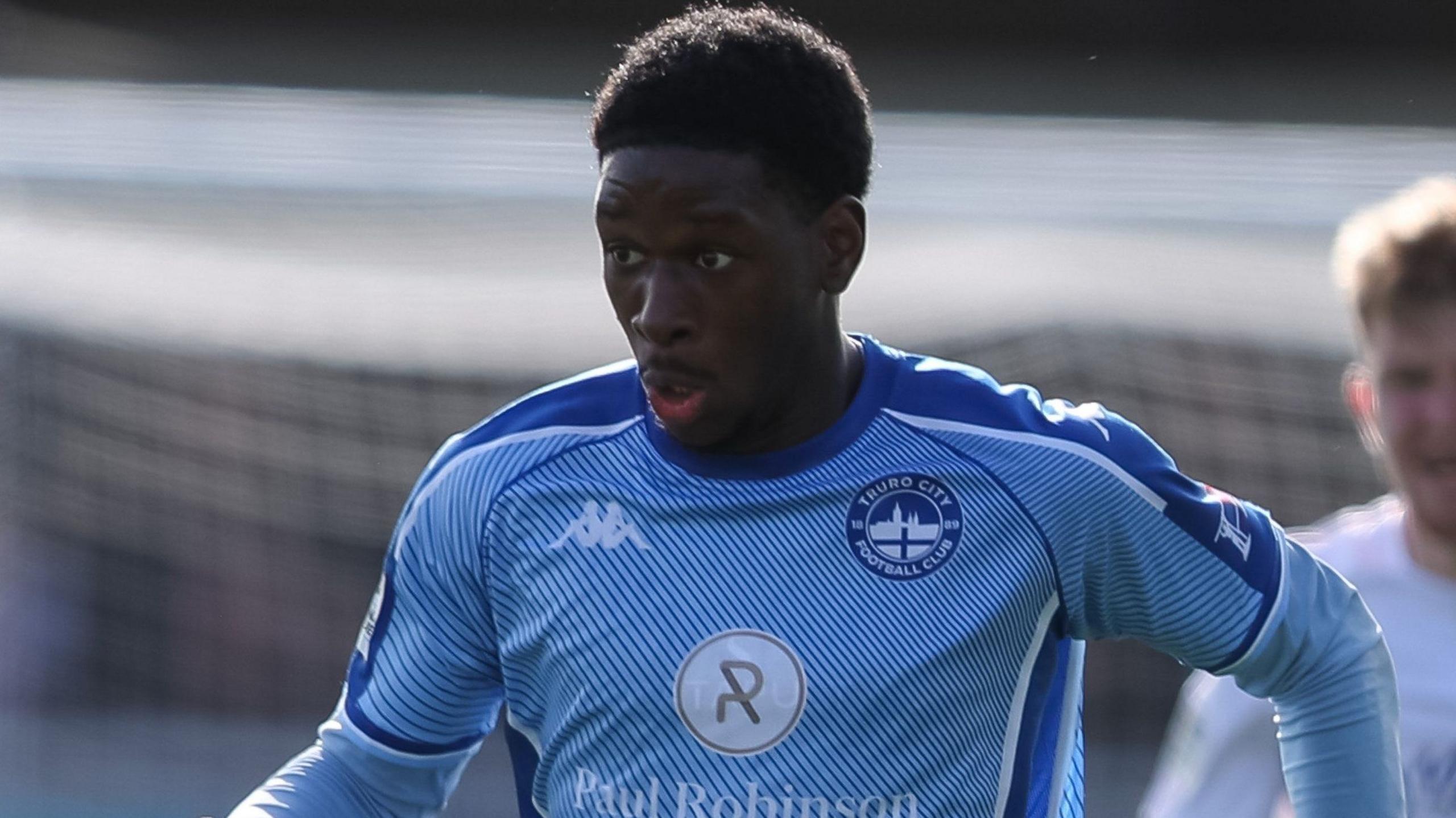
Worthing have signed forward Dominic Johnson-Fisher from Truro City for an undisclosed fee.

The 23-year-old broke into the Truro first team in 2023-24 and has scored 10 goals in 93 appearances for the club in all competitions.

Johnson-Fisher helped Truro win promotion to the National League in the 2024-25 campaign before they were immediately relegated back to National League South last season.

Worthing are 11th in the National League, one point outside the play-off spots, and host Halifax Town in their next game on Saturday.

Chelsea struggles to Villa bench - Garnacho faces defining season
Premier League

Chelsea struggles to Villa bench - Garnacho faces defining season

By Staff Writer — 22 September 2026

Alejandro Garnacho cost Chelsea £40m from Manchester United last year

Just like last season, questions are being asked about Alejandro Garnacho.

Two months after joining from Chelsea on an initial loan, the winger has yet to convince Aston Villa boss Unai Emery of his worth.

The Argentina forward has played just 31 minutes for Villa, spread across three substitute appearances.

A 15-minute outing against Hull is the most time he has spent on the pitch in a game.

Garnacho has been an unused substitute for Villa’s past four matches, watching from the bench again as they won 3-2 at Tottenham on Saturday.

One goal and four assists in 24 Premier League games for Chelsea last term fell below what the Blues expected from their £40m recruit from Manchester United, so he was allowed to move on.

This campaign is only a month old, but 22-year-old Garnacho could be at a crossroads at Villa Park already.

Emery likes to ease new players into his teams.

Youri Tielemans did not start a Premier League game until November 2023 after joining in the summer, but became an integral part of Emery’s machine.

Only Joao Gomes, out of 10 new summer signings, started Villa’s opening Premier League game. Just two - Zion Suzuki and Nicolas Jackson - started the next.

Garnacho’s situation feels extreme though, having been left on the bench for the Carabao Cup win at Coventry when Emery made seven changes.

Academy product George Hemmings, who joined Villa from Forest as a teenager, has started the season well to earn Emery’s full trust and start ahead of Garnacho.

Ibrahim Mbaye, a £47m arrival from Paris St-Germain, made his first Villa start in the 3-1 victory at Coventry and is also preferred to Garnacho for now.

A facial injury in early August hampered Garnacho’s pre-season and meant he missed the Super Cup defeat by Paris St-Germain, adding to the complications.

Emery needs his players to understand their roles and his methods before having full faith in them and he expects Garnacho to catch up.

“Continue working. Work, work, train, work,” Emery said when asked about Garnacho’s absence from the pitch.

“When he can have minutes to play, try to play well. He is progressing, but we have players in front of him now.

“George is playing fantastic. Alysson is also understanding things well and is giving us things I want. [Ibrahim] Mbaye also responded well.

“We want a competitive team and players to compete in the style we have. Garnacho is a little bit behind because of some circumstances we had in pre-season. It is time to be patient for the time he needs.”

Garnacho, who first made his name as a livewire teenager, has shown in the past he can torment defences at Premier League level.

He spoke about needing time to adapt to a “different club and a different place” at Chelsea.

A further season of struggle would be a significant setback.

Emery is clearly yet to be convinced by what he sees in training, despite being a long-term Garnacho admirer.

Villa wanted more pace in their side and Crysencio Summerville was considered before he moved to Saudi Arabia’s Al-Hilal.

Chelsea’s £117m signing of Morgan Rogers from Villa left a gap for Emery to fill and Garnacho was available. A positive relationship between the clubs allowed for easy discussions.

Striker Jackson also joined from Chelsea for a Villa club record £65m and there have been eight deals between the clubs in the past four years.

Alejandro Garnacho suffered a facial injury against BG Pathum on Aston Villa’s pre-season tour in Thailand

Garnacho did not train with Xabi Alonso’s Chelsea squad before leaving for Villa Park in July.

Roma were interested in the winger, but their loan offer did not suit Chelsea. Instead, Villa’s deal gives the Blues the chance to make their money back after last year’s outlay.

There is an obligation to buy tied into the loan that is believed to relate to appearances, and it is expected to be achievable - but that does not guarantee anything.

For instance, Harvey Elliott would have triggered a move worth £35m if he made just 10 Premier League appearances last season. As it turned out, the Liverpool loanee - now at Valencia - was used just four times by Villa in the top flight.

Emery did not feel the 23-year-old was good enough and made up his mind not to sign Elliott permanently just a couple of months into the season.

It raised the question for some within the game about whether a loan at Villa should be viewed with caution, and whether other players’ careers could be derailed in the way Elliott experienced.

It was accepted that Elliott’s options this summer were not as extensive following his season at Villa Park.

Time will tell whether Garnacho faces the same struggles, having experienced his career stalling over the past two years.

He made his Manchester United debut aged 17 and was part of Argentina’s Copa America-winning squad in 2024, but has not added to his eight international caps since November of that year.

The Madrid-born attacker also won the Premier League’s goal of the season award in 2023-24 for his overhead kick against Everton while playing for United, but his output for Chelsea was disappointing.

Emery is waiting to see Garnacho fulfil his full potential at Villa, but the winger will have to wait until he gains the coach’s trust, and then take his chance.