Halifax sign Houghton on loan from Blackburn
Transfers

Halifax sign Houghton on loan from Blackburn

By Staff Writer — 30 October 2026

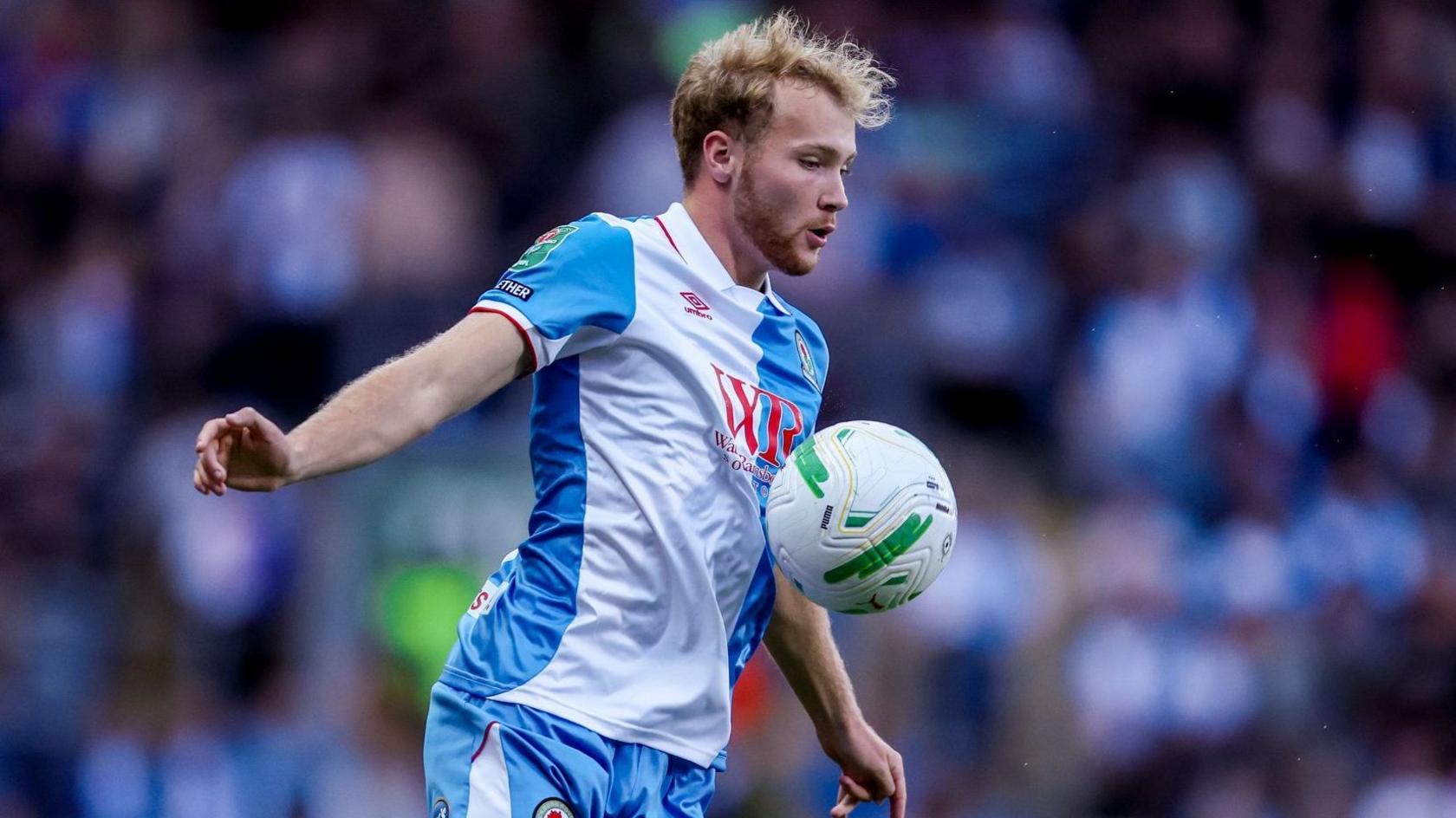
FC Halifax Town have signed defender Lucas Houghton on a month-long loan deal from Championship side Blackburn Rovers.

The 19-year-old right-back made his debut for Rovers’ senior team in their 2-1 defeat by Sheffield United in the Carabao Cup in August.

He joins in time to be available for selection for the Shaymen’s home fixture against Yeovil Town on Saturday [12:30 GMT].

How talking about Man Utd's cycle of doom became an industry
Premier League

How talking about Man Utd's cycle of doom became an industry

By Staff Writer — 30 October 2026

Manchester United. More a high-volume content farm than a football club these days.

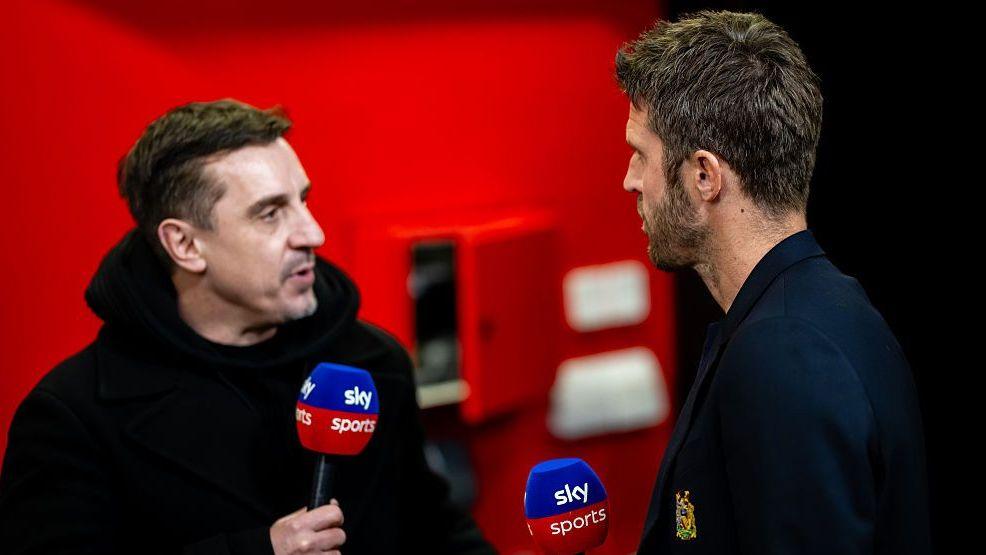
Michael Carrick’s starring role in what has become one of the nation’s favourite soap operas has been extended for at least another week, with the 45-year-old set to be in charge for Saturday’s visit to Chelsea.

Good news - you’d think - for Carrick. But even better news for Amazon’s All or Nothing camera crews, who have been given “unprecedented” access to document the behind-the-scenes goings-on at Old Trafford this season.

United fans will presumably be relieved when the football resumes on Saturday, if only to break up the constant stream of opinion for 90 minutes.

But while the wall-to-wall reporting of one of the world’s biggest football clubs is hardly new, the unrelenting coverage from former players is a growing phenomenon.

It is easier to name the Manchester United legends who don’t have a platform from which they scrutinise the club’s every move than those that do - and it begs the question whether the club’s demise has been industrialised into a content-creating machine.

Whether supporters feel comments from ex-players are damaging or not differs from fan to fan, but what cannot be denied is how difficult it is to escape their views.

Sky Sports pundit Gary Neville provided scathing on-air commentary during United’s 3-0 defeat by Bournemouth last Sunday, before conducting a post-match podcast in the Old Trafford gantry in which he accused some of their players of being unprofessional.

“There’s a couple of them… I live in Manchester and they’re not that professional, some of them,” Neville stated.

“I’ve got no time for them. There’s a few of them that don’t go to bed at the right time. Don’t eat the right things. Don’t think about Manchester United every single minute of every single day.”

But it’s digital and streaming platforms that are re-defining a new age of analysis.

Neville launched The Overlap in 2021, and its success across video and podcast platforms has seen the channel become one of the most influential outlets in sports media.

On Tuesday, Wayne Rooney appeared on Neville’s Manchester United-dedicated YouTube channel ‘Stick to United’ where he said Carrick’s players “need a firework up their a***”.

Neville has since hosted his own The Overlap show where he said managers sometimes need to be sacked “for their own good”, while ex-United captain Roy Keane said Carrick and his backroom staff are “lucky boys” to still be in jobs.

Neville acquired a network of YouTube channels from United influencer Mark Goldbridge last summer, which has significantly increased the channel’s coverage of the club.

Largely known for viral clips of his expletive-laden rants during streamed ‘watchalongs’ of their matches, Goldbridge’s YouTube channels had amassed more than 3.7million subscribers.

Goldbridge - whose real name is Brent di Cesare - now co-hosts the ‘Stick to United’ show with Rooney, the club’s record goalscorer.

But Neville, Rooney and Keane are far from the only ones setting the agenda.

Class of ‘92 pair Paul Scholes and Nicky Butt co-host their own podcast called ‘The Good, The Bad & The Football’.

Before last season’s Manchester derby at Old Trafford - Carrick’s first home game in charge - Butt said City striker Erling Haaland would “pick Lisandro Martinez up and run with him”, while Scholes said the Norway forward would “throw him in the net” after scoring.

United won the game 2-0, with Martinez putting in a stellar performance.

Asked about Scholes’ comments after the match, the Argentine defender said: “Honestly, he can say whatever he wants. I told him already, if he wants to say something to me, he can come to wherever he wants. To my house, wherever. I don’t care.”

Asked during Thursday’s news conference how he deals with the ‘noise’ from former team-mates and ex-players, Carrick said he avoids it as best he can.

“I don’t see it really. I see the things that I need to see,” he added.

“I don’t look for it - it doesn’t really help in any way.”

“I’ve said it before, I care about what the supporters think. I care about what it feels like in the stadium, and them travelling to games for us, to come and see us and support us. I care about what we give them, and what we offer them, and what they see. I genuinely don’t take any notice of anything else.”

Where once a low rating in a newspaper could anger players, they now have to deal with days of debate after a bad result or below-par performance.

Former manager Erik ten Hag recently alluded to the difficulty his Manchester United squad had dealing with the opinions of people like Neville and Rio Ferdinand, and said former players could be “more helpful” to the club.

“I did nice interviews with them both [Neville and Ferdinand], so it didn’t hurt me. Of course, they have podcasts, they have their models,” Ten Hag told The Athletic.

“Sometimes it’s difficult for players. Some of them get affected by it, get annoyed by it.”

“They achieved massive successes. But also, they can help the club more, help the players more. There should be two ways that they support it. But I think always the thing you most love, you most criticise.”

It is a point Neville agrees with.

Speaking on Ferdinand’s podcast last summer, it was put to Neville he had been overly critical when covering his boyhood club.

“It’s a balance though Rio, isn’t it?” he told his former United team-mate.

“It’s like, do I want [Manchester] City to win the league? I absolutely don’t want City anywhere near the league title.”

And he insisted “United are the hardest games I do”.

“People might think that I’m more critical of United when they don’t play well. Sometimes, over the last maybe 10 years, the balance, maybe I’ve not got it right,” admitted Neville.

But, having won 18 major honours in 19 years at Old Trafford, few are better placed to judge the club than Neville.

“There was a banner in the first half [against Bournemouth] that was held up in the Stretford End - ‘standards’. They went a long time ago,” he said last Sunday.

Like Neville, Butt also came through United’s academy and said former players have the club’s best interests at heart.

“When it goes bad, you can’t cry and go, ‘Oh, they’re [ex-players] having a go at us’,” explained Butt back in January.

“We love the football club. I’ve been a Manchester United fan since the age of six or seven, as long as I can remember. I’m not saying it to go, ‘Let’s stab everybody in the back’. I’m saying it because it is genuinely c**p.”

While the club would rather be awash with positivity, negative coverage is consumed by a wider base that more regularly includes non-Manchester United fans.

It’s difficult to apply a value to the club’s popularity but United have remained one of the highest-grossing football clubs in world football since last winning the Premier League in 2013.

Much of their off-field success has been underscored by industry-leading commercial deals, as well as strong matchday revenue. Only Arsenal made more money from matchday revenue last season in the Premier League.

Former executive vice-chairman Ed Woodward angered supporters in 2018 when he said: “Playing performance doesn’t really have a meaningful impact on what we can do on the commercial side of the business.”

Being a constant source of attention is something that the club and supporters have regularly boasted about, too.

The ‘hated, adored, never ignored’ mantra regularly appears on banners at Old Trafford, while the club even released a clothing range that adorned the slogan.

It’s fair to say, then, that the club are as guilty as anyone in capitalising on their global fame and ability to grab headlines.
Why managers must put their own fitness first - Pulis
Premier League

Why managers must put their own fitness first - Pulis

By Staff Writer — 30 October 2026

A lot has changed for football managers over the past few decades but Vincent Kompany’s recent health scare was a reminder it is still an all-consuming occupation that takes its toll physically and mentally.

From the tragic death of Scotland manager Jock Stein after a World Cup qualifier against Wales in 1985, to the different heart issues suffered by Graeme Souness, Sir Alex Ferguson, Gerard Houllier, Joe Kinnear and Harry Redknapp down the years, I’ve always been aware of the dangers of my job.

It is 25 years since then Leicester boss Dave Bassett and Bolton manager Sam Allardyce took part in an experiment that saw them wired up to heart monitors during a game between the teams, and both their heart rates reached critical levels.

It’s not just during games when management can have an adverse effect on your health, either.

The stress you are under is relentless and you have to find a way of looking after yourself. Fortunately this was something I realised very early on in my management career.

Kompany collapsed at Bayern Munich’s training ground and the cause has been identified as meningeal irritation - an inflammation of the protective membrane surrounding the brain and spinal cord.

I had worked under and alongside managers for my entire working life as a player and then coach, but it was only when I got my first management job - at Bournemouth in 1992 - that I realised the workload you undertake and just how time consuming and stressful a job it is.

In those days, and in fact throughout my whole career, I wanted to be the person who made all the footballing decisions at my club.

That meant I did everything from scouting players to signing the ones I wanted, and organised my staff at every level from first-team to the reserve and youth teams, all within the club’s financial restraints.

I saw the first-team performances as being my main responsibility so I never wavered from my work on the training ground either, coaching a certain way that suited the players and gave them the best chance of winning games - which would ultimately determine my future.

All of the above was generally the way most English clubs were run so it was not just me doing it. But the demands were relentless, and I had to learn how to look after myself properly to cope.

During those early days, my management of myself personally was really poor.

It starts with your diet. At that time I would be driving up and down the motorway to watch players, trying to find a fish and chip shop or fuelled only by a half-time pie or a sandwich from a local shop.

I was young and could deal with it, so it never crossed my mind that I wasn’t eating well or getting the exercise I needed to retain my own fitness levels.

But, at the same time, the pressure on the team to win games ultimately fell on my shoulders so the pressure of being the person responsible for results and performances every week really built up.

I had never realised how stressful that part of management was until we started to lose a few games and every bit of criticism was directed on to my lap.

That part has not changed for managers now.

They may have less to do with the way their clubs are run now but they still have to deal with people they have never met criticising their ability to do a job they love to media outlets, without taking into consideration any other factors that might be contributing to those performances and results.

That’s why it’s so stressful. All the arrows and guns are pointed in your direction, and you have no way of protecting yourself, apart from by winning games.

Many a young manager will have experienced these factors, which could and would affect their health and wellbeing.

The turning point for me came when I spoke to an Australian triathlete just before I left Bournemouth in 1994.

His advice was pretty blunt and straightforward. He told me doing my job was physically hampering my own fitness levels - but more worrying were the stress levels that came with it, because they could have a major effect on my life itself.

It was only after having that conversation that I realised the compromises I was making for my career at the cost of my own health.

I came to the conclusion that in my next job, if I got one, I would dedicate myself to a more manageable lifestyle and put my own fitness first.

I decided I would work out early every morning before breakfast at the club I managed, so I could then dedicate the rest of my day to my work.

Yes, there were days I would be empty and would only walk and stretch, but generally I stuck to that rule and worked hard to keep on top of myself physically.

At Gillingham in 1999, I decided to run a marathon - my first London Marathon - which got me focused during the season in respect of my physical health.

That was my first challenge of many I have taken on for charity down the years. I have also cycled from John O’Groats to Land’s End, walked up Mount Kilimanjaro, and rowed from Tower Bridge to the Eiffel Tower.

All of this exercise also helped my stress levels, especially in respect of sleeping. Being tired going to bed really helped my sleeping hours and meant I was never kept awake worrying about what was going wrong at work.

There were other ways I looked after my mental health too. Even as the internet exploded, I have never read any press, good or bad, about me or my team.

I always worked as hard I could at every club I was with, and picked good staff who I was able to confide in, but I was able to switch off too, thanks to my family.

I’ve written in previous columns about my routine after games and how I would often drive home to the south coast on a Saturday night, reflecting on our result and starting my preparation for our next game.

But Sundays were always about spending all day with the family.

Whether it was watching my son Anthony playing football as a young boy, or just being around the children full stop, that was how I relaxed and that day with them became a release valve which was an important part of my routine.

When I speak to young managers now, I give them the same advice I followed.

You have to maintain your enthusiasm for looking after yourself, because this is the time when you will need it the most. Under the constant stress you will put yourself under, it is dangerous not to.

But, while everyone knows the risks of the job, many are prepared to take them. I always was.

Years ago, managers’ health was never much of a concern to clubs - we probably drank too much and ate too many of the wrong foods, at all hours of the day and night, but that was just part of the lifestyle that went with it.

Now, there is lots more support - the League Managers’ Association offers frequent health testing under its ‘Fit To Manage’ programme, and most clubs’ medical staff will now ensure that not only are their players properly looked after, the coaching staff is too.

A manager’s life can still be a lonely place, but thankfully the help available is on a different level to where it was at the start of my career.

Tony Pulis was speaking to BBC Sport’s Chris Bevan.

Experienced Duffy joins Derby on free transfer
Transfers

Experienced Duffy joins Derby on free transfer

By Staff Writer — 29 October 2026

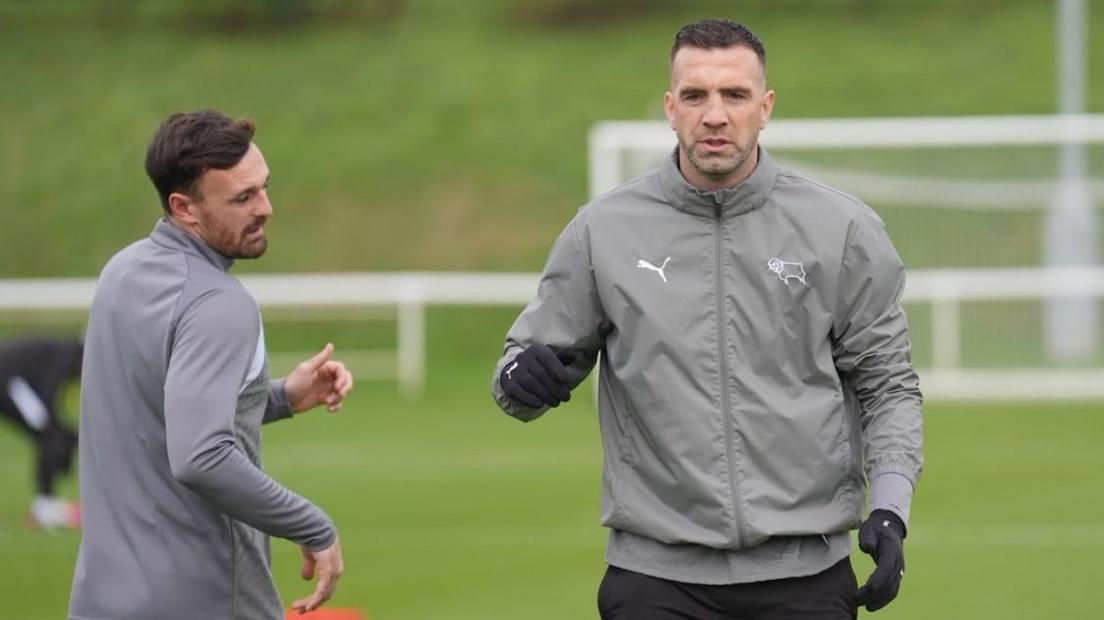
Experienced centre-back Shane Duffy has joined Championship side Derby County on a free transfer following his release from Norwich City in the summer.

The 34-year-old has signed a two-month deal after impressing during a trial with and will be available for the Rams’ trip to Millwall on Saturday (15:00 GMT).

Derby sit 23rd in the table and have six defenders missing through injury including centre-backs Matt Clarke (calf), Erin Cashin (calf) and Sondre Langas (groin).

Duffy has made more than 500 appearances for club and country, earning 61 caps for the Republic of Ireland and scoring seven goals. However, he has not featured for the national side since 2024.

“Shane’s coming in with great experience and know-how,” head coach John Eustace told BBC Radio Derby.

“He’s coming to help the group with training, to help the players who are playing at the moment and with a bit of luck we can keep him fit and get him going.”

Duffy’s last league appearance was November 2025 during Norwich’s 3-1 win over QPR.

Eustace added they will work on his fitness and utilise his experience during his time at Pride Park.

“We’ll give him the opportunity to get fit over the coming weeks, but just to have his voice around the group will certainly benefit us,” he added.

“Matt Clarke is the best defender in the league in both boxes for sure. We’ve certainly missed him and I think Shane is very, very similar.”

“He’s been promoted out of the league, played in the Premier League, and has lots of international experience. He’s just a good character to bring in and to help the group.”

Duffy spent six years at Brighton & Hove Albion between 2016 and 2022, helping the Seagulls secure promotion to the Premier League in 2017.

He has also had spells at Blackburn Rovers, Celtic and Norwich City, where he made 91 appearances and scored five goals.

All Spanish cup matches suspended after Madrid train collision
Champions League

All Spanish cup matches suspended after Madrid train collision

By Staff Writer — 28 October 2026

Spain’s Prime Minister Pedro Sanchez said he was “shocked” by the train accident and offered support to all the victims and their families

All 24 matches in the Spanish Copa del Rey due to take place on Wednesday have been suspended as a mark of respect after at least 68 people were killed in a train crash near Madrid.

More than 500 passengers were travelling on the trains when they collided and derailed in Toledo.

In the statement released by the Spanish FA (RFEF), authorities said the decision has been made in solidarity with the victims.

Five top flight teams, Levante, Alaves, Valencia, Celta Vigo and Real Betis were due to play in the first round matches on Wednesday.

Spanish giants including Real Madrid, Barcelona and Atletico Madrid aren’t due to enter the competition until the last-32 round.

Barcelona expressed its “deepest condolences” to the victims of the accident on social media.

“FC Barcelona expresses its deepest condolences to the victims of the serious railway accident between Los Yebenes and Urda (Toledo).

“The club wishes to convey its support and solidarity to the families and friends of the victims and to wish all those injured a speedy recovery.”

Real Madrid took to their website to offer “full support” to the emergency services.

“Real Madrid C. F. wishes to express its deepest sorrow over the tragic railway accident that occurred in the province of Toledo.

“The club extends its condolences to the families and loved ones of those who lost their lives, as well as its affection and solidarity to the injured and all those affected by this terrible accident.

“Real Madrid would like to express its full support to the emergency services and all those working in the rescue efforts, and shares in the grief of everyone impacted during these moments of profound sadness.”

Thursday’s matches remain unaffected with the RFEF not yet releasing the revised tournament schedule for Wednesday’s postponed games.