How Ukrainians are uniting behind Shakhtar in London
Champions League

How Ukrainians are uniting behind Shakhtar in London

By Staff Writer — 14 October 2026

Shakhtar’s UK-based fans relish opportunities to watch their team, with Crystal Palace’s away section selling out in an hour

Artem Genne’s favourite footballing memory is standing on the Donbas Arena pitch, waving the Champions League flag, before Shakhtar Donetsk faced Chelsea.

That was in 2012. Two years later, the Russian-backed capture of Donetsk led many Ukrainians to leave the city, including ardent Shakhtar supporter Genne.

A large number fled to other areas of Ukraine and beyond, with the region’s football club forced to find a new home. Fourteen years later, they are still searching.

It has led Shakhtar to Kyiv, Lviv and Kharkiv in Ukraine, and Poland, Slovenia and Germany for European games.

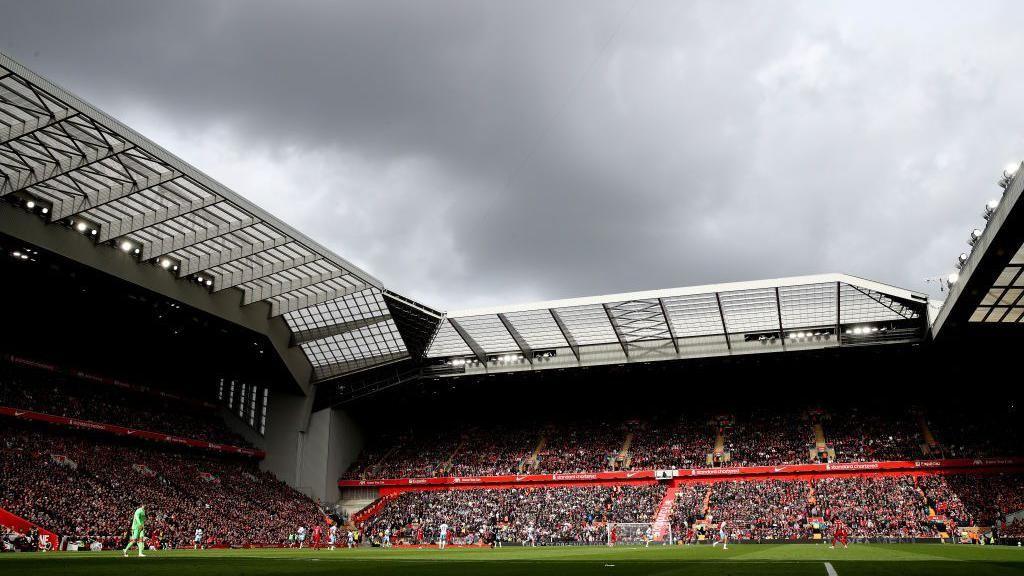
This season they will play their home Champions League fixtures at Chelsea’s Stamford Bridge, with Genne, who now lives in the West Midlands, aiming to attend all four - starting with AEK Athens on Wednesday.

“When the invasion started, lots of people left, thinking that it’s all going to be over in several weeks, we’ll be coming back. But unfortunately, that didn’t happen,” he says.

“When I meet people from my home area of Ukraine abroad, it gives you a sense of home and hope.”

“Knowing that you’re sharing the values and you remember the times when it was different, that’s important. It gives you a bit of a soft tear because that’s something you cannot touch any more.”

“In the UK, people are very supportive and I want to highlight that I’m extremely grateful to this country for hosting so many of our people at the most difficult time.”

“When you’re walking around in a Shakhtar shirt, people are clapping their hands and giving you high fives and there is no aggression whatsoever.”

Since the Russian-backed annexation of East Ukraine, Donetsk have featured in some form of European competition every season.

Dima Prasolov, who left Donetsk for Kyiv after the war started and now lives in Kent, is another who will be supporting, with fans able to buy a four-game pass.

“I was ecstatic because it’s the first time in about 15 years that I will be able to buy some sort of a season ticket for Shakhtar,” says Prasolov.

“It really means everything to me because it’s the club I’ve been supporting all my life. But since the Russian invasion, for us Donbas people, watching our team regularly is almost impossible.”

“For me, it’s a very emotional situation, because of how much the club means to me and how dedicated myself and my family are to the club.”

Indeed, the London stadium offers a brief safe haven from the uncertainty faced in Ukraine.

Chief executive Sergei Palkin says Shakhtar have had to move their under-12 team to a safer area of Kyiv following recent attacks, while their women’s side had a match disrupted by a nearby drone strike.

“Every day when our team goes to the pitch, it’s much more than football because behind it we have a lot of challenges every day,” says Palkin.

“It’s a human question, a mental question, a family question for our players, for the academy and so on. The most difficult and important challenge is uncertainty.”

“You wake up in the morning and you don’t know what’s going to happen today or tomorrow.”

Palkin adds: “Part of our role when we play in London and other cities in Europe is to send these messages and remind people what’s going on.”

Shakhtar’s general director is hoping for an average of 30,000 supporters at Stamford Bridge for the four home games.

This week’s occasion is more important than just watching Shakhtar. It will be a chance for Ukrainians to come together in London, even involving rival fans.

The dynamic of Ukrainian football support has changed for many clubs since the invasion in 2022. Shakhtar’s fanbase, meanwhile, has shifted since 2014, with many ultras fighting in the war but still supporting their clubs from afar.

“My two friends are supporters of Dynamo Kyiv, but in Europe we support each other,” Genne says.

“It’s about representation of the country. The hooligans don’t fight any more with each other because they know they have one enemy and it’s not the football enemy.”

The decision to play in London was met with some scepticism in Ukraine because of the difficulty for fans to visit the UK - a visa costs £135 and you must apply at least three months before entering.

One Shakhtar fan, who is speaking anonymously but attends many home and away games in Ukraine, says: “That sort of money for some Ukrainians is a monthly income. And no-one has time in Ukraine now to wait a few months for a visa.”

“So the poor thing is we want to support the team, but we can’t go to support because the regulation in England is crazy now.”

Instead, fans will watch in pubs all over the country, with similar support from beyond Shakhtar’s traditional fanbase.

The fan adds: “When Shakhtar play, it’s like a big family. It’s more than rivalry because they represent Ukraine. Ukraine is always the first place. Then comes football.”

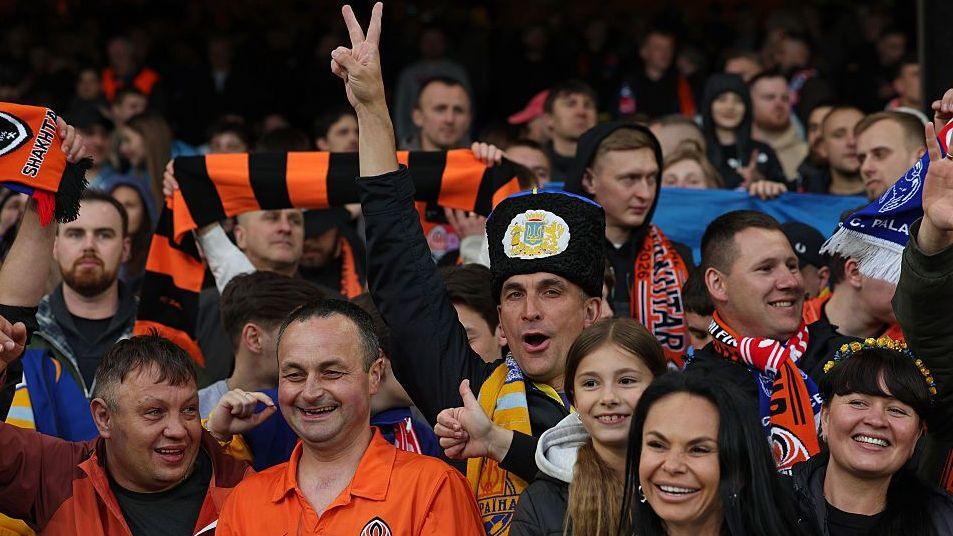
It is expected many fans in attendance will be travelling from within the UK to watch Shakhtar, which is a common occurrence for the Miners when they have previously played away games in England.

When tickets went on sale for the club’s away leg against Crystal Palace in the Europa Conference League semi-final last season, and when they played Arsenal in the 2024-25 Champions League campaign, Shakhtar’s allocation sold out in an hour.

Prasolov explains: “The club are making a big gamble on the existing Ukrainian population in London, of which in west London there is a big Ukrainian diaspora that’s been there for a number of years.”

“They are actually a very passionate fanbase of all things Ukraine. Any time Ukrainian teams plays in London, they always turn up.”

“There will be lots of Ukrainian national songs and chants. It will be a good atmosphere for sure. I think people will enjoy it. It will be very friendly.”

It is also an opportunity to celebrate Ukrainian culture, with many fundraising activities helping to fund supplies in their home country.

“There’s a massive community,” says Genne. “There are constantly events like concerts with Ukrainian artists and they fund-raise for med kits, for equipment, for everything.”

“We’re all united by the symbol to liberate our country and to do what we can. Even though we’re far away, we help with what we can.”

“It’s great that there will be another reason for Ukrainians to get together. It’ll be something positive rather than something that’s not so positive, which unfortunately is happening a lot more lately.”

The club want to use this opportunity to bolster relations with Ukrainians living in London.

Palkin says: “We have a very good connection with the Ukrainian diaspora in England.”

“We will do activities with Ukrainian children living in London. We will come to schools, bring them to training sessions and connect them with the team.”

“For Ukrainian people living here, it’s a good connection to Ukraine.”

London has welcomed many of the roughly 265,000 Ukrainians who took refuge in the UK, and Shakhtar hope to keep raising awareness of issues faced back home.

“For Ukraine, it’s very important to be visible at this moment of our history. And for us it’s very important because we are playing for our nation,” says Palkin.

“At this moment 99% of news coming from Ukraine is all negative. To see Ukraine represented in a tournament like the Champions League is very important. It means one message: that we are alive, Ukraine continues to fight, continues to work, continues to live and continues to compete on this stage.”

Amir, another Shakhtar fan in the UK, left Donetsk at 15 and now lives in London.

Seeing the club competing in the Champions League remains important to such supporters.

Amir says: “I think it is a beacon of hope. Seeing Ukrainian sportsmen succeeding internationally gives a lot of reassurance and a sense of power to the Ukrainian people.”

“There is a sense of reconnection to their roots and the national achievements for Ukrainians living abroad.”

“In a way it is quite important the club that is from Eastern Ukraine which is currently occupied by Russia is the club representing Ukraine internationally.”

“It is important internationally as a reminder of the regional roots of Shakhtar and of Donetsk overall.”

Wednesday’s game against AEK Athens will mark an emotional moment for many Shakhtar and Ukraine fans, before Real Madrid, Sporting and Fenerbahce also visit.

Genne says: “Any sort of positive news, any positive results, are bringing people joy and making us a little bit happier.”

“It doesn’t make us forget about all the rest of the things that are happening, but it makes us a bit more joyful.”

“Like remembering what joy of life is, in supporting your club, having fun, coming together, having the sense of community.”

“It’s way more than just football and analysing a player’s performance and goals. It’s way, way more than that.”

Additional reporting by Nizaar Kinsella.
Jackson steps up again as Aston Villa revival continues
Champions League

Jackson steps up again as Aston Villa revival continues

By Staff Writer — 14 October 2026

Nicolas Jackson celebrated his first-half double by making a cutting motion which proved fitting on a night Aston Villa found their clinical edge.

A first win at Villa Park this season, three first-half goals with six in total and a commanding Champions League victory - all in the biggest European win in their history.

Unai Emery said his side had been impacted by the rebuild of the North Stand after three winless games at home this season but they showed no signs of struggle against Fenerbahce.

A dominant victory against the Turkish visitors leaves Villa already well placed to reach the Champions League knockout phase and will add to their slowly growing momentum.

Questions had been building as Villa picked up just one point from their opening three Premier League home games this season even if Saturday’s 2-2 draw with Brentford ensured they avoided a third-straight home league defeat under Emery for the first time since February 2024.

Against Fenerbahce, they found a willing opponent. Scattered with former Premier League players, including Ederson, Nathan Ake, Romelu Lukaku and Nelson Semedo, the visitors would have been a formidable foe five years ago.

Instead, they folded quickly in the first half - despite Zion Suzuki’s two important saves - as Johan Manzambi and Jackson’s double put Villa in complete control.

The goals came in front of the skeleton of the North Stand, which will not have gone unnoticed as they had previously scored only once when attacking that end this season.

Ross Barkley’s double and Tammy Abraham’s late tap in added to the visitors’ woes and underlined Villa’s dominance.

They last scored so many in a 6-1 win over Brighton three years ago and had previously put five past Hibernian in the Europa Conference League in 2023.

The result provides another springboard and extends Villa’s recent form to just one defeat in their last seven games.

However, Emery’s rebuild will still take time. Before the international break, he described the opening five weeks of the campaign as similar to still being in pre-season with 10 new players to adapt following a chaotic summer of change.

Reflecting post match on how things are now progressing, he said: “They (Fenerbahce) didn’t deserve 6-0 but for us it was very important how we achieved the first win at home and how we managed with different players, our progression and step forward.

“There is still a lot of work to do and we need time, we are progressively getting better and it was a good step forward. In the Champions League the three points are important. We want to be a protagonist in the Champions League.

“Now the clear objective is against Newcastle because of the lack of points in the Premier League.”

The shoots of progress are already evident.

Manzambi glided past powerless Fenerbahce tackles, Ibraham Mbaye found space to exploit - even if he needs to improve - and Jackson was clinical.

Leon Goretzka made his debut as a late substitute and Suzuki remained commanding, continuing to slip into his role with ease.

“I think that’s what Emery has been talking about with the potential of this team and what they can do,” former Villa captain Stiliyan Petrov told TNT.

“There’s been a lot of questions from the start of the season, even for this game as well. People asking how far they can go in this competition but it seems as though they’re clicking together and there’s a flow to their game.

“The players that Emery has brought in are starting to perform really well and it’s a well-deserved win.”

Record £65m signing Jackson came to replace the departing Ollie Watkins after his £50m switch to Al-Hilal.

He joined having helped Bayern Munich win the Bundesliga last season on loan from Chelsea, and on moving to Villa Park was reunited with Emery.

The pair worked together at Villarreal, with Emery giving him his debut with the Yellow Submarine.

The 25-year-old scored the final goal for Emery at Villarreal before the manager left for Villa in October 2022, a last-minute winner against Almeria, and has repaid the faith quickly on their reunion.

The only thing missing for Jackson was a potential hat-trick, with Barkley - the pre-arranged penalty taker - scoring from the spot.

“I wanted to take it but the most important thing is we win. Hopefully next time I’ll get the hat-trick,” Jackson told TNT Sports.

“It’s very important. We haven’t won at home. Our keeper is amazing.”

Jackson’s four goals in three games and five for the season in total allow Villa and their fans to move on quickly from Watkins, their record Premier League scorer, following a summer exit that threatened to turn acrimonious.

Emery added: “Jackson is doing a fantastic job.

“He’s scoring, he’s working defensively [and] helping the team. This is very important and maybe in the future he can shoot (from the spot) as well.”

Villa, and their new-look forward line, will now be eager for Saturday’s trip to Newcastle, especially as Matthias Jaissle’s side shipped four against Coventry on Monday to leave them with the joint-worst defensive record in the Premier League.

And Jackson hopes he can prosper alongside his attacking colleagues.

“He [Johan Manzambi] is a top player. I’m really happy we’re playing together. I hope we score many more goals together,” Jackson said. “[Ibrahim Mbaye] is [also] an amazing player. We’re in the [Senegal] national team together and hopefully he’ll get more time to play [for Villa]. He’s very fast and it’s good to have him.”

On night of mayhem for Liverpool, Barcola arrives in style
Champions League

On night of mayhem for Liverpool, Barcola arrives in style

By Staff Writer — 14 October 2026

On the eve of Liverpool’s meeting with LASK, manager Andoni Iraola was repeatedly asked about the fortunes of Florian Wirtz and Bradley Barcola.

Given their price tags, the pressure was on both to start delivering after stuttering starts to their individual campaigns. Iraola, as most managers would, stood by his players, insisting he trusted them “100%”.

Iraola insisted the focus was on the collective rather than individual stats but there is no denying that when you spend such eye-watering sums - £116m on Wirtz and £123m on Barcola - you want those players to be match-winners.

Wirtz delivered a fine display in the Austrian city of Linz as Liverpool won 6-3, with an assist to show for his efforts.

However, this was a night where the headlines belonged to Barcola, who on the 238th appearance of his career across clubs and country combined, scored his first hat-trick.

And it was those three goals which proved to be the difference as Liverpool returned to winning ways after their 3-0 loss to Manchester City on Sunday.

In truth, the 24-year-old could have scored more such was his quality, but he did enough to take the match ball home after two fine finishes with his right foot and left foot, followed by a tap in after the break.

And a little over 24 hours after defending his players against those pre-match questions, Iraola was speaking with a smile on his face.

“I’m really happy for Bradley,” Iraola said.

“You were asking me yesterday about him not making the numbers and [the same with] Florian and I think both of them today played really, really well. I think they made a difference.

“Bradley was a threat, always when one-on-one [and] certainly in behind. He helped us a lot to control the game, finding the pockets. I am happy for both of them.

“I think for their confidence it’s very good. I think they feel now that we trust them a lot. I think it’s going to be very good, very good for them.”

On what it could mean for Barcola, Iraola added: “I think he has to enjoy this [as] to score a hat-trick in the Champions League is always very difficult.

“Even yesterday in training, I could feel he was very lively. Sometimes you feel these things [are going to happen]. We were feeling he was in a good place going into the game.”

Barcola will now hope to show that level in the Premier League, starting with a visit to Brentford on Saturday.

Iraola’s side were relentless in the first-half against the Austrian Bundesliga champions, racing into a three-goal lead. Such was their dominance, they could have easily scored more.

The 19 shots Liverpool had by half time against LASK was the most on record since 2003-04 by any team in the first half of a Champions League away match.

If there was any criticism, it would be that they were guilty of becoming a little complacent in the second half, conceding three goals after the hour mark but in fairness, the job was all but done.

There were more positives to take on the night, with both full-backs coming into the side and performing well. Jeremie Frimpong scored and registered two assists while Kostas Tsimikas added two assists of his own.

Ronald Araujo also scored his first goal for the club since joining in the summer and Lewis Koumas got no less than he deserved when he got on the scoresheet in the second half.

The 21-year-old even had two goals ruled out for offside but his first-half assist for Barcola meant that he became the youngster player to score and assist in a Champions League match for Liverpool (21y 25d), with the previous youngest being Steven Gerrard (21y 139d v Dynamo Kyiv in 2001). Fine company, indeed.

But Liverpool will know that they won’t get many easier games than this over the course of the season. LASK came into this game, winless in their past four matches.

“What do you take from that? It’s very difficult because the game was very passive for large periods,” said Stephen Warnock on 5 Live.

“There were parts where I am watching Trey Nyoni in midfield and he has literally got no pressure on him at all, he is picking passes off.

“Barcola has got the run of his full-back who was taken off at half-time, which tells you everything.

“I don’t read too much into it, because I expected Liverpool to go there and win, and win comfortably.”

Warnock added that a bigger test for Liverpool will come at Brentford on Saturday, the Bees fourth in the table and unbeaten in the league.

“Can Barcola do that again, away at Brentford, because that is what they have essentially bought him for, to play in big games away from home,” Warnock said.

“He hasn’t played that much football this season so [this game] was about getting minutes in his legs and getting him fit and getting him sharper. The acid test will be Brentford away.”

PSG on different level - but where do they rank against other great sides?
Champions League

PSG on different level - but where do they rank against other great sides?

By Staff Writer — 14 October 2026

PSG are looking to win five pieces of silverware this season

Some find success sweet but fleeting, others spend years building to the pinnacle, and then there are those whose lasting glory evolves into a dynasty.

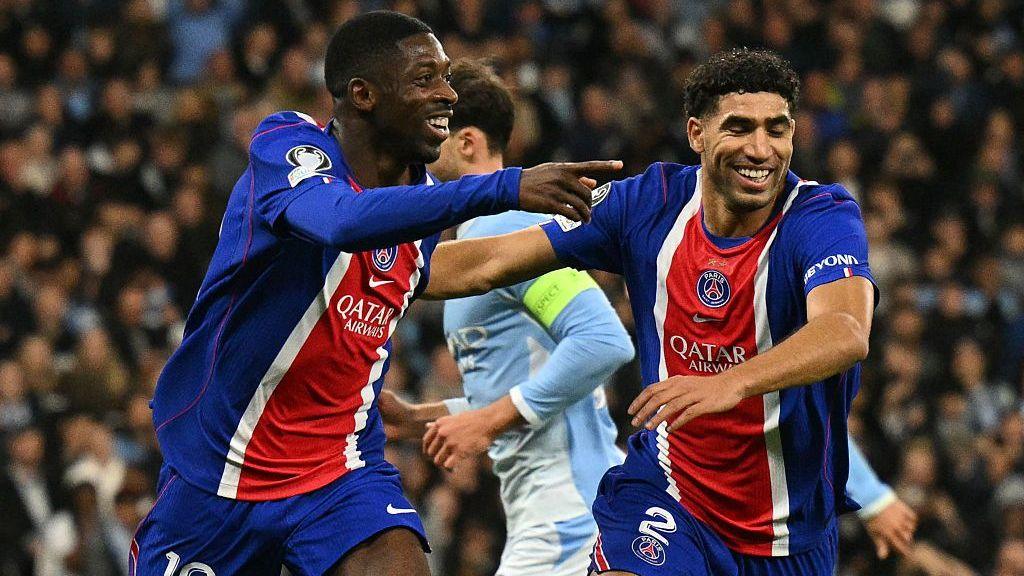
After tearing Manchester City apart in large spells of their 4-2 Champions League victory on Wednesday, Paris St-Germain look well on track to join the latter bracket.

The back-to-back European champions sliced through City with astonishing ease to take a 3-0 lead into half-time, and were still able to score another despite a spirited second-half fightback from the Premier League leaders.

After obliterating Inter Milan 5-0 in the 2025 final before squeezing past Arsenal on penalties in last season’s showpiece game, Luis Enrique’s side are aiming to win a third consecutive European crown.

They would be the fifth team to do so going back to 1956, and just the second in the Champions League era.

“This PSG team are on a different level,” Chris Sutton told BBC Radio 5 Live at half-time.

“They have just run all over Manchester City, who haven’t been able to string passes together. It’s been an absolute pummelling for Man City.”

To mark PSG’s latest display of attacking excellence, we’re looking at how the Parisians compare to those clubs who have enjoyed the most dominant eras in European competition.

Some will point out that football existed before the European Champion Clubs’ Cup began in 1955 - so apologies to Stan Cullis’ ‘world-champion’ Wolves outfit and the Mitropa Cup’s early Vienna heavyweights.

However, this top 10 debate is centred around winning European football’s grandest prize.

Paris St-Germain 2025-present

OK, straight in with the current champions, because this is a dynasty in the making.

Paris St-Germain are hoping to enter that bracket and the 4-2 win against Manchester City on Wednesday reminded the rest of Europe why you shouldn’t bet against them becoming continental champions for a third successive season.

PSG had a lacklustre start to the domestic season - they always do, don’t they? - but boast an uncanny ability to click into gear when it matters.

In Manchester, Luis Enrique’s side were at their unstoppable best. A ruthless blend of silky flicks and slick off-the-ball movement that saw a dazed City caught several frames behind.

“Unbelievable. PSG, what a team,” Sutton said.

“PSG’s press, I don’t think there’s another team that press with their intensity and ferocity.”

“This [City] is one of the best teams in the Premier League getting an absolutely roasting. This is them [PSG] having a slow start to the season. Heaven help everyone.”

The Parisians have been France’s most dominant force since the arrival of Qatar Sports Investments 15 years ago, but it took a change of approach for the holy grail of continental success to arrive.

“It’s the end of the glitter,” professed president Nasser Al-Khelaifi after years of lavish spending, ushering out the “flashy, bling-bling” era.

Instead, Enrique arrived in 2023 intent on building a coherent team. There was still significant investment, but on younger players who could be moulded by his philosophy and discipline while given room to flourish.

The result was two scintillating Champions League triumphs.

PSG thrashed Inter 5-0 to win their first Champions League in 2025

Talking of discipline. Helenio Herrera, the Argentine-born defender reared in Casablanca and Paris, had already traversed the dugouts of Atletico Madrid, Malaga, Deportivo and Barcelona before landing in Milan in 1960.

Herrera set about implementing his tactical brand of catenaccio at San Siro - one he insisted is misremembered as being more defensive than it actually was - and developing a ruthless counter-attacking team known as ‘Grande Inter’.

Winning the Scudetto in 1962-63, Herrera’s outfit became the first to lift the European Cup without losing a game the following season as Sandro Mazzola netted twice against Real Madrid in the final.

The Italians defended their crown the following year, despite losing their semi-final first leg at Anfield, edging Benfica in the final. It was the Portuguese giants’ second final defeat in three seasons. Some may say they were cursed…

Helenio Herrera won league titles with Inter, Barcelona and Atletico Madrid

The story goes that Bela Guttmann, fresh from winning the title with Porto, rocked up at Benfica, sacked all the senior players and promoted a talented bunch of youth team players instead.

Those promising youngsters won the title and then went all the way in the European Cup, beating Barcelona in the 1961 final.

That summer, a teenage Eusebio also joined Guttmann’s squad and steered them to European glory once more, seeing off Tottenham Hotspur in the semi-final before beating the great Real Madrid in the competition’s showpiece.

The legendary Ferenc Puskas scored a first-half hat-trick for the Spaniards, but Eusebio netted twice after the interval to seal Benfica a second successive crown.

Guttmann, buoyed by his remarkable success, left the club after not being offered the pay rise he felt he deserved and the curse the Hungarian boss supposedly put on the club - that they would not win another European trophy for 100 years - has become fable.

Whether the often-disputed story is true or not, the Lisbon giants have not landed another since - losing eight European finals, including three in the 1960s.

Eusebio scored 47 goals in the European Cup, including two in the 1962 final

Bayern Munich 1973-76

This was Bayern’s coming of age. Emerging from what was a fiercely competitive West German football scene, the Bavarians - promoted to the Bundesliga less than a decade earlier - were able to establish themselves as heavyweights in Europe.

With a backbone of goalkeeper Sepp Maier, marauding sweeper Franz Beckenbauer and the prolific Gerd Muller, and fresh off West Germany winning the 1974 World Cup, Bayern clinched three on the bounce, despite their domestic form dipping.

In fact, Beckenbauer said Bayern were past their peak after the first European Cup win over Atletico Madrid, but experience carried them through big games.

They beat Leeds in a controversial final in Paris, and then saw off Saint-Etienne the following year.

It took Bayern Munich 25 years to win Europe’s top prize again after doing it three times in a row during the 1970s

The teams above make the list for their trophy-winning spells. Pep Guardiola’s Barcelona were European champions twice in three years - losing to Jose Mourinho’s treble-winning Inter in between - but their dynasty was built on more than silverware.

Guardiola only spent four seasons at Barcelona, but it was an era-defining tenure, the Catalan giants pioneering a brand of football that would be celebrated and copied the world over.

Perhaps the real success of a team is in its legacy. Guardiola’s tiki-taka Barcelona built around La Masia graduates Xavi, Andres Iniesta, Sergio Busquets and, of course, Lionel Messi still resonates more than a decade since he left.

Pep Guardiola won the European Cup as a player with Barcelona and then twice as a manager, losing semi-finals to Inter and Chelsea either side of those triumphs

Where does this particular Milan dynasty start and end? It was fuelled, of course, by Silvio Berlusconi, who saved the club from bankruptcy in 1986 and appointed the up-and-coming Arrigo Sacchi as boss.

You could argue it continued until a Champions League final defeat by a young Ajax side in 1995. In between, the Rossoneri won back-to-back European Cups in 1989 and ‘90, then thrashed Cruyff’s Barcelona ‘Dream Team’ in 1994 after defeat in the final the previous season.

In fact, the only campaigns in which Milan did not reach the final were after their quarter-final second leg was abandoned because of floodlight failure while trailing Marseille in 1991. The Serie A giants’ refusal to re-enter the pitch for the final minutes of that one also led to them being banned the following year.

From Sacchi to Fabio Capello, through the brilliant Dutch trio of Ruud Gullit, Marco van Basten and Frank Rijkaard to homegrown stars Franco Baresi, Paolo Maldini and Alessandro Costacurta - the Italian core remaining from that 1989 triumph to the defeat by Ajax six years later - Milan were a phenomenal force.

Ruud Gullit and Marco van Basten both scored twice in a 4-0 victory over Steaua Bucharest as Milan won the first of back-to-back European Cups in 1989

In an era of English dominance on the continent, winning seven of eight European Cups between 1977 and 1984, Liverpool’s ‘Boot Room’ boys led the way.

The Reds won four of those, Nottingham Forest - who could argue they also deserve a spot on the list - went back-to-back and Aston Villa completed the haul.

Liverpool’s European pedigree really began when Bill Shankly’s side won the Uefa Cup in 1973, the Reds doing it again three years later under Shankly’s former assistant Bob Paisley.

Paisley was able to deliver the biggest prize of all the following season in Rome and, after Kenny Dalglish was brought in to replace Hamburg-bound Kevin Keegan, retained the European Cup at Wembley against Club Brugge in 1978 - the Scottish forward netting the winner.

Three years later, after Brian Clough took Forest to the top, Liverpool were European champions again when Alan Kennedy’s goal downed Real Madrid in Paris.

Perhaps most impressive is how the Anfield outfit were able to maintain that success through a series of managers. The line of succession from Shankly to Paisley then landed on Joe Fagan, who was in charge when they beat Roma - in Rome - in ‘84. That was before the Heysel disaster, and defeat by Juventus, the following year.

Liverpool won the European Cup four times between 1977 and 1984

Atletico fans look away now. Two finals in three years and twice Diego Simeone’s side ran into their Madrid rivals, losing in agonising fashion in both 2014 and 2016.

The second of those also sparked a three-year winning run for the most successful club in European Cup history.

Real Madrid’s formula was seemingly simple: construct a team of the world’s best players - spearheaded by Cristiano Ronaldo - and stick a legendary former star in charge.

Zinedine Zidane’s new-era galacticos just felt inevitable - they always found a way to win, becoming the first club in the Champions League era not only to retain the trophy but to lift three in a row.

After downing Atletico in the first of the three-peat, they beat Juventus and then Liverpool - the latter remembered for Gareth Bale’s cameo, Loris Karius’ blunders and Sergio Ramos leaving his mark on Mo Salah.

Similar to Guardiola’s Barcelona, the influence of this Ajax side was seen far beyond the trophy cabinet. The lineage of their philosophy - via Johan Cruyff - survives through several of the clubs on this list, from Catalonia to Paris.

Rinus Michels was the pioneer, taking Ajax from the threat of relegation to the most dominant side in Europe, losing the 1969 final to AC Milan but returning to win it for the first time two years later with their swaggering brand of Total Football.

Michels left for Barcelona on the back of that success, though Stefan Kovacs was able to retain the trophy the following year and then add a third successive European crown to Ajax’s pile with an impressive run that included knocking out Bayern Munich, Real Madrid and then Juventus in the final.

Cruyff, about to win the second of his three Ballon d’Ors, followed Michels to Barcelona and Ajax’s dynasty began to fall apart. The legacy, however, remains.

Ajax won three successive European Cups, having lost the final in 1969

When it comes to dominance, no one compares to the Real Madrid side who stormed to five successive European Cup triumphs after the competition began in 1955.

With the tournament in its infancy, it was perhaps not considered as imperative by certain nations compared to how Champions League participation dominates clubs’ thoughts today, but Real Madrid’s style and success helped to alter perceptions.

Alfredo Di Stefano, already a world star by the time Real beat Reims in the inaugural final, was an integral part of the Spanish giants’ success, the legendary Paco Gento likewise a stalwart (he also won a sixth European Cup in 1966).

Then, in 1958, Madrid added Hungarian genius Ferenc Puskas following his two-year ban for refusing to return to Budapest after the revolution in 1956.

Puskas was 31 when he joined, but scored 35 goals in 39 European Cup games for Real Madrid, including four in the 7-3 win over Frankfurt at Hampden in the 1960 final. Di Stefano grabbed the other three as Madrid made it five on the spin.

Real Madrid won the first five European Cups

'Shameless' - Mourinho critical of Vinicius Jr ban timing
Champions League

'Shameless' - Mourinho critical of Vinicius Jr ban timing

By Staff Writer — 14 October 2026

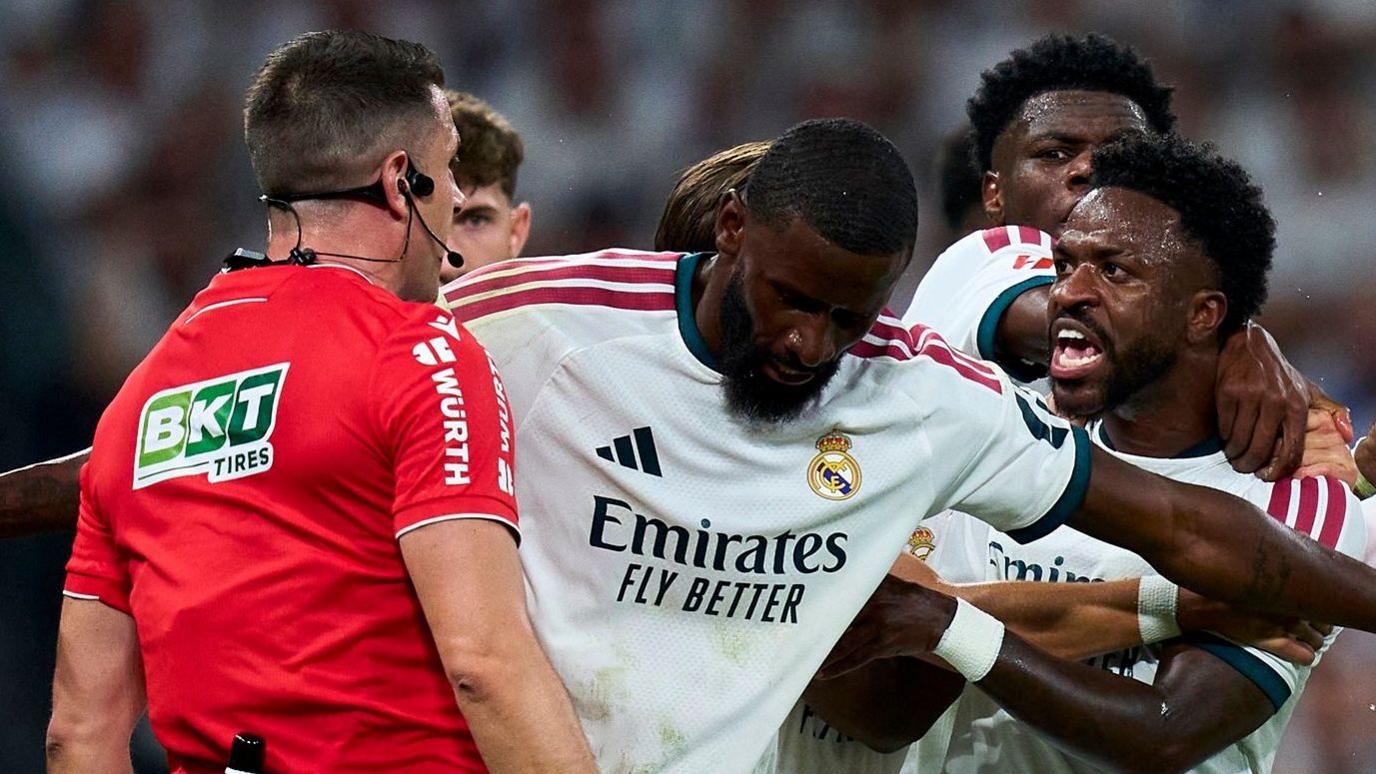
Real Madrid forward Vinicius Jr will miss El Clasico against Barcelona after being given a four-game ban.

The Brazil international was sent off for pulling Nathan Saliba’s hair in Real’s 1-0 win against Villarreal last Saturday.

His suspension means he will miss games against Sevilla (18 October), Barcelona (25 October), Racing Santander (1 November) and Valencia (7 November).

The timing of the decision’s announcement angered Real Madrid boss Jose Mourinho, as it came hours before his side - featuring Vinicius Jr - faced Roma in the Champions League.

“Do you think it’s normal that a player from a Spanish team, who has to play a match that is also important for Spanish football, that two hours before the match a player knows he’s been given a four-match suspension?” Mourinho said following their astonishing comeback to win 4-3.

“Couldn’t they do it tomorrow morning? Do we have to come by bus and almost arrive at the stadium when we find out Vinicius has a four-match suspension?

“They do things shamelessly now. The cat is out of the bag now. Two hours before the match, a player must know he has a four-match suspension.

“A Spanish team that has earned three points for Spanish football, for the rankings, for the prestige of Spanish football. You want to kill a player two hours before the match? It doesn’t seem normal to me.”

Vinicius Jr came on after 52 minutes against Villarreal and thought he had scored his side’s second goal.

However, the referee reviewed the build-up on the pitchside monitor and, with Vinicius clearly being shown to have pulled Saliba’s hair before scoring, sent him off and disallowed the goal.

The Spanish football federation’s disciplinary committee suspended the winger for two games for “behaving violently … (while) not being in a position to challenge for the ball” and a further two matches for “protests” to the officials.

Following the match, Real Madrid manager Jose Mourinho did not attend the post-match news conference.

Vinicius also later apologised when he posted a message on social media, saying he was “sorry to the team and the [Real Madrid] fans”.