Anfield, intensity, rotation - how Iraola is improving Liverpool
Premier League

Anfield, intensity, rotation - how Iraola is improving Liverpool

By Staff Writer — 1 November 2026

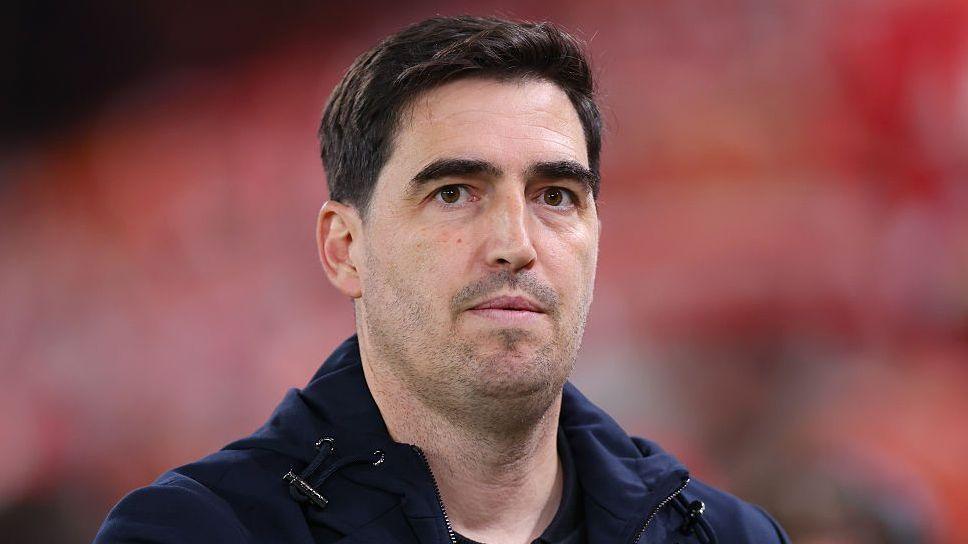
Liverpool have won nine and drawn three of their 13 games in all competitions under Andoni Iraola

You have go back to 2012 for the last time Arsenal won a game at Anfield.

In recent years - whenever this fixture comes around - it is well documented that a certain Mikel Arteta was playing for the Gunners on that day.

Arteta is now a Premier League-winning manager and leading reigning champions who will arrive at Anfield on Sunday (16:30 GMT) hoping to end that streak.

But they will come up against a Liverpool side that are starting to find some rhythm under Andoni Iraola and will have backing from a re-energised Anfield crowd.

Since tasting their only defeat of the season so far against Manchester City on 11 October, Liverpool have won their past five across all competitions.

Not since the start of last season under Arne Slot have they had such a run. Facing Arsenal at the end of a week in which the Gunners were knocked out of the Carabao Cup by League Two Fleetwood, they will sense an opportunity to deliver a statement to the rest of the Premier League.

Former Reds defender Jamie Carragher believes Liverpool are the biggest title challengers to Arsenal, though, speaking on Friday, Iraola insisted it was too early to look at the table.

Either way, the game will offer an early indication of Liverpool’s progress under the Basque boss.

Victory will see them move just three points behind Arsenal, but defeat would see the difference extend to nine points after nine games.

For vast parts of last season, Anfield lost its fear factor and watching Liverpool became a turgid experience. In the past fortnight, the connection between the fanbase and the side seems to have grown again.

Liverpool were flawed against Villarreal but the atmosphere was electric as they came from behind to win. The feel-good factor has only grown since, with an impressive win against high-flying Brighton in the Premier League and victory on penalties over Chelsea in the Carabao Cup.

“We have a big advantage over other teams because this atmosphere we can create is special,” said Iraola.

Big-money signings like Alexander Isak, Bradley Barcola and Florian Wirtz are all heading in the right direction, while players like Cody Gakpo and Alexis Mac Allister have been much better this season than last.

At the back, Ronald Araujo is already a fan favourite and Jeremy Jacquet has seamlessly settled into the Premier League. Iraola’s growing trust in using youngsters like Rio Ngumoha, Trey Nyoni, Lewis Koumas and James McConnell is certainly worth highlighting too.

Liverpool have made three or more starting XI changes in nine consecutive games and that rotation has been a key aspect of Iraola’s own adaptation to coaching two games a week.

“It’s true that [when I came], I didn’t have a lot of experience [coaching two games a week], but I had a lot as a player of when you arrive back at 3am in the morning and so on,” said Iraola.

“It’s different to managing, but you do a lot of the job with the analysts, in the video room with the board and without spending the legs but I think our players are very used to it so a lot of the work is done.”

“Now, it’s more a matter of getting the decisions right, in terms of loading and freshening the legs. We are changing [the team] a lot from game to game and I think we will continue this approach.”

Iraola is a believer that possession itself is not overly important but he wants his team to produce the better chances.

“Whoever controls the game is whoever controls the chances,” he said, after Liverpool’s 2-0 win over Brighton, where the Reds only had the ball for 35.6% of the playing time.

Liverpool went more direct against a Brighton side that likes to keep the ball and it worked. Liverpool are averaging 24.9 long balls per Premier League game this season, compared to 21 last term.

In terms of high pressures in the opposition half (165.9 per game, compared to 160.1) and sprints (128.3 per game, compared to 123.2), Iraola’s side are doing more in comparison to last season but they are actually covering marginally less distance (111.1 km per game, compared to 111.7km).

Asked what has changed under Iraola, captain Virgil van Dijk offered an interesting response earlier this week.

“The ‘intensity’ word has been said so many times, sometimes a bit of chaos and there is this risk-reward that’s going on now as well,” he said.

“If we press high, I ended up at one point almost putting Cody [Gakpo] in one versus one on goal when I intercepted the ball on the right-hand side - when I’m a left centre-back. It’s this sort of intensity that we try to get into our press.”

“It’s still a work in progress, but if you defend with a lot of intensity you have a big chance to win the ball high. Sometimes, that creates some risk and it could be vulnerable, but we’re working on it a lot in order to be able to take that risk, but still not be as vulnerable as we have been sometimes.”

There is more to come from the approach and Iraola insisted “there has to be another level” after arriving late to Friday’s news conference because training overran.

If his side can find that, starting against Arsenal, then talk of a title challenge will only grow.
AC Milan v Inter and the tale of an iconic image
Champions League

AC Milan v Inter and the tale of an iconic image

By Staff Writer — 31 October 2026

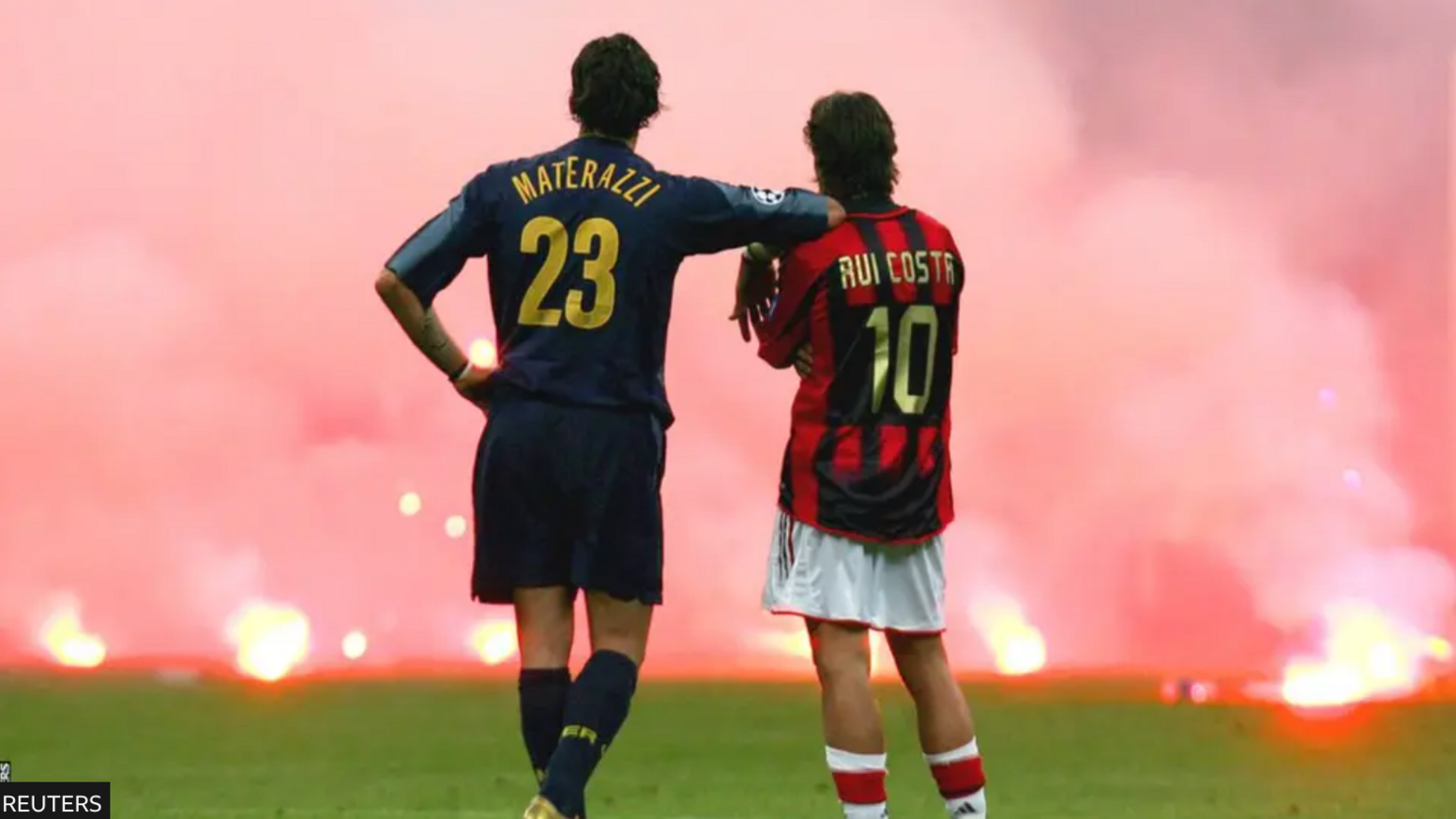
An image of Inter defender Marco Materazzi leaning on the shoulder of Milan attacker Rui Costa has become one to symbolise the teams’ local rivalry.

A version of this article was first published in May 2023.

There was Rui Costa and there was Marco Materazzi. Beauty and the brawn. The elegant Portuguese shouldering the weight of his grizzled opponent’s elbow.

Tranquillity amid the chaos as a pair of footballing rivals paused to ponder a hazy wall of red smoke and simmering flares.

“Everyone was focused on the flares, on the smoke,” photographer Stefano Rellandini, who captured that iconic image 21 years ago, tells BBC Sport. “But near the centre of the pitch I saw a certain moment.

“Materazzi was nicknamed something like a butcher; he is not really a gentle player. Rui Costa was the opposite - more gentle, more artistic in his football. For several seconds Materazzi put his elbow on the shoulder of Rui Costa.

“So when I saw that, I shot it. I have just one frame in that sequence. That was the moment.”

The picture has its own legacy, but it also captured the end of AC Milan and Inter Milan’s 2005 Champions League quarter-final that was abandoned after flares and other objects rained down on the San Siro turf from a section of Inter fans, one striking and injuring Milan goalkeeper Dida.

With 73 minutes played of the second leg, the referee abandoned the match and the tie was later awarded to Milan, who were leading 3-0 on aggregate.

“The atmosphere that night was like every time you have an AC Milan and Inter derby at the San Siro,” says Rellandini, who was working for Reuters at the time.

“It is always strong. They don’t fight a lot, but the choreography of the supporters is huge and great, so you can really feel it, even if you’re not a player.

“When you put your feet on to the pitch, you can feel that it’s not just a soccer match. It is something more.

“You are really close to the players. It was a nice atmosphere; there was adrenaline.

“It just blew up when they disallowed the goal from Esteban Cambiasso. That completely changed the situation.

“The Inter Milan supporters were freaking out. They started throwing down objects, flares, and did not stop for about 15 or 20 minutes. It was something like a war.”

The tension had been brewing. Milan had knocked Inter out of the competition two years earlier on away goals, despite both semi-final legs ending in a draw at the San Siro. Milan went on to beat Juventus on penalties in the final at Old Trafford.

Milan also headed into the 2004-05 campaign as Italian champions - a sixth Scudetto since Inter last got their hands on the Serie A title in 1988-89.

Owner Silvio Berlusconi was building his second truly great Milan side and the entrepreneur-turned-politician had trusted Carlo Ancelotti, a member of the team that won successive European Cups in 1989 and 1990, to deliver another period of success as manager.

For the quarter-final second leg a formidable back four of Cafu, Jaap Stam, Alessandro Nesta and Paolo Maldini sat behind Andrea Pirlo, Clarence Seedorf, Massimo Ambrosini and Kaka, with Hernan Crespo - formerly of Inter - and Andriy Shevchenko up front. Rui Costa was on the bench.

Inter, meanwhile, had spent lavishly to try and compete with Milan and Juventus. Chairman Massimo Moratti broke the transfer world record twice in three years, first to sign Ronaldo from Barcelona in 1997 and then to get Christian Vieri from Lazio in 1999.

Crespo and Seedorf had arrived at Inter on big deals, but failed to land any significant silverware, before uniting across the divide at Milan.

Fabio Cannavaro had also come and gone - a misfiring two-year spell ending with a move to Juventus.

By 2005 the Inter midfield was built around the Argentina pair of Cambiasso and Juan Sebastian Veron, while ahead of them precocious Brazil forward Adriano was enjoying his most prolific season in a black and blue shirt.

The team was improving. The results weren’t.

Inter carried the unwanted tag of ‘August champions’ among rival fans, who mocked the expectations that had been built up in the summer transfer market and invariably fizzled out by the time silverware was at stake in May.

Among Inter supporters, there was an underlying feeling that they were running an unfair race - between them, Milan and Juventus had won 11 of the previous 13 titles.

However, in 2006 both would be implicated in the Calciopoli scandal. Juventus were relegated to Serie B for their part and stripped of two titles. Milan, Fiorentina, Lazio and Reggina were docked points.

In 2005 rumours were already swirling in the stands. Criminal investigations had begun in Naples and Turin over alleged bribery and corruption in football.

As the match turned against Inter, their fans’ frustrations - at the scoreline and their inability to close the gap on Milan and Juventus teams who always seemed one step ahead - spilled over from the stands and on to the pitch.

Stam and Shevchenko had given Milan a two-goal advantage in the first leg.

But heading into their ‘home’ leg at the San Siro, Inter’s fans were still buoyant and hopeful of a comeback.

Milan great Alessandro Costacurta, who came on as a substitute in the first leg, talked of the ‘Derby della Madonnina’ meetings as the “worst” days in his career.

He couldn’t sleep. “It was the turmoil of emotions,” he said. “It was the tension.” Team-mate Maldini described an “electricity” across the city.

Shevchenko also said he struggled to sleep and remembers seeing more club colours on show around the city as the games grew closer.

“There was great tension, great anticipation but above all passion, and always with civil attitudes,” the former Ukraine forward told Gazzetta dello Sport.

It was Shevchenko, Milan’s number seven, who opened the scoring half an hour into a fiery second leg when he beat Francesco Toldo with a left-footed effort from outside the box. That the forward had avoided punishment after appearing to headbutt Materazzi early on only added to Inter’s fury, with fans also believing they should have had a penalty.

But the real flashpoint came with just under 20 minutes remaining.

Inter midfielder Cambiasso’s bald head met Veron’s corner to seemingly make it 3-1 on aggregate, only for the goal to be disallowed because striker Julio Cruz was ruled to have fouled Dida. There looked to be little contact.

Flares thrown by the ultras in the Curva Nord began to pour down on the San Siro turf like flaming arrows.

One struck Dida on the shoulder, narrowly missing his head, as he attempted to clear the pyrotechnics and bottles from his penalty area.

The players gathered in the centre of the pitch as Maldini, Cambiasso and Inter captain Javier Zanetti remonstrated with referee Markus Merk, before Zanetti and Veron took to helping the firefighters who were dousing the flames by trying to clear debris from the goalmouth.

Eventually, with objects still cascading down from the stands, both teams were ordered off the pitch, attempting to shelter as they escaped via a tunnel in the same corner of the ground as the ultras.

“After the first few flares lit up, the pitch was completely in the fog, so you couldn’t see. Even if you wanted to catch a picture of someone injured, you couldn’t,” explains Rellandini, although he did manage to catch his masterpiece amid the chaos.

“They stopped the match for almost half an hour, which was strange at that time. You start to think that something bad has happened because they really threw down everything - they were getting crazy.”

When the players returned, Dida - treated for first-degree burns to his shoulder - was replaced by Christian Abbiati, but after 30 seconds, with the barrage continuing, Merk was forced to abandon the fixture.

“The referee took the right decision,” said Maldini. “I was surprised that he tried to restart the game but it was good because so many supporters had paid to watch.”

Ancelotti, like Inter manager Roberto Mancini, condemned the incident, calling it a “disgraceful episode”.

“What happened will not just discredit Inter but all of the city,” Ancelotti said. “The reaction of the Inter fans was completely unexpected. I was really surprised because I have never seen something like that in all of the Milan derbies that I have taken part in.”

Milan police chief Paolo Scarpi blamed it on “two to three hundred hooligans… the usual hotheads from the Inter section”, while Berlusconi, Italian prime minister at the time as well as Milan owner, suggested “drastic measures” were needed to stem the rise of violence at stadiums.

Uefa, European football’s governing body, handed Inter a £132,000 fine and ordered them to play four European games behind closed doors.

“This is the largest fine in Uefa’s history. There will be some people who think it is lenient and some people who think it harsh,” a Uefa spokesperson said.

Milan went on to beat PSV Eindhoven on away goals in the semi-finals - Dida set a Champions League record of seven successive clean sheets in their 2-0 first-leg victory, before PSV won the return 3-1.

Milan would have clinched a seventh European title but for a miracle in Istanbul - Liverpool scoring three times in six minutes in the final before winning on penalties.

Milan would get their revenge two years later, seeing off Liverpool in the final in Athens, although on a domestic level their points deduction and Juventus’ relegation opened the door for a period of Inter dominance in Serie A.

Inter were awarded the 2006 title then won four in a row, culminating in a Treble under Jose Mourinho in 2009-10.

Neither Milan side have won the competition since.

Are Manchester United really at risk of a relegation scrap?
Premier League

Are Manchester United really at risk of a relegation scrap?

By Staff Writer — 31 October 2026

“We’ve got to keep moving forward and winning games, simple as that,” said Michael Carrick in that considered way of his, after their 2-0 defeat by Chelsea on Saturday.

Carrick did get relegated once, with West Ham at the start of his playing career.

The Hammers were supposed to be too good to go down in 2002-03. Aside from Carrick, they had England goalkeeper David James in their squad. Joe Cole, Jermain Defoe and Trevor Sinclair all played more than 40 games in all competitions.

But down they went, finishing third bottom with 42 points. It remains the highest tally any side has been relegated with across a 38-game Premier League campaign.

To put that into context, Manchester United’s current tally of seven points from nine games would not even get them 30 points if it was continued for the full season.

So, are United really destined for a relegation scrap?

You would have to be touching 60 to have any recollection of the last time United were relegated.

Legend has it that old boy Denis Law sent them down with an impudent back heel he didn’t celebrate when he was at Manchester City. The reality is United were already doomed under then-boss Tommy Docherty.

United have not been in the relegation zone after nine games or more since November 1986, when they collected a single point in Sir Alex Ferguson’s first two games in charge following Ron Atkinson’s dismissal.

Their lowest position after at least nine games of a season since then was 17th in 1989-90. They are back there again right now, mainly thanks to the failings of others in results elsewhere on Saturday.

It is now nine games in all competitions since Carrick’s side won, their worst run since 1988-89. Their single Premier League win of the season was when they came from behind to beat Ipswich at home in August.

Of course, United’s supporters have very recent experience of seeing their team in the lower reaches of the table. They were 16th under Ruben Amorim after 37 games of the 2024-25 season. The caveat is they were 14 points clear of third-bottom Leicester and at no point in that tortuous campaign were they in danger of relegation.

One club that has been at real risk in recent years is Tottenham, who were third bottom and two points behind West Ham with four games of last season remaining.

So, it could happen, even if it remains unlikely a club that should post revenues in excess of £700m for the current campaign will finish in the bottom three.

“You can look at it like that, or you can look at how far you can move up the league quite quickly if you win football matches,” was Carrick’s response when asked if his players are equipped for the “mentality shift” required to deal with the present situation. “That’s the way it’s got to be approached.”

Yet, as Carrick said, in order to save themselves, United need to win matches.

Their next game is against Aston Villa at Old Trafford on 8 November. Among the seven matches they have after that are trips to Liverpool, Newcastle and Arsenal.

As yet, there is no word about Carrick’s future, although before Saturday’s loss, the expectation was he would be in charge for Tuesday’s Champions League encounter with Roma.

But these are unchartered waters and no-one can be absolutely sure what happens next. It is clear that many players need to improve their performance levels.

United will be without one of those players, Lisandro Martinez, who will miss the Villa game due to suspension after his red card at Chelsea, which was branded “inexplicable” by former World Cup final official Darren Cann on BBC Sport.

Martinez’s longer-term future with the club is uncertain, but clearly he could not leave until January at the earliest.

His contract expires in the summer, and the Argentine’s patchy injury record had already raised questions over whether it was worth triggering the clause that would commit United to another season.

United are winless in their last nine games in all competitions - they last had a longer run in September 1984 (10 games).

After just nine games, it is a bit early to dig into the actual consequences of relegation for United, but the numbers might offer pause for thought.

In May, respected football finance blogger Paul Quinn, known as The Esk, calculated that Tottenham’s “absolute revenue loss” would be between £197m-£235m if they did go down.

As one of the league’s highest recipients of TV income, United would not remotely be covered by the parachute payments available to relegated clubs.

It seems unlikely that many, if any, of their squad would have relegation clauses, and while United have huge commercial income, it is not known to what extent that would be affected by clauses triggered by relegation.

United also have £1.15bn worth of debt, made up of bonds that were renegotiated in June at a higher interest rate, a revolving credit facility and outstanding transfer fee payments.

The club are also about to launch a fan consultation before coming up with final plans for a new stadium, which are due to be submitted either in late 2027 or early 2028.

United fans once again chanted their opposition to a new stadium at Stamford Bridge during the Chelsea defeat.

It is a complicated picture, and even though it seems highly unlikely that the doomsday scenario will become reality, the mere fact that United are in the position they are underlines just how poor their form has been.

'We fell behind' - what does new San Siro deal mean for AC Milan and Inter?
Champions League

'We fell behind' - what does new San Siro deal mean for AC Milan and Inter?

By Staff Writer — 31 October 2026

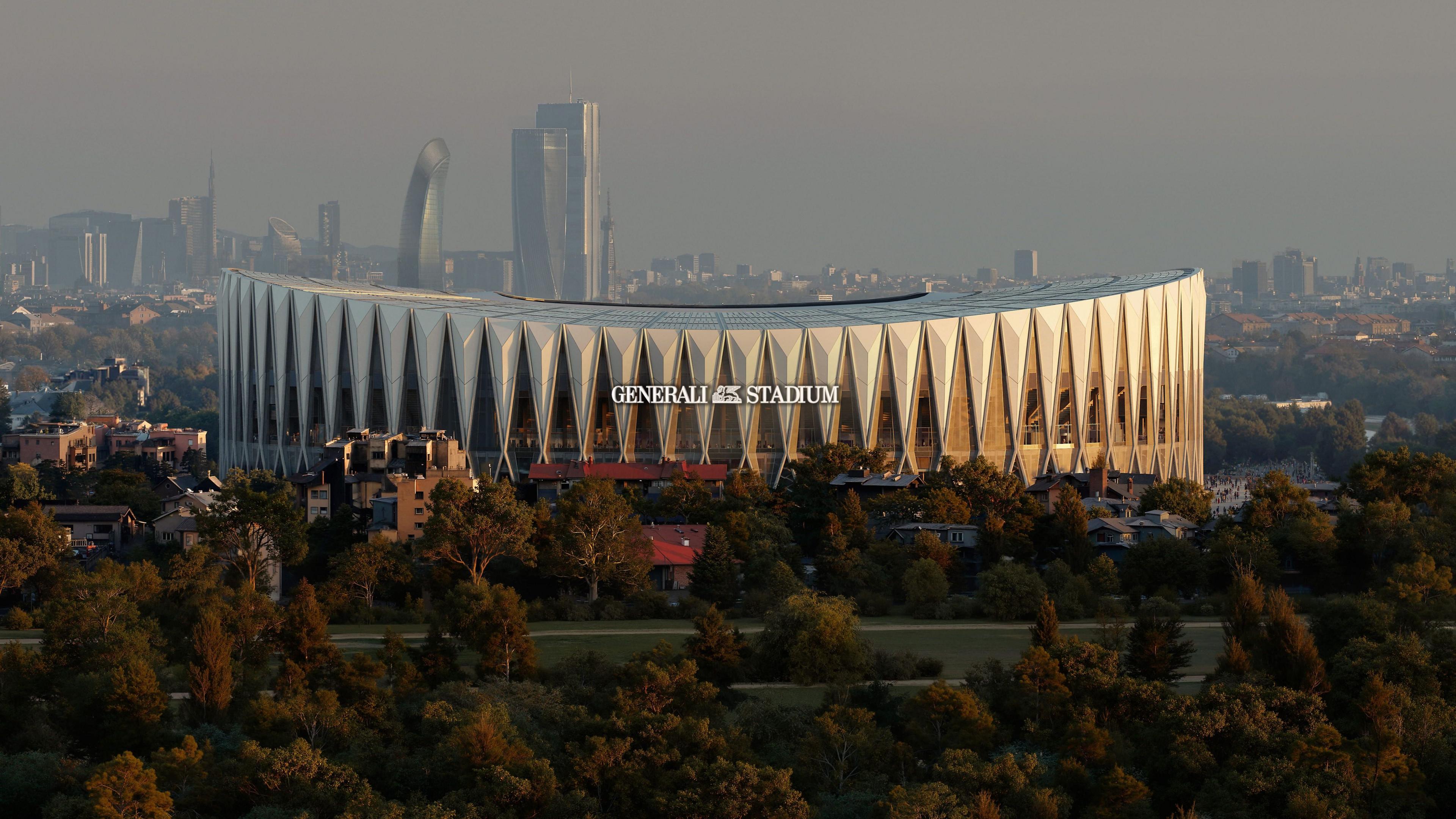
When AC Milan and city rivals Inter jointly revealed the design of their planned new stadium on Thursday, one thing stood out in particular - the name.

The 71,500-seater arena the clubs aim to share from 2031 onwards, replacing the iconic San Siro, will be called the Generali Stadium.

Generali is an Italian insurance company, and the firm has agreed to pay about 650m euros (£542m) for naming rights through to 2052.

The length and value of the agreement makes it one of the most lucrative naming-rights deals in sports history.

Stadium naming rights are, of course, nothing new in elite football. The champions of England and Germany both play in arenas built in the 21st century that have always been known by their sponsors’ name, and plenty more stadiums across the continent have been partly financed by revenue from naming rights.

But in recent years, some clubs have struggled to sell them.

It was thought that both Tottenham Hotspur and West Ham would look to sell the rights to their new stadiums’ names, but as yet neither have. Liverpool aimed to sell the name of a new stand they built in 2016 but no such deal has been agreed.

So, what do these stadium plans mean for AC Milan and Inter, what underpins the viability of expensive new football grounds, and what impact do culture and history have?

AC Milan and Inter are owned by separate US-based investment firms and in the joint announcement described the Generali Stadium as “a new home for generations of supporters, and a destination designed to contribute to the cultural, economic and urban development of the city”.

The demolition of San Siro has been discussed for decades, and the clubs believe its deterioration and lack of modern features are significant reasons behind their progressive fall lower down the pecking order at the top of European football.

The new stadium is expected to cost about 1.2bn euros (£1bn) to construct, and the clubs aim to generate income by selling just under 12,000 of the seats as premium or hospitality, and host a wider array of events like concerts and fixtures in other sports.

“This is the biggest stadium naming-rights deal in the history of global sports,” AC Milan owner Gerry Cardinale told BBC Sport.

“That’s a significant achievement in its own right and especially in the context of having been done in Italy and what it means to bring Italy back to the world stage of football.

“But if you’re looking at this purely as an annual sponsorship payment, you’re missing the bigger picture.

“The stadium is what fundamentally transforms our economic model - matchday revenues, hospitality, premium experiences, entertainment and commercial opportunities.

“These are the things that allow us to compete with the biggest clubs in Europe.”

AC Milan have played at San Siro for 100 years, while Inter moved in 1947. The two clubs paid 197m euros (£164m) to buy the stadium and surrounding land in 2025.

The plans for the new stadium have faced opposition from some supporters, with some Inter fans protesting outside the venue where the plans were announced by carrying a banner reading ‘You will never extinguish the lights at San Siro’ and chanting “Hands off San Siro”.

“You cannot compete consistently with the best clubs in the world without having the infrastructure and economic model to support that ambition,” added Cardinale.

“The Premier League has set the benchmark in terms of commercial development and infrastructure. Italian football has fallen behind, and we need to change that.

“This stadium is a massive step forward, not just for AC Milan but potentially for the whole of Serie A.”

The two decades of naming rights paid for by Generali break down to about £27m per season - £13.5m per year, per club.

New stadiums are rarely built in Italy, with many Serie A stadiums in varying states of disrepair and in need of renovation before the country jointly hosts Euro 2032 with Turkey.

That means AC Milan and Inter have focused on selling a rare proposition.

“The 20-year deal is key - having that guaranteed long-term incomes gives the clubs security,” said Dan Plumley - sport finance expert at Loughborough University.

“The money stacks up pretty well. Spotify pay around 20m euros (£17m) to sponsor Barcelona’s Camp Nou per season, so now the Milan clubs aren’t too far off that figure.

“What a lot of these partners are looking for is a long-term relationship because they can build their profile as expand around the world, pushing themselves into regions like Asia and Africa, and football can be very valuable for that.

“It couldn’t be done at San Siro because everybody would have just carried on calling it that. Getting in early makes the sponsor part of the new history and is a really smart play from a business point of view.”

Historically, the home of stadium naming rights has been the US, where the majority of arenas in most sports are known by a sponsor name.

In European football, similar deals have been most common in Germany, where major companies have direct ownership links to some of the country’s biggest clubs including Bayer Leverkusen and Wolfsburg.

“It’s really difficult to do naming-rights deals in English football because of our history and culture,” said Plumley.

“The clubs and potential naming partners know that fans around the world could strongly oppose a deal, because it’s less common here, so the value becomes less attractive.”

Timing and performance on the pitch are key considerations when clubs are planning to sell the stadium name.

“As a club you don’t want to just do a cheap deal and give the name away for a few million just because it’s extra revenue,” said Plumley.

“Clubs like Spurs or West Ham know there is a trade-off between not just agreeing something because it’s a bit of extra value, having a deal that genuinely makes a difference financially, and doing something that the fans will tolerate.

“Sometimes the balance just isn’t right, and some of the most successful clubs in the world would rather hold on and protect their overall value and hold off and sell when their performance is at its peak - being in the Champions League is key to that.

“Everton weren’t in a position in terms of results to go out and get a big global name paying a huge amount every year, so a more local partner [the Hill Dickinson law firm] made sense.”

Fylde sign ex-Bamber Bridge midfielder Lang
Transfers

Fylde sign ex-Bamber Bridge midfielder Lang

By Staff Writer — 30 October 2026

AFC Fylde have signed midfielder Archie Lang on a two-year deal.

The 21-year-old joins, having left Bamber Bridge earlier this week, where he made a total of 15 appearances this season.

He could make his debut in Friday’s National League fixture against Hornchurch, the club said.

“It’s been a long time coming, but I’m really happy to be here, and I’m just ready to kick on now,” he said.

“I want to push myself, and this feels like the right place to do so.”